Author: Ajay Poundarik

  • Second Half Of Sixties, Hindi Film Music,  Sovereignty Of  Laxmikant-Pyarelal

    Second Half Of Sixties, Hindi Film Music, Sovereignty Of Laxmikant-Pyarelal

    It was indeed a remarkable achievement for the new comer music directors, Laxmikant-Pyarelal to achieve TOP spot in the span of over three years.

    When the duo Laxmikant-Pyarelal started with “Parasmani” music in 1963, many big names like Naushad, Shankar-Jaikishan, Roshan, O P Nayyar, S D Burman, Madan Mohan, Ravi, Chitragupt, Hemant Kumar, etc were established music directors.

    But Laxmikant-Pyarelal took on all the might of Naushad, Shankar-Jaikishan O P Nayyar, Roshan, Madan Mohan etc. The duo, Laxmikant-Pyarelal ruled the later half of 60s. Later maintained it, till the end of the century. It was the stunning ‘blow’ to all old, established music directors.

    Listen to what Ameen Sayani / C. Ramchandra had predicted about the new, talented, proficient star music directors, Laxmikant-Pyarelal, in the following video clip.

    In the second half of sixties (after 1965), Laxmikant-Pyarelal become the household name in hindi film music. It was like a TSUNAMI of songs from the duo. Honestly speaking Laxmikant-Pyarelal were primarily responsible for eliminating the dominance of the older music directors such as C. Ramchandra, Naushad, Shankar-Jaikishan, Madan Mohan, O.P.Nayyar, Ravi, Chitragupt, Roshan etc.

    Second Half Of Sixties, Hindi Film Music, Sovereignty Of Laxmikant-Pyarelal

    Have compared Laxmikant-Pyarelal, year wise, musical journey (musical hit films) with other contemporary music director’s prominent musical hit films from 1963 to 1969.  At the end of each year’s comparison statement I have also given the list of the songs, composed by  Laxmikant-Pyarelal, which appeared in Final Binaca Geetmala Standing. 

    LAXMIKANT-PYARELAL 1963…

    Dashing and Bouncy Start by Laxmikant-Pyarelal in their very first film “Parasmani

    LP v/s “Other prominent musical” hits.. in 1963 

    Shankar-Jaikishan:– –Profesor–Humrahi–Dil Ek Mandir

    Roshan--Taj Mahal –Dil Hi To Hai

    SD Burman--Bandini — Tere Ghar Ke Samane

    Naushad--Mere MehaboobRamlal–Sehara

    Ravi—Gumrah

    Laxmikant-Pyarelal had just two films “Parasmani” and “Harishchandra Taramati”. These films were released in the third quarter of the year. 

    Music director Roshan won the best music director award for “Taj Mahal” beating Naushad’s “Mere Mehboob” and Shankar-Jaikishan’s “Dil Ek Mandir”. 

    BINACA Geetmala Standing in Annual Countdown.. ( 32 songs ) 

    No 15 Woh Jab Yaad Aaye Lata – Rafi..“Parasmani”

    No 06 Hasta Hua Nurani Chehara,,,Lata – Kamal Barot ”Parasmani”

    —————————————————————————————————-

    LAXMIKANT-PYARELAL …1964

    Beginning of TWO Great & Big combos.

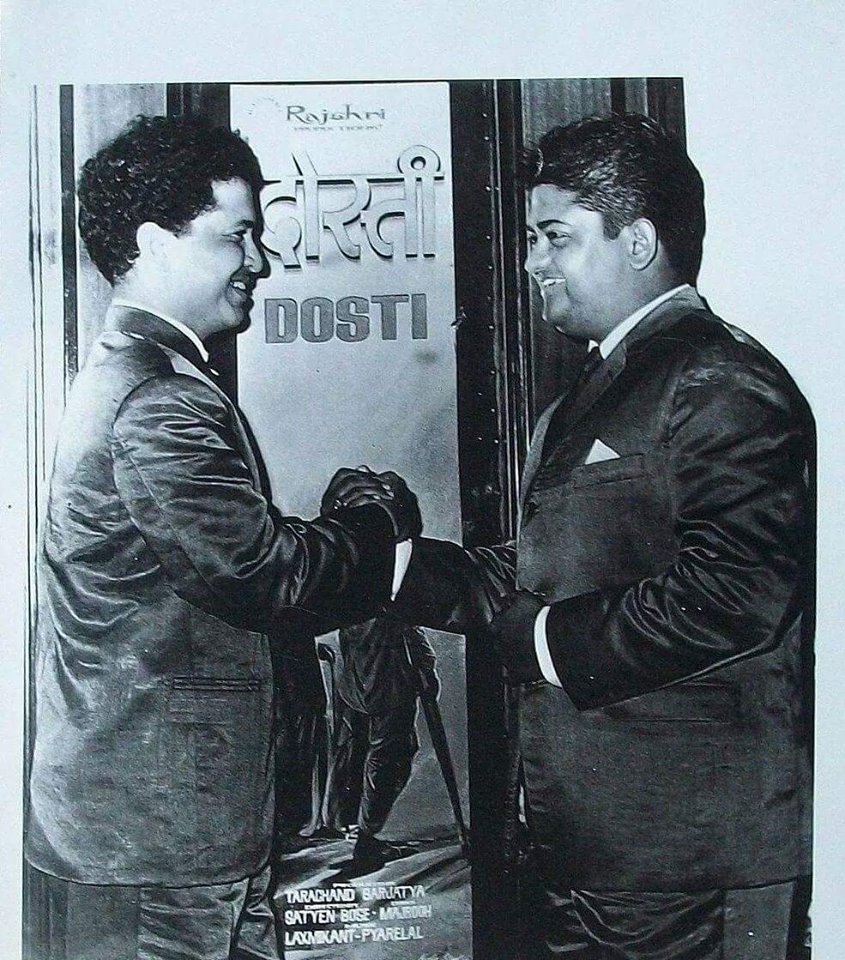
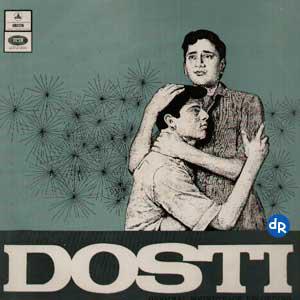
    Mohammad Rafi & Laxmikant-Pyarelal “Dosti” Kishore Kumar & Laxmikant-Pyarelal “Mr X In Bombay

    LP v/s Other prominent musical hits.. in 1964 

    Shankar-Jaikishan:- –Aayi Milan Ki Bela—Raj Kumar—Sangam

    Naushad:—Leader

    Madan Mohan:- Woh Kaun Thi

    OP Nayyar:—Kashmir Ki Kali

    Ravi:- Door Ki Awaz

    Roshan:- Chitralekha

    Ramlal:- Geet Gaya Pattharone 

    Laxmikant-Pyarelal:- Aaya Toofan, Mr. X In Bombay, Sati Savitri, Sant Gyaneshwar and Dosti.

    Filmfare Awards:- Nominations Madan Mohan (“Woh Kaun Thi”), Shankar-Jaikishan (“Sangam”) and Laxmikant-Pyarelal (“Dosti”). Laxmikant-Pyarelal won their, well deserved,  first-ever filmfare award for “DOSTI” .

    BINACA Geetmala Standing in Annual Countdown.. ( 32 songs ) 

    Laxmikant-Pyarelal have some wonderful songs from “Harishchandra Taramati” which released in end of 1963.

    No 30 Main Ek Nanha Sa .. Lata.. “Harishchandra Taramati”

    No 26  Rahi Manwa ..Rafi..”Dosti”

    No 21  Chahunga Main Tujhe..Rafi..”Dosti”

    No 06  Mere Mehaboob Quyamat ..Kishore..”Mr X In Bombay”

    Laxmikant-Pyarelal

    ————————————————————————————————

    LAXMIKANT-PYARELAL….1965

    Strong Bonding Of Two Combos Through “Lootera” Songs.

    Laxmikant-Pyarelal & Lata Mangeshkar Laxmikant-Pyarelal & Anand Bakshi

    LP v/s Other prominent musical hits in 1965

    RD Burman:—Bhoot Bangala. 

    Kalyanji-Anandji:— Himalay Ki God Main,– Jab Jab Phool Khile,–Saheli

    Shankar-Jaikishan:— Professor, Aarzoo

    Ravi:- —Khandan,—Waqt

    SD Burman:– — Teen Deviyan, — 

    Roshan:- Bhigi Raat

    OP Nayyar:- Mere Sanam.

    Laxmikant-Pyarelal:- —Lootera, —Shreeman Fantoosh, –Hum Sab Ustaad Hai, Boxer.

    Music director Ravi won the best music filmfare award for “Khandan” beating Shankar-Jaikishan’s “Aarzoo” and Kalyanji-Anandji’s “Himalay Ki God Main”..

    BINACA Geetmala Standing in Annual Countdown.. ( 32 songs ) 

    As happened in earlier years, this year too saw one film song attaining cult status in India. This song was- “Jyot se jyot jagaate chalo” from Sant Gyaneshwar.

    No 29  Khudaya Mohabbat Na Hoti..Rafi…”Boxer”

    No 25  Koi Jab Raah Na Paye..Rafi..”Dosti”

    No 24  Neend Nigahon Ki ..Lata..”Lootera”

    No 18  Ajnabi Tum Jane …Kishore ..”Hum Sab Ustad Hain”

    No 04  Jyot Se Jyot Jagate Chalo…Lata-Mukesh “Sant Gyaneshwar”

    No 02  Chahunga Main Tujhe….Rafi “Dosti” 
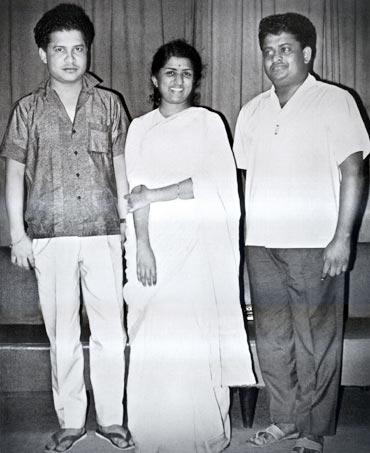
    Laxmikant, Lata Mangeshkar & Pyarelal
    Laxmikant-Pyarelal & Anand Bakshi

    ——————————————————————————————

    LAXMIKANT-PYARELAL…1966

    Association of J Omprakash Laxmikant-Pyarelal, starts.

    LP v/s Other prominent musical hits in 1966

    Khayyam:– –Aakhri Khat

    RD Burman:— Teesari Manzil, Pati Patni. 

    Roshan:—Dadima,–Mamata

    S D Burman:– Guide

    Shankar-Jaikishan:- — Suarj,–Love In Tokyo

    Madan Mohan:- –Mera Saya

    OP Nayyar:-– Yeh Raat Phir Na Aayegi

    Ravi:- —Dus Lakh, Do Badan 

    Hemant Kumar:- –Anupama

    Laxmikant-Pyarelal:- –Mere Lal,–Aaye Din Bahar Ke,–Pyar Kiye Ja,–Aasra,–Sau Saal Baad,–Laadla,–Dillagi,–Chhota Bhai..–Naag Mandir. (All have top music).

    By this year Laxmikant-Pyarelal started gaining the TOP position..all the songs of the films, released so far, are still popular.

    Shankar-Jaikishan won the best music award for “Suraj” beating, S D Burman’s “Guide” and Ravi’s “Do Badan”

    BINACA Geetmala Standing in Annual Countdown.. ( 32 songs ) 1966

    No 26 Din Jawani Ki Char Yaar ..Kishore..”Pyar Kiye Jaa”

    No 24 Gore Hathon Par Na Zulm ..Rafi..Pyar Kiye Jaa”

    No 20  Payal Ki Jhankar Raste Raste..Lata..”Mere Lal”

    No 14  Ye Aaj Kal Ke Ladake..Usha ,”Dillagi”

    ———————————————————————————————

    LAXMIKANT-PYARELAL…1967

    TSUNAMI of Laxmikant-Pyarelal Music. 

    Laxmikant-Pyarelal Right On TOP

    LP v/s Other Prominent Musical Hits of 1967

    Shankar-Jaikishan:- — Chhoti Si Mulaqat, –An Evening In Paris,– Around The World

    R D Burman:- — Baharon Ke Sapane

    S D Burman:– –Jewel Thief 

    Ravi:– — Hamraaz

    Kalyanji-Anandji:– –Upkar

    Roshan:- –Bahu Begam, Noor-Jahan

    Naushad:– –Ram Aur Shyam

    Laxmikant-Pyarelal:- –Milan, –Shagird, –Farz, –Patthar Ke Sanam, –Anita, –Night In London, –Jaal,– Taqdeer ( Have not considered the films like, Chhaila Babu, Milan Ki Raat, in which too, LP has given some beautiful songs)

    It was an LP “wave”. “Weekly Binaca Geet Mala” was 70% flooded with LP songs…It was a CLEAN SWEEP..

    I don’t think any of the music directors have given so many hits and quality songs in a particular year. .

     “FARZ” was the most successful golden jubilee hit movie which made Jeetendra a STAR.

    Truly speaking 1967 belongs to Laxmikant-Pyarelal, they not only confirmed the Number One position in Hindi Film Music, but also consolidated it with a series of hits by one after another with variety.

    After this victorious feat, Laxmikant-Pyarelal and success went together without a break or loss of continuity.

    Laxmikant-Pyarelal won their second filmfare award for “MILAN”, beating Kalyanji-Anandji for “Upkar” and Ravi for “Humraz”.  

    Now this was the time that Laxmikant-Pyarelal’s music became an essential component of every successful film. Big banners, prominent producers and directors wanted LP to score them for their respective films.

    BINACA Geetmala Standing in Annual Countdown.. ( 33 songs ) 

    Songs of Milan, under the music direction of Laxmikant Pyarelal, took the nation by storm in the year 1967, and Binaca geetmala 1967 was no exception. 

    No 33 Yeh Kali Jab Talk..Lata – Mahendra “Aaye Din Bahar Ke”

    No 24 Maa Mujhe Apane Aanchal ..Lata..”Chhota Bhai”

    No 23 Main Dekhu Jis Aur..Lata..”Anita”

    No 21 Mera Yaar Bada Sharmila ..Rafi..”Milan Ki Raat”

    No 17 Mubarak Ho Sabko..Mukesh..”Milan”

    No 13 Mere Dushman Tu ..Rafi..”Aaye Din Bahar Ke”

    No 07 Na Baba Na Baba..Lata..”Anita”

    No 06 Hum Tum Yug Yug..Lata-Mukesh..”Milan”

    No 01  Sawan Ka Mahina ..Lata- Mukesh..”Milan”

    MILAN :: Winners, Nutan, Jamuna, A Subbarao, Laxmikant, Anand Bakshi & Pyarelal
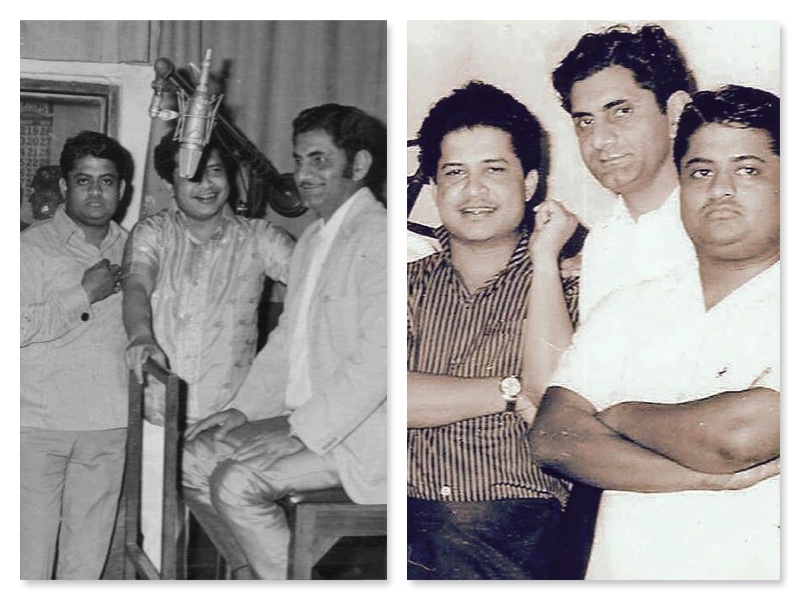
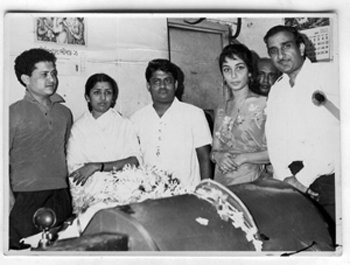
    “ANITA’ . Song Recording :: Laxmikant, Lata Mangeshkar, Pyarelal, actress Sadhna & Producer/Director Raj Khosla

    ————————————————————————————

    LAXMIKANT-PYARELAL ….1968

    LP v/s Other Prominent Musical Hits of 1968

    Shankar-Jaikishan:– –Bramhachari,–Jhuk Gaya Aasman, –Mere Huzoor, –Shikar

    Ravi:– –Neel Kamal,–Do Kaliyan, –Aankhe.

    Kalyanji-Anandji:– –Saraswatichandra

    OP Nayyar:– –Kahin Din Kahin Raat

    RD Burman:- –Padosan

    Usha Khanna:– Fareb

    Sapan Jagmohan:- Teri Talash Main

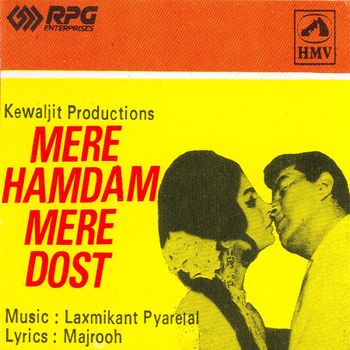
    Laxmikant-Pyarelal:- –Mere Humdam Mere Dost, –Izzat, –Raja Aur Rank, –Baharon Ki Manzil, Spy in Rome.

    It was a good musical competition between Shankar-Jaikishan  and Laxmikant-Pyarelal songs. LP’s songs have an edge because of the freshness of the music.

    Although Shankar-Jaikishan wins the filmfare award for “Bramhachari”..beating Ravi’s “Aankhen” and Shankar-Jaikishan’s “Deewana”. 

    BINACA Geetmala Standing in Annual Countdown.. ( 32 songs ) 

    No 32 Mast Baharon Ka Main ..Rafi.. ”Farz”

    No 24 Chalkaye Jaam..Rafi.”Mere Humdum Mere Dost”

    No 22 Bade Miyan Deewane..”Shagird”

    No 20 Mehaboob Mere..Lata-Mukesh..”Patthar Ke Sanam”

    No 16 Mera Naam Hai Chameli ..Lata..”Raja Aur Rank”No

    14 Chalo Sajna ..Lata..”Mere Humdum Mere Dost”

    No 11 Bata Du Kya Lana..Lata..”Patthar Ke Sanam”

    No 01 Dil Vil Pyar Vyar..Lata..”Shagird”

    ——————————————————————————————————–

    LAXMIKANT-PYARELAL…..1969

    Beginning Of Kishore Kumar’s ERA

    LP v/s Other Prominent Hits of the year 1969

    Chitragupt:- –Vaasana, –Aulad

    Shankar-Jaikishan:- –Kanyadan, –Prince

    Kalyanji-Anandji:– — Suhag Raat,– Haseena Maan Jayegi, –Vishwas, –Mahal

    R D Burman:- –Waris, –Abhilasha, –Pyar Ka Mousam.

    Madan Mohan:– –Chirag

    Naushad:– –Saathi, –Sangharsh.

    O P Nayyar:- –Kismat, –Humsaya, –Sambandh

    Ravi:– –Ek Phool Do Mali

    S D Burman:- Aradhana

    Roshan:– –Anokhi Raat


    Laxmikant-Pyarelal..gave the music for as many as 17 films in the year 1969..and 90% of the songs composed were hit, memorable, melodious and are still popular…Even the “Aradhana” wave could not do much of the effect to LP’s songs…

    Laxmikant-Pyarelal’s hits. — Aaya Sawan Jhum Ke, –Intequam, –Do Raaste, –Jeene Ki Raah, –Dharati Kahe Pukar Ke, –Satykam, –Sajan, –Pyasi Sham, –Jigari Dost, –Aansoo Ban Gaye Phool…

    Laxmi-Pyare’s ‘CLEAN SWEEP’ continued for the third successive year. 

    Laxmikant-Pyarelal’s songs and films kept hitting the charts with regularity for coming 20 years and they were the safest bets to the producers, directors and the distributors to finance their films. 

    Laxmikant-Pyarelal wins their third filmfare award trophy for the super hit music for “JEENE  KI  RAAH”, beating, S D Burman’s “Aradhana” and Shankar-Jaikishan’s “Chanda Aur Bijli”. 

    Kishore Kumar’s ERA has also now started. LP too gave a few good songs to KK this year. “Do Raaste”, (Khiza Ke Phool) “Aansoo Ban Gaye Phool”,(Jane Kaisa Hai Mera Deewana..with Asha),, “Satyakaam” (Zindagi Hai Kya,,with Mukesh, Mahendra Kapoor)….. good melodies of LP with KK.

    BINACA Geetmala Standing in Annual Countdown.. ( 32 songs ) 

    No 31 Woh Kaun Hai ..Lata-Mukesh…”Anjana”

    No 25 Mehabooba Mehabooba..Rafi..”Sadhu Aur Shaitan”

    No 23 Resham Ki Dori..Lata-Rafi ..”Sajan”

    No 22 Ruk Ja Jara …Lata..”Izzat”

    No 19 Aaya Sawan Jhoom Ke..Lata-Rafi..”Aaya Sawan Jhoom Ke”

    No 18 Badi Mastani Hai..Rafi..”Jeene Ki Raah”

    No 16 Dil Mein Kya Hai..Lata-Rafi..”Jigri Dost”

    No 12 Ek Tera Saath .Lata-Rafi..”Wapas”

    No 09 Je Hum Tum Chori Se..Lata-Mukesh..”Dharati Kahe Pukar Ke”

    No 06 Aa Mere Humjoli Aa..Lata-Rafi..”Jeene Ki Raah”

    No 01 Kaise Rahoon Chup ,..Lata..”Intequam”

    Laxmikant-Pyarelal arrived in Hindi film music in 1963, when most of the big names of the music directors were in top gears. Laxmikant-Pyarelal have no God Father to support. But the duo achieved  towering success, right from the day one, and became the most successful music directors of Bollywood Music.

    Ajay Poundarik, Atlanta (Georgia), USA. 10th September, 2020.

  • When Laxmikant-Pyarelal’s Powerful Music Became the real “STAR” of The Film:-

    When Laxmikant-Pyarelal’s Powerful Music Became the real “STAR” of The Film:-

    When Laxmikant-Pyarelal’s Powerful Music Became the real “STAR” of The Film:-

    There are many films in which the real  “STAR” was only Laxmikant-Pyarelal’s music.  The following selected, listed films have no Major Star Cast, even some of the films are B Grade and Low Budget but the entire success of the film was carried away by Laxmikant-Pyarelal’s  “MAGICAL MUSIC”.  

    Review of  such films and its “Powerful” music by Laxmikant-Pyarelal.

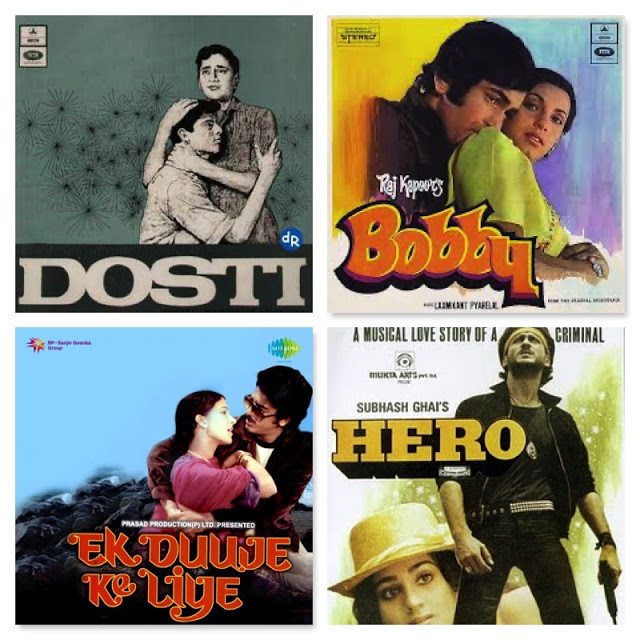
    PARASMANI  (1963):-   

    Rousing start by Laxmikant-Pyarelal. The film is a musical fantasy drama shot partly in Black and White and partly in colour. This was a movie that launched Laxmikant-Pyarelal.  Being the First Film of LP, they make sure that all the  songs are composed as per the standard of early Sixties.  The outcome was outstanding. Though the Film “Parasmani” was a mystical film, the film is still remembered only because of its immortal songs.   LP’s very first film Hit the Box Office despite being B grade, Black & White, Mystical Film and no major star cast to support.  But the main cause of the super success of the film was LP’s SUPER HIT music.  Who can forget ?

    –Hasta Hua Nurani Chehara…..                       Lata-Kamal Barot

    –Wo Jab Yaad Aaye Bahot Yaad Aaye             Lata-Rafi

    –Ooi Ma Ooi Ma Ye Kya Ho Gaya …               Lata

    –Chori Chori Jo Tumse Mili                              Lata-Mukesh

    –Mere Dil Main Halki See..                               Lata

    –Roshan Tumhi Se Duniya..                               Rafi

    The very first duet of Lata-Rafi with Laxmikant-Pyarelal. The song is based on Indian Classical Raag Yaman Kalyan. The song starts with beautiful AALAPS by Lata ji, followed by VIOLINS. Wonderful take off by Rafi Saab>> वो जब याद आये बहोत याद आये, with delicately played SITAR synchronizing TABLA rhythm. Both the  interludes are full of VIOLINS played in Symphony style. No rhythm in interlude. It has a melody of the 60s. The song is picturised on Mahipal and Anita Guha.

    DOSTI (1964):- 

    This film give name and fame to both Rajashree Films and Laxmikant-Pyarelal. It was Rajashree Films Second Film. Black & White movie. No media publicity. . No Star… No Major Star… No Hero ….No Heroin…, No Villain and …..No Big Name at all. Laxmikant-Pyarelal, the new name in Hindi Film Music. All the prominent music directors of that time refused to give the music to this film as there was no star cast (two teenage unknown actors) and also they feel there was nothing in the film to compose the songs for Blind and Physically disable  Children.  But LP took up the  challenge and the film became History.  It has won as many as 8 Filmfare Awards (including best music directors)  + President Award.  The film was a great success and the credit goes to Laxmikant-Pyarelal’s immortal music.   How to use “classical ragas”; make it little simpler to create Mass Appealing and Popular Songs is a best example of “Dosti” songs.  Mohammad Rafi was at its best.  Laxmikant-Pyarelal’s outstanding music.  

    LP composed majority of the songs in “Pahadi Raag”.This film give name and fame to both Rajashree Films and Laxmikant-Pyarelal. 

     –Chahunga Mian Tuze Sanz Sawere..                Rafi

    –Mera To Jo Bhi Kadam Hai..                           Rafi

    –Koyi Jab Raah Na Paye..                                 Rafi

    –Janewalo Jara Mudake Dekho Muze..             Rafi

    –Rahi Manawa Dukhati Chinta..                       Rafi

    –Gudiya Hamase Ruthi Rahogi..                       Lata

    –Gudiya Hamase Ruthi Rahogi..                       Lata

    Touching song with such message to all ……reminder for humanity & peace. Mind-Boggling take off by Rafi Saab, at end of ‘prelude’ (MOUTHORGAN), with ‘aalap’ synchronised with SYMPHONY VIOLINS.  MOUTHORGAN ( played by late R D Burman) is brilliantly orchestrated in all the first ‘interlude’ with VIOLINS. Second and third “interludes” brilliantly decorated with SYMPHONY style VIOLINS and GUITAR. It has a wonderful DHOLAK rhythm.

    FARZ (1967)

    “FARZ” made actor JEETENDRA a “STAR”. “FARZ” songs storm the nation. All the songs of FARZ are popular even today. Sometime it is hard to believe that Laxmikant-Pyarelal also had “Milan”, in the same year. The two movies music (‘Milan” & “Farz”) are so poles apart ! ‘FARZ’ have six songs and most of them have a melody and mass appealing. Not only that the westernized background music is also excellent. It was matching to any of the James Bond Movies.The film was smash hit. This was Laxmikant-Pyarelal’s first “Golden Jubilee” Hit film.  It was yet another non-star cast film from south.  This was the second film for Jeetendra and Babita, who were yet to established themselves in the hindi film stardom. This film has made Jeetendra a “STAR”.  The “Super Hit” music of this film was solely responsible for the success. 

    — Mast Baharonka Main Aashiq….                  Rafi

    — Hum To  Tere Aashiq Hai   ….                      Lata-Mukesh

    — Bar Bar Din Ye Aaye ….                                Rafi

    — Tumse Ho Haseena Kabhi                              Rafi-Suman Kalyanpur

    — Dekho Dekho Ji Socho Ji                                Lata

    Universally HIT as BIRTHDAY song. “Prelude” of 54 seconds set up the mood for this beautiful song. Wonderfully orchestrated with VIOLINS, ACOUSTIC GUITAR, PIANO and BONGO DRUMS in rhythm.Certainly orchestra arrangements have ‘SYMPHONY’ touch. 
    Lyrics overflowing with Love. A timeless masterpiece.

    BOBBY (1973).

    Yet another non-star cast film (Rishi Kapoor and Dimple Kapadia’s first film).  Not only star cast was new but also the male singers were new. Shailendra Sing and Narendra Chanchal was introduce to the film music by LP.  Chancal won the Filmfare Award.  Raj Kapoor was looking for a “Supper Hit Film” after the disaster of “Mera Naam Joker” …and he got it.  Yet again the success of the film was carried away by LP’s music. The music of the film created a History.   In this film not only main leading actor/actress were new but also two new male singers were introduced. 

    “BOBBY’ is an example of a ’SOUNDTRACK’ better than the “BOBBY” Film itself. Laxmikant-Pyarelal’s music really came to rescue Raj Kapoor and RK Films.

    Main Shayar To Nahin..                                 Shailendra Singh

    Chabi Kho Jaye          …                                Lata-Shailendra

    Muze Kuchh Kehana Hai..                             Lata-Shailendra

    Main Maike Chali Jaungi                               Lata-Shailendra

    Pyar Main Souda Nahin.                                Mannade-Shailendra

    Beshaq Mandi Masjid …                                Narendra Chanchal

    Tut Ke Dil Ke Tukade…                                 Lata

    Ai Fasa..                                                         Lata

    One of the best songs composed by Laxmikant-Pyarelal using Huge, Enriched and Melodious Orchestra arrangements.
    It has >>Three differently tuned “Antaras” + Three differently composed “Interludes”…MESMERISING ORCHESTRA arrangements. Toe Stepping RHYTHM :- Intermixing of IRANI SANTOOR (Played by Pandit Shivkumar Sharma) + ACCORDION (Played by Sumit Mitra) + BONGO Drums. Singing “Pauses”. There are many singing “Pauses” of 4 seconds, in the song. The First is at 0.27 seconds, immediately after singing..हम तुम s s s . Highlighting the wonderfully orchestrated ‘rhythm’.(हम तुम ढण ढण टण टण, ढण ढण टण टण, ढण ढण टण टण, एक कमरे मैं बंद हो ढण ढण टण टण, ढण ढण टण टण, ढण ढण टण टण First Interlude:- Beautiful display of ACCORDION, GUITAR and VIOLINS. Second Interlude:- VIOLA, IRANI SANTOOR Lata’s beautiful sound (आलाप) .. Third Interlude:- ACOUSTIC GUITAR, SAXOPHONE,, VIOLINS, MOUTHORGAN, FRENCH HORN and VIOLAS. Rhythmic “Pause”. at 6.32 for 2 seconds.
    Postlude:- ACCORDION + SAXOPHONE. An uncomplicated tune with simple words is mellifluously orchestrated with TOE STEPPING RHYTHM. Another specialty of this song is the “OVERLAPPING” sound effects of various instruments in all the ‘interludes’. I would rate this song is one of the finest compositions from the desk of Laxmikant-Pyarelal, in terms or orchestra arrangements.

    EK DUJE KE LIYE (1981)

    This was the first hindi film for Kamal Hasan and Rati Agnihotri.  Yet another non-star cast musical block blaster, smash hit film.  The films success again was carried away  by the  melodious music by LP.  S. P. Balasubramanium was introduced to hindi film music.  He won Filmfare as well as  the national award for this film. Who can forget the immortal melodies from this musical hit. 

    Tere Mere Beech Main..                                  Lata/SPB

    Hum Bane Tum Bane..                                    Lata-SPB

    Hum Tum Dono Jab ..                                     Lata-SPB

    Mere Jeevan Saathi                                         SKB-Chitra

    Sola Baras Ki Bali Umar..                              Lata-Anup Jalota

    Composed in Hindustani Classical Raag “SHIVRANJANI”. 16 seconds of ‘prelude’ orchestrated with glimpses of GUITAR, Symphony style CELLOs, and VIOLINS and awesome aalaps by Lataji. Excellent “DHOLAK” rhythm. SANTOOR, FLUTE, VIOLINS and SHEHANAI are melleflously decorated in the orchestra. 

    HERO (1983)

    Subhash Ghai had played the gamble by taking new hero and heroin (Jacky Shroff and Minakshee Sheshadri) for this film but at the same time firmly depend and believed on LP’s music.  Yet another non-star cast film, which got success only because of the hit music. LP’s music was part of the film and once again the music became the “Real STAR” of the film. Excepting Lata’s one song, fairly new and un-popular singers sang all the songs.  All the songs are still popular.

     — Pyar Karane Wale Kabhi                               Anuradha-Manahar

    Ding Dong O Baby Sing Song                        Anuradha-Manahar

    Tu Mera Janu Hai ..                                       Anuradha-Manahar

    Lambi Judai                                                    Reshma (From Pakistan)

    Nindiya Se Aayi Bahar                                    Lata

    The biggest hit song of the film, melodious romantic song. Mellifluous “Prelude” of 24 seconds with ‘intermixing’ the sounds of “DHOL” and “GHOONGHRU” with ACOUSTIC GUITAR, sets the mood of this song. “Interludes” are mesmerizing. Use of SANTOOR, VIOLINS and FLUTE and overlapping sound effect is just brilliant. Even the “postlude” is beautifully orchestrated with glimpses of MANDOLIN Excellent ‘DHOLAK’ rhythm. The song is very fresh, even today, with excellent orchestra arrangements and the fresh voices.

    HAPPY BIRTHDAY TO LIVING LEGEND PYARELAL (Laxmikant-Pyarelal).

    Ajay Poundarik, Atlanta (Georgia), USA.

  • BIRTHDAY Celebration Is “ON”. 3rd September. Birthday Wish To Living Legend PYARELAL (Laxmikant-Pyarelal).

    BIRTHDAY Celebration Is “ON”. 3rd September. Birthday Wish To Living Legend PYARELAL (Laxmikant-Pyarelal).

    BIRTHDAY Celebration Is “ON”.3rd September. Happy Birthday Living Legend PYARELAL (Laxmikant-Pyarelal).

    Yash Raj Film’s DAAG (1973)As a Director Yash Chopra has given many musical hits under the banner of B.R Films, owned by his brother B.R.Chopra. In 1973 Yash Chopra opted to come out of B R Chopra banner and form ”YASH RAJ FILMS”. Yash Chopra wanted to get the Top Stars and Top Names for his maiden film ”DAAG”, as a Producer and the Director. 

    To start with YASH RAJ Films first ever film, producer and director Yash Chopra wanted to utilize the ‘best’ artists available then.

    Rajesh Khanna was in supreme form in early seventies, he along with Sharmila Taigor, Rakhi were the stars of the film.

    LAXMIKANT-PYARELAL, in top gears, form 1967, got the honor of the first music director for ”YASH RAJ FILMS”. Yash choose his favorite lyricist Sahir Ludhiyanvi to penned the songs.

    An outstanding/evergreen/ever-fresh music of ”Daag” is still popular.Let us review the Most Popular song.

    लाजवाब, सुमधुर, कर्णप्रिय एवं बेहद रोमांटिक गाना। Mesmerizing Orchestra arrangements..IRANI SANTOOR (played by Pt Shivkumar Sharma) & GUITAR (played by Gorakh Sharma) are brilliantly executed in the entire orchestra of the song.

    The song starts with “zero” ‘Prelude”…First ‘Interlude’ starts with IRANI SANTOOR at 0.42…with brilliant overlapping sound effect and ends at 1,00. The second ‘Interlude’ starts at 1.46 and listen how mellifluously IRANI SANTOOR have been played till 1.58…The third ‘Interlude’ starts at 2.45 and how effectively GUITAR is played to give the perfection to the romance and great “pick up” through IRANI SANTOOR from 2.53 to 3.02..The song has beautiful DHOLAK as “rhythm” excepting in “Interludes”…SAHIR LUDHIYANVI’s elegiac lyrics and KISHORE KUMAR’s tender as well as romantic rendition and LAXMIKANT-PYARELAL’s wonderful composition with beautiful decoration of the orchestra has made this song as all time classics.

    You just have to look at the way Rajesh Khanna croons, “Mera pyaar keh raha hai main tujhe khuda bana doon” and you will want to watch the song. Nobody could act out a love song better than Rajesh Khanna.

    Also full credit to Kishore Kumar who was nominated by filmfare awards, the best male singer, for singing this romantic GEM. One of the finest song of Kishore Kumar under Laxmikant-Pyarelal who were also nominated by filmfare awards, for the best music directors, along with Raj Kapoor’s ‘Bobby”.

    If you compare all Yash Raj Films Musical score, DAAG remains top sellers and also the best.

  • BIRTHDAY Celebration Is “ON”. 3rd September. Happy Birthday PYARELAL (Laxmikant-Pyarelal)

    BIRTHDAY Celebration Is “ON”. 3rd September. Happy Birthday PYARELAL (Laxmikant-Pyarelal)

    BIRTHDAY Celebration Is “ON”. 3rd September.                                                                                       Happy Birthday PYARELAL (Laxmikant-Pyarelal)

    It’s now 57 years. I was an 8-year-old studying in the Indian city of virtuoso TANSEN, Gwalior. Radio Ceylon, All India Radio, and Vividh Bharati were playing ‘Main Nanhasa Chhota Sa Bachha Houn’  (from the movie ‘Harishchandra Taramati, 1963′) , ‘Jyot Se Jyot Jagate Chalo’, and   Ek Do Teen Chaar’ (from the movie ‘Sant Gyaneshwar‘, 1964). Both the films have the music by the newly arrived, young, talented musicians, Laxmikant-Pyarelal. 

    Growing up in the same era as that of child artists from these films, the songs, listed above, made a huge impact on my musical ears.  I distinctly remember one thing — a downpour of coins on the screen for ’Jyot Se Jyot Jagate Chalo’, which went on to become my very first all-time favorite without having an idea that it was Laxmikant-Pyarelal’s music. 

    From 1963 to 1998, without any discontinuity, constantly, my childhood days, my school days, my college days and few years of working (job) in India as well as abroad, have witnessed many memorable hit songs from Laxmikant-Pyarelal. 

    Simplicity, Commitment and the quality of Unconquered Versatility gave Laxmikant- Pyarelal a Supreme Staying Power of 35 years in Hindi Film Music.

    Laxmikant-Pyarelal’s tunes used to be very simple but at the same time they used to be extremely sweet, catchy and melodious.

    There are many interesting aspects of Laxmikant-Pyarelal music / songs. 

    1 The duo’s songs have Indian touch, raag based, with MELODY. 

    2 The songs with the simple tunes are decorated with canorous ORCHESTRA arrangements, mostly in western style. Laxmikant-Pyarelal would add a few ingredients in the orchestra that would help the song become hit. Most of the “Interludes” ( musical glimpses between “mukhda” and “antara”) are blended with western style, by giving the ‘symphony’ touch. LP were masters in synchronising various instruments to illuminate the orchestra in ‘preludes’, ‘interludes’ and ‘postludes’. Most interestingly there is no repetition.

    3  RHYTHM. Most of the tunes are Indian, Folkish but are decorated mellifluously with the mind-blowing RHYTHM using  DHOLAK.  In many songs the “Interludes” are blended with a different rhythm than that of the ‘mukhada’ of the song. 

    Laxmikant-Pyarelal music >>> “””of the common people, for the common people and inspired by the common people””””. It was a perfect music for any successful film to have.

    Laxmikant-Pyarelal :: The Most Successful Music Directors Of Bollywood Music. 1963 to 1998, 503 films, 2850 songs,  72 songwriters and 157 singers.

    LONG LIVE  LP MUSIC. 

    Ajay Poundarik Atlanta (Georgia) USA

  • Sweet-Sounding Mukesh – Lata  Duets Symphonised By Laxmikant-Pyarelal

    Sweet-Sounding Mukesh – Lata Duets Symphonised By Laxmikant-Pyarelal

    Sweet-Sounding Mukesh – Lata Duets  Symphonized By Laxmikant-Pyarelal 

    Singer Mukesh was introduced to Hindi Film Music by music director Anil Biswas, wayback in 1945 in the film ‘Nirdosh’. Mukesh was a favorite singer for the music directors like Anil Biswas, Salil Chaudhari, Roshan and Kalyanji-Anandji. Music directors Shankar-Jaikishan and Laxmikant-Pyarelal very oftenly used Mukesh. 

    Actually, it was not an easy task for any music directors to extract the “best” from singer Mukesh. That is why Mukeshji was a very special singer in his own way. It is very surprising to note that MUKESHji was not used by many BIG Music Directors..

    It is very surprising to note that MUKESHji was not used by many BIG Music Directors..

    C Ramchandra (4 songs)

    Madan Mohan (9 songs)

    O P Nayyar (4 songs)

    S D Burman ( 12 songs)

    R D Burman ( 15 songs) and 

    Naushad ( 27 songs)

    But very effectively used by following music directors 

    Shankar-Jaikishan ..136 songs (highest numbers) 

    Kalyanji-Anandji…107 songs..

    Laxmikant-Pyarelal….80 songs

    In the year 1967 Music Directors Laxmikant-Pyarelal brought back the glory of singer Mukesh through the super hit songs of “Milan” ( 5 Lata-Mukesh duets, including all the versions of Hum Tum Yug Yug Se + 2 wonderful solos). In addition,  songs from “Anita” (2 beautiful solos) “Farz” (1 Lata-Mukesh duet) and “Patthar Ke Sanam” (1 Lata-Mukesh duet). 

    In return Mukeshji strongly recommended Laxmikant-Pyarelal’s name to Raj Kapoor for the music of  “BOBBY”.

    Persuasive start made by Laxmikant-Pyarelal through the songs of “Parasmani” in 1963. The duo used Lata Mangeshkar, Mohammad Rafi, Mukesh and Kamal Barot. The film has as many as six songs with 3 duets, Lata-Rafi, Lata-Kamal Barot and Lata-Mukesh singing “Chori Jo Tumse Mile To Log Kya Kahenge”.   This duet became the first Mukesh-Lata duet for Laxmikant-Pyarelal. 

    Total 31 numbers of duets rendered by Lata-Mukesh from 1963 to 1977.  Have included the multi-singers songs, Mehngai Mar Gayee** from Manoj Kumar’s “Roti Kapda Aur Makan” and  Humko Tumse Ho Gaya Hai from Manmohan Desai’s  “Amar Akbar Anthony” involving both Lata-Mukesh. 

    Listing a few Lata-Mukesh songs excluding 2 to 3 versions of the songs from “Milan”, “Man Mandir’, “Shor” and “Roti Kapda aur Makan” etc. 

    Chori Jo Tumse Mile To Log                          PARASMANI, 1963.

    Tum Meri Meri Zindagi Ho.                             DILLAGI, 1966.

    Dhagina Tinak Dhin Tha Thaiyya,                  MERE LAL, 1966.

    Hum To Tere Aashiq Hain Sadiyon Purane   FARZ, 1967. 

    Kyon Zuki Zuki Hai Palake,                           CHHAILA BABU, 1967.

    Wo Kaun Hai Wo Kaun Ha                            ANJANA, 1967.

    Sawan Ka Mahina Pawan Kare Shor            MILAN, 1967.

    Hum Tum Yug Yug Se Yeh                            MILAN, 1967.

    Bol Gori Bol Tera Kon Piya                            MILAN, 1967.

    Mehaboob Mere Mehbob Mere                      PATTHAR KE SANAM, 1967.

    Je Hum Tum Chori Se Bandhe Ek              DHARATI KAHE PUKAR KE, 1969.

    Dil Main Aji Dil Mein Koi Rehta Hai                MERI BHABHI, 1969.

    Ai Meri Aankhon Ke Pehale Sapane              MAN MANDIR, 1971

    Rubi O Rubi Jan-E-Mehboob                         CHAHAT, 1971.

    Baat Hai Ek                                      JAL BIN MACHHALI NRUTYA BIN BIJALI, 1971.

    Zum Ke Gaye                                   JAL BIN MACHHALI NRUTYA BIN BIJALI, 1971.

    Dheere Dheere Bol Koi Sun Na L                  GORA AUR KALA, 1972.

    Ho Tere Naina                                                EK BECHARA, 1972.

    Ek Pyar Ka Nagma Hai.                          SHOR, 1972.

    Paani Re Paani Tera Rang Kaisa.                 SHOR, 1972.

    Maina Bhulunga                                    ROTI KAPADA AUR MAKAN, 1974.

    Mehngai Mar Gayee**                           ROTI KAPADA AUR MAKAN, 1974.

    Phool Aahista Phenko                         PREM KAHANI, 1975.

    Mujhe Dard Rehta Hai                                   DUS NUMBRI, 1976

    Humko Tumse Ho Gaya Hai ***                   AMAR AKBAR ANTHONY, 1977

    BINACA  GEETMALA :- 

    About 80% of Lata-Mukesh songs listed above appeared in the weekly Binaca Geetmala countdown program. 9 songs appeared in ‘finals’ with two of the songs getting top position in 1967 Sawan Ka Mahina from “Milan” and in 1975 Mehangai Maar Gayi. from “Roti Kapda Aur Makaan”. Ek Pyar Ka Nagma Hai,  from “Shor” 1972, has become an iconic song.

    1967   No 06  Hum Tum Yug Yug..Lata-Mukesh..”Milan”  

    1967   No 01 Sawan Ka Mahina ..Lata- Mukesh..”Milan”   

    1968   No 20 Mehaboob Mere..Lata-Mukesh..”Patthar Ke Sanam” 

    1969   No 09 Je Hum Tum Chori Se..Lata-Mukesh..”Dharati Kahe Pukar Ke”

    1970   No 14 Woh Kaun Hai ..Lata-Mukesh…”Anjana”

    1972   No 29 Ek Pyar Ka Nagma Hai ,,Lata-Mukesh .”Shor”

    1973   No 16 Dheere Dheere Bol Koi ..Lata-Mukesh..”Gora Aur Kala”  

    1975   No 01 Mehangai Mar Gayi..Lata-Mukesh-Chanchal-Janibabu..”R K Ar Makan

    1976   No 24 Muze Dard Rehata Hai..Lata-Mukesh..”Dus Numbari”

    The orchestra arrangements in “preludes” and “interludes” used to be the assets of the songs composed by Laxmikant-Pyarelal. It would be more proper to listen to the songs  after reading the write up, explaining peculiarities, for each of the songs,  you will enjoy it more.

    Chori Chori Jo Tumse Mile To Log           PARASMANI, 1963. (Songwriter  Farooq Qaisar)     

    The 26 seconds of ‘prelude’ is orchestrated with the use of SHEHNAI with BONGA Drum rhythm intermixed with GHUNGROO BELLS and VIOLINES. Imposing take off by Lata Ji, चोरी चोरी जो तुमसे मिली तो लोग क्या कहेंगे।  The ‘intro’ is sweetly surrounded by VIOLINS as well as the glimpses of ACCORDION. Now the “mukhda” or “intro” have DHOLAK rhythm intermixed with GHUNGROO BELLS. First ‘interlude’ starts with MANDOLIN surrounded with VIOLINS. Again the ‘rhythm’ pattern changes with BONGO Drum. “Antara” has a DHOLAK rhythm. Second “interlude” is beautifully instrumented with ACCORDION, MANDOLIN as well as VIOLINS with change of rhythm pattern. The song is filmed on Mahipal and Geetanjali. “Postlude” is mellifluously displayed by SHEHNAI. 

    Tum Meri Meri Zindagi Ho.                 DILLAGI, 1966. (Songwriter Majrooh Sultanpuri)

    Once again a duet with melody. Composed in 60s style of song. Beautiful take off by Mukesh jj हम जी लेंगे बिन तुम्हारे। The unique rhythm of DHOLAK starts. Enjoy the ‘singing pauses’ as well as ‘rhythmic pauses’ given at various points. The first interlude have CELLOS, VIOLINS and the second ‘interlude’ has SARANGI with VIOLINS. The ‘rhythm’ pattern for ‘interludes’ changes (no  DHOLAK). It is filmed on Mala Sinha Sanjay Khan

    Kyon Zuki Zuki Hai Palake,                  CHHAILA BABU, 1967. (Songwriter Hasrat Jaipuri))

    The song is filmed on Salim Khan (today’s star actor Salman Khan’s father) and Zeb Rehman. This song is very melodious, tenderly rendered by Lata-Mukesh. This delicately composed song has an accordant DHOLAK rhythm. Interludes have BANJO as well as VIOLINS. 

    Mehaboob Mere Mehbob Mere             PATTHAR KE SANAM, 1967. (Songwriter Majrooh Sultanpuri)

    When #Pyarelal ji told Pandit Shivkumar Sharma to play #SANTOOR with his “nails” for this melodious song.

    LAXMIKANT-PYARELAL have extensively used the mellifluous instrument from “Kashmir” named SANTOOR…. Santoor used to be prominently played instrument in most of the songs by Laxmikant-Pyarelal right from 1965. There are many TOP HIT songs which are decorated with Santoor in Laxmikant-Pyarelal’s orchestra arrangements. Till 1974, in most of the songs the SANTOOR is played by none other than Pandit Shivkumar Sharma.

    Pandit Shivkumar Sharma has full respect for the duo of Laxmikant-Pyarelal. Both Shivji and Pyarelalji have done various experiments while orchestrating the SANTOOR in the song. This particular song from “Patthar Ke Sanam” (1967) is awesomely orchestrated, “prelude’ of 16 seconds and all the “interludes”, with SANTOOR (played by Pandit Shivkumar Sharma) and the FLUTE (played by Pandit Hariprasad Chaurasiya). To create a different sound of Santoor, in the song,  Pyarelalji told Shivji  to use his ‘nails’ instead of the ‘wooden sticks’. Even the ‘strokes’ of the Santoor in the song, at various places,  are played through the nails. See how beautifully this immortal song has been created.

    This song is Laxmikant-Pyarelal’s  symphonic orchestra arrangements with an astonishing DHOLAK rhythm. Filmed on Manoj Kumar – Waheeda Rehman. 

    Hum To Tere Aashiq Hain Sadiyon Purane   FARZ, 1967 (Songwriter Anand Bakshi)

    Evergreen and Ever-Fresh Popular. Melodious and Sweetly Composed Romantic Duet. “DHOLAK” rhythm” (theka) in the song has made an addict one.”Prelude” (34 seconds) has a wonderful display of VIOLINS, NADASWARAM. All the “interludes” are spectacularly orchestrated with overlapping sound effects of VIOLINS, ACCORDION, GUITAR and FLUTE. The song is filmed on Jeetendra – Babita. 

    Sawan Ka Mahina Pawan Kare Shor            MILAN, 1967. (Songwriter Anand Bakshi)

    Milan”, starring Sunil Dutt – Nutan, was a musical blockbuster movie of the year 1967. The song “ सावन का महीना पवन करे सोर “ stormed the nation.  An inordinately popular song, till date. Exceptionally melodious duet. Beautiful DHOLAK rhythm. All the ‘interludes’ are orchestrated in ‘western’ style with no ‘rhythm’. First ‘interlude’ have MANDOLIN, FLUTE, symphony VIOLINES overlapping the FLUTE.  Second ‘interlude’ again symphony style VIOLINS, RUBAB with overlapping sound effects of FLUTE. In the third ‘interlude’ again VIOLINS in symphony style. The song topped the 1967 Binaca Geetmala Finals.  The song is filmed on beautiful location, in Tamil Nadu.

    Dil Main Aji Dil Mein Koi Rehta Hai                MERI BHABHI, 1969. (Songwriter  Majrooh Sultanpuri)

    Once again an immensely melodious duet, orchestrated with Indian classical instruments.  34 seconds of ‘prelude’ starts with SITAR, SANTOOR. Later at 0.21 to 0.25 excellent synchronization of FLUTE and SANTOOR. The ‘prelude’ ends with the simultaneous ‘strokes’ of SANTOOR and VIOLINS.The ‘intro’ have take off from Mukeshji दिल में अजी दिल में  aligned with DHOLAK rhythm which has the ‘strokes’ of  SANTOOR at various places. First ‘interlude’ starts with overlapping sounds of SANTOOR and FLUTE followed by VIOLINS and again ‘strokes’ of SANTOOR.  Second ‘interlude’ starts with an ear-pleasing display of SITAR (played by Ustad Rais Khan) and lastly VIOLINS. There is a ‘rhythmic’ ‘pause’ at the end of each ‘stanza’/’antara’. Filmed on Sunil Dutt – Waheeda Rehman.

    Je Hum Tum Chori Se Bandhe Ek                 DHARATI KAHE PUKAR KE, 1969.(Songwriter  Majrooh Sultanpuri)

    This is a very famous song. An extremely melodious duet composed  in the “folkish” style of DHOLAK rhythm. Sounds of SHEHNAI and NADASWARAM are  brilliantly intermixed with FLUTE and GHUNGROO BELLS, in all the “interludes” to get the typical Indian Village feeling. It is filmed on handsome Jeetendra and beautiful Nanda. 

    Ai Meri Aankhon Ke Pehale Sapane              MAN MANDIR, 1971 (Songwriter  Rajendra Krishnan)

    It’s one of the finest lullaby (लोरी). Extraordinarily melodic, sad,  dulcet duet filmed on Waheeda Rehman – Sanjeev Kumar. ‘Prelude’ is full of SITAR and VIOLINS. First ‘interlude’ is orchestrated with SANTOOR, VIOLINS and FLUTE. Second ‘interlude’ with VIOLINS with the beautiful overlapping sound of SANTOOR. This song has 3 versions, considering the first for review,  

    Baat Hai Ek Boond  Si               JAL BIN MACHHALI NRUTYA BIN BIJALI, 1971          (Songwriter  Majrooh Sultanpuri)

    बात है एक बूंद सी दिल के प्याले में… आते-आते होंठों तक तूफ़ान ना बन जाए.

    For the first time in Hindi Film Music, all the songs of this V Shantaram Classic, recorded in stereophonic sound effect. Yet another variety of song a simple but melodious tune. The beauty of the song is it’s “Interlude”. It is full of VICHITRA VEENA and GUITAR. Lataji’s take-off बात है एक बूंद सी दिल के प्याले में…with the “stroke” of VEENA is ear-pleasing.  First and third ‘interludes’ are orchestrated with the solo display of VICHITRA VEENA. Second ‘interlude’ is awesomely instrumented with GUITAR. The glimpses of GUITAR can also be heard in the surround sounds. Filmed on Abhijeet – Sandhya

    Ek Pyar Ka Nagma Hai.                   SHOR ,1972. (Songwriter  Santosh Anand)

    This song has three versions, The first version is analyzed. Captivating ‘prelude’ of 46 seconds starts  with solo VIOLINS, Lataji’s ear-pleasing HUMMING.  The “beauty” of the ‘prelude’ is ..Lataji’s HUMMING sound is mind-blowingly synchronised with solo VIOLIN, for 6 seconds (0.17 to 0.23). Again solo VIOLIN and ends with the “stroke” of SANTOOR. Awesome take off by Lata ji एक प्यार का नगमा है। the BONGO Drum ‘rhythm’ starts. Lata ji’s rendering is surrounded by symphony style VIOLINES, throughout the song. 

    First interlude starts with solo VIOLIN followed by hypnotising AALAPS by Lataji. At the end of the first ‘interlude’, Lataji’s AALAPS are overlapped with symphony VIOLINS. Mukeshji enters at the end of stanza (अंतरा )

    Second ‘interlude’ starts with SANTOOR; it ends with beautifully orchestrated VIOLINS in symphony style. 

    Third interlude starts with solo VIOLIN, later symphony VIOLINS overtaking it. Wonderful synchronization of CHORUS and VIOLINS.  

     The solo VIOLIN in this song is played by Mr. Jerry Fernandes, a famous Violinist  

    Paani Re Paani Tera Rang Kaisa.                 SHOR, 1972. (Songwriter   Indrajeet Singh Tulsi )

    Another GEM of Mukesh-Lata duet, one of the best rainy songs.  59 seconds of ‘prelude’ wonderfully orchestrated with GUITAR, SANTOOR, SITAR and VIOLINS supported by CHORUS HUMMING. Awe-Inspiring DHOLAK rhythm intermixed with water sound. First ‘interlude’ starts with ACOUSTIC GUITAR, SHEHNAI / NADASWARAM and VIOLINS. Second ‘interlude’ is full of AALAPS and HUMMING sound of CHORUS. Third ‘interlude’ have VIOLINS, SITAR (played by Ustad Rais Khan),GLOCKENSPIEL or ‘GLOCKS’ and CHORUS. The entire song is shot in rain. Filmed on Manoj Kumar – Jaya Bhaduri.  

    Main Na Bhoolunga         ROTI KAPDA AUR MAKAAN    1974.                                                              (Songwriter  Santosh Anand)

    This song has two versions, the first version is considered. Splendid composition, from Laxmikant-Pyarelal. Orchestrated melodiously. Wonderful DHOLAK rhythm. Rhythmic ‘PAUSEs’. Awesome take off by Mukesh-Lata मै ना भूलूंगा ssss मै ना भूलूंगी ssss, rhythmic pause, highlighting DHOLAK rhythm, mesmerizes the listeners. CHORUS sound is distinctively used in the song. First ‘interlude’ is harmonised by the synchronisation of SITIAR, VIOLINS, CELLOS, FLUTE and Lata ji AALAPS. Second ‘interlude’ has a mind-boggling display of SAXOPHONE and VIOLINS.Third interlude with FLUTE, VIOLINS and Lataji AALAP. Glimpses of VIOLINS are excellently used as a ‘filler’ in mukhada as well as in antara. Another beauty of the song is the third antra’s overlapping sound effect of Mukesh – Lata voices in synchronization with symphony style VIOLINS. Manoj Kumar – Zeenat Aman.  

    Ajay Poundarik, Atlanta (Georgia), USA                                                                                                                                                                                                                                                                                                                                                                                     26th August, 2020.                                                                                                                                                 

  • Laxmikant-Pyarelal  & Tuneful Use Of Harmonium

    Laxmikant-Pyarelal & Tuneful Use Of Harmonium

    Laxmikant-Pyarelal  & Tuneful Use Of Harmonium

    The use of HARMONIUM in Hindi Film Music is comprehensive right from the Music Directors composing the songs. Music Directors first, demonstrate the song to the singers with use of HARMONIUM. Many actors/actresses are seen playing HARMONIUM in the film. 

    Many music directors have composed some beautiful melodies orchestrating the HARMONIUM.  Listing out a few ‘gems’ of the songs composed by various music directors. 

    Anil Biswas

    Shukriya Aye Pyar Tera  Talat Mehmood   “Aaram” 1951

    Naushad 

    Husn Walon Ko Na Dil Do   Talat Mehmood   “Babul” 1959

    O P Nayyar

    Leke Pehla Pehla Pyar    Rafi – Shamshad  “CID”  1956

    Bahut Shukriya Badi Meharbani    Rafi – Asha  “Ek Musafir Ek Haseena” 1962

    Kajra Mohabbat Wala   Asha – Shamshad  “Kismat”  1968

    Shankar-Jaikishan

    Jane Kahan Gayi   M. Rafi  “Dil Apna Aur Preet Parai”  1960

    Chalat Musafir Moh Liya     Manna Dey   “Teesari Kasam” 1966

    Roshan

    Na To Carvaan Ki Talash  Manna Dey-Asha-Rafi   “Barsat Ki Raat 1960

    Bar Bar Tohe Kya          Lata  “Aarti”  1962

    Nigahe Milane Ko Jee   Asha  “Dil Hi To Hai”  1963

    Hemant Kumar

    Sakiya Aaj Mohe Nind    Asha    “Sahib Bibi Aur Ghulam”  1962

    Kalyanji-Anandji

    Deewane Hai Deewanon Ko  Rafi-Lata   “Zanjeer”   1973

    R D Burman

    Chunari Sambhal Gori   Lata-Manna Dey  “Baharon Ke Sapne” 1967

    Ek Chatur Naar Kar Ke  Kishore-Manna Dey-Mehmood.  “Padosan” 1968

    Jeena To Hai Usika      Rafi  “Adhikar”  1971

    Hai Agar Dushman   Rafi-Asha “Hum Kise Se Kam Nahin”  1977

    Sonik-Omi

    Raz Ki Baat Keh Doo    Asha – Rafi “Dharma” 1973

    Madan Mohan

    Ye Mana Meri Jaan     Rafi   “Haste Jakham”  1973

    Laxmikant-Pyarelal have also composed many songs with the prominent use of HARMONIUM. The song composed by the duo “payal ki jhankar raste raste” from the film “Mere Lal”, 1966, still considered to be the best song on HARMONIUM. 

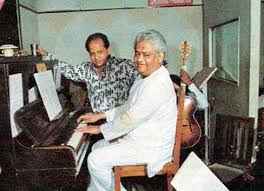
    Sonik Verma (On Harmonium) with Pyarelalji (on Piano)

    Also included a very famous Marathi Song ::Bai Mee Vikat Ghetala Sham :: The song is composed and rendered by Sudhir Phadke with Asha Bhosle, for the film “Jagachya Pathivar” 1960. It is written by G D Madgulkar. 

    In most of the songs the HARMONIUM is played by Shyamrao Kamble and Sonik Verma, blind musician, of the music director pair of Sonik-Omi

    Payal KI Jhankar Raste Raste   “MERE LAL” 1966 Lata Mangeshkar / Majrooh Sultanpuri.

    TILL DATE, The Best Song Composed On HARMONIUM. Super Hit Song of the year 1966. A Sheer Magic of DHOLAK and HARMONIUM. Mesmerizing “Prelude” of 42 seconds, full of HARMONIUM, BANJO (overlapped with Harmonium), FLUTE and DHOLAK, sets the mood to listen to this gem of composition. Entire song is woven around glimpses of HARMONIUM (played by Sonik Verma, a Blind Musician, of Sonik-Omi music director pair). All the “Interludes” have different tunes. The Best Song In Terms Of Use Of HARMONIUM. It was the TOP hit song and rocked in Binaca Geetmala Weekly Countdown, also appearing in the finals. Actress INDRANI MUKHARJEE with Dev Kumar has beautifully danced making the song memorable and immortal, as well. In the picture above Sonik Verma can be seen sitting on Harmonium and Pyarelalji on Piano. 

    Duniya Ne Sunli Hai     “SHARAFAT”  1970    Lata Mangeshkar / Anand Bakshi

    An extremely melodious ‘mujra’, filmed on Hema Malini. The song is awesomely woven around the glimpses of HARMONIUM, as a filler, in surround sound and also in ‘interludes’. Interludes are orchestrated with HARMONIUM, VIOLINS, SAROD, SITAR and FLUTE. The rhythm of DHOLAK / TABLA is synchronised with GHUNGROO BELLS.  

    Sanam Tu Bewafa Ke Naam Se    “KHILONA”  1970  Lata Mangeshkar / Anand Bakshi

    Mellifluously orchestrated with prominent use of HARMONIUM, in ‘interludes’ as well as the ‘filler’, at the end of the “antara”.  One of the finest Mujra songs of Hindi Cinema. Wonderful ‘prelude’ of 32 seconds, full of DHOLAK rhythm synchronised with VIOLINS and SITAR. Spectacular take off by Lata ji, at the same time 20 seconds ‘pause’ in the orchestra gives additional flavor to this resonant composition. The rhythm of the song is from DHOLAK / TABLA,  intermixed with the CLAPPING and GHUNGROO BELLS.  All the ‘interlude’ are excellently orchestrated with traditional musical instruments NADASWARAM, SAROD, SARANGI, MANDOLIN, SITAR, VIOLINS and HARMONIUM. Filmed on Mumtaz.

    Hamin Kare Koi Surat      “EK NAZAR” 1972.   Lata / Majrooh 

    A typical MUJRA song, Orchestrated with SARANGI, SANTOOR, FLUTE, SAROD, VIOLINS and beautiful display of HARMONIUM. Filmed Jaya Bachchan – Amitabh Bachchan. 

    Roothe Rab Ko Manana     “MAJBOOR” 1974   Asha-Rafi / Anand Bakshi

    Street song nicely composed on Harmonium. It has a similar situation like ‘Zanjeer’ son. . Filmed Amitabh Bachchan – Parveen Babi

    Yashomati Maiya Se    “SATYAM SHIVAM SUNDARAM”  1977                                                   Lata Mangeshkar-Manna Dey / Pandit Narendra Sharma

    Fascinating 34 seconds ‘prelude’ awesomely instrumented with TANPURA, FLUTE and HARMONIUM. It has captivative DHOLAK rhythm which will ‘swing’ your neck. FLUTE is sumptuously used in the ‘interlude’ which gives you an ear-pleasing effect. Filmed on child artist, then, Padmini Kolhapure and Kanhaiyalal. 

    Aadmi Musafir Hai       “APNAPAN “ 1977  Rafi-Lata / Anand Bakshi

    Doctrine worded, each and every line. Anand Bakshi writes क्या साथ लाये क्या छोड़ लाये ! रस्ते मैं हम क्या छोड़ लाये ! मंज़िल पे जाके याद आते है !   Laxmikant-Pyarelal’s composition is simply superb. 32 seconds of ‘prelude’ is composed by GHUNGROO BELLS, VIOLINS and HARMONIUM.The ‘rhythm’ has DHOLAK synchronized with GHUNGROO BELLS. Interludes are instrumented with SANTOOR, FLUTE, CLERANATE, VIOLINS and HARMONIUM. 

    Tere Haathon Mein Pehna Ke   “JAANI  DUSHMAN”  1979  Asha-Rafi / Verma Malik

    Mesmerizing composition. “Prelude” of 40 seconds. SHEHNAI and NADASWARAM are awesomely intermixed followed by VIOLINS in SYMPHONY style then “folkish” DHOLAK rhythm and then glimpses of HARMONIUM. All the “interludes” are also orchestrated with the above musical instruments in addition it has a “CLAPPING” in the “rhythm”. Filmed on Jeetendra – Neetu Singh.

    Jane Hum Sadak Ke Logon Se         “ASHA”  1980  M. Rafi / Anand Bakshi. 

    HARMONIUM is wonderfully synchronised with the ‘rhythm’ of MATKI and DHOLAK. The song is filmed on Jeetendra – Reena Roy.

    Chana Jor Garam Laya     “Kranti”    Rafi-Kishore-Lata-N. Mukesh / Santosh Anand.

    Beautiful display of HARMONIUM in ‘prelude’, तुम तुम तररारा तुम तुम तरम how beautifully rendered by Lata – Kishore, synchronising with TANPURA. The HARMONIUM is also used as ‘filler’ in ‘mukhada’. First ‘interlude’ is full of HARMONIUM. The song is filmed on Hema Maliini Shatrughn Sinha, Manoj Kumar

    Mere Dil Se Dillagi Na Kar       “WOH SAAT DIN”  1983  Sahabbir – Anuradha 

    Beautiful Display of HARMONIUM in ‘prelude’ the song has an awesome DHOLAK rhythm intermixed with HARMONIUM. It is filmed Anil Kapoor-Padmini Kolhapure.

    Mujhe Aaj Kuch Na Kehna        “AKAYLA”  1991 Sudesh – Alka Yagnik / Anand Bakshi. 

    Once again a beautiful display of HARMONIUM in ‘prelude’. Sudesh Bhosle sounds fresh. Filmed on Amrita Singh – Amitabh Bachchan

    Tu Naja Mere Badshah       “KHUDA  GAWAH”   1992  Alka Yagnik-Mohammad Aziz/ Anand Bakshi

    Spectacularly rendered by M. Aziz and Alka Yagnik. Wonderful use of HARMONIUM with RUBAB (An instrument from Afghanistan). ‘Prelude’ of 55 seconds mesmerizes the listeners. CLAPPING, RUBAB and HARMONIUM orchestrated awesomely with unusual DHOLAK and THALI rhythm, Alkaji’s sweet AALAPS. HARMONIUM is remarkably utilized as a feeler in mukhada as well as in Antara. First ‘interlude’ instrumented with RUBAB, FLUTE and HARMONIUM. Second ‘interlude’/’postlude’>  solo VIOLIN, CLAPPING and RUBAB. Filmed on Amitabh Bachchan and Sridevi. 

    Bai Me Vikat Ghetla Sham.  “JAGACHYA  PATHIVAR’  1960 Sudhir Phadake – Asha Bhosle. 

    Ajay Poundarik , Atlanta (Georgia), USA.

  • Kishore Kumar – Asha Bhosle / Laxmikant-Pyarelal Overlooked Quadruple

    Kishore Kumar – Asha Bhosle / Laxmikant-Pyarelal Overlooked Quadruple

    :: Kishore Kumar – Asha Bhosle / Laxmikant-Pyarelal :: 

    Overlooked Quadruple 

    It was a surprise when I saw the list of the songs rendered by Kishore Kumar and Asha Bhosle under music directors, Laxmikant-Pyarelal. The song list contains 94 songs. 

    One should also not forget that Asha Bhosle herself has rendered 494 songs under the music directors Laxmikant-Pyarelal. 

    Not to forget Kishore Kumar and Laxmikant-Pyarelal 402 songs

    It is very unfortunate for the music lovers that the Quadruple of Kishore Kumar – Asha Bhosle and Laxmikant-Pyarelal is being overlooked. Few of the hit songs of this quadruple are being reviewed. The song from Karz ‘ek haseena thi’ remains top favourite, as on today. Very strange, it did not appear in the Binaca Geetmala Finals of 1980.

    There are many films which contain two / three songs of Kishore Kumar – Asha Bhosle. 

    1977  Chhaila Babu      Three Songs

    1977  Dildaar        Four Songs

    1979  Lok Parlok  Three Songs

    1980  Bandish    Three Songs

    1980  Judai         Two Songs.

    1980  Nishana     Three Songs

    1980  Ram Balram  Two Songs

    1981  Waqt Ki Deewar  Two Songs

    1981  Samrat   Two Songs

    1983 Bequrar   Two Songs

    1983 Prem Tapasya  Two Songs

    1985 Baye Haath Ka Khel  Three Songs

    1986 Swarg Se Sundar  Three Songs.

    Not sure, these 94 numbers of the songs, are likely to be the highest numbers of Kishore Kumar – Asha Bhosle duets under any music directors. 

    Binaca Geetmala :- 

    Many of the songs from this Quadruple appeared in Weekly Countdown. Few could get the entry in the finals, an annual program.

    1975  No 21 Jijaji Jijaji “Ponga Pandit”

    1977  No 18 Yaar Dildar Tuze  “Chhaila Babu”

    1977  No 17  Teri Meri Shadi  “Dildar”

    1981  No 07  Mar Gayi Muze Teri Judai    “Judai”

    1982  No 25  Sara Din Satate Ho  “Raste Pyar Ke” 

    1982  No 09  Pyar Ka Vada “Fifty Fifty”

    Kya Teri Jhulphe Hai    “Hum Sab Ustad Hain”  1965

    (Songwriter  Asad Bhopali)

    Sweet, Melodious Duet. The very first song of Kishore Kumar – Asha Bhosle with Laxmikant-Pyarelal. ‘Prelude’ of 15 seconds starts with ACOUSTIC GUITAR, followed by a few lines by Kishore Kumar with awesome take off क्या तेरी झुल्फे है ! ‘stroke’ of ACOUSTIC GUITAR. The song has BONGO DRUM rhythm. First and second interludes are full of CELLOS, GUITAR and VIOLINS. Second interlude decorated with the glimpses of MENDOLIN,  AALAPS by Asha Bhosle, GUITAR and VIOLINS. Filmed on Kishore Kumar and Ameeta. Kishore Kumar has 3 solo songs + 1 duet, a must Album for KK / LP fans. 

    Jane Kaisa Hai Mera Deewana  “Aansoo Ban Gaye Phool”  1969

    (Songwrite Govind Moonis)  

    A Breezing Melodious Duet. This is an incredible, addict and sweet-sounding song. A canorous composition from Laxmikant-Pyarelal. The song has an assonant DHOLAK rhythm. In ‘mukhada’ it has a ‘rhythmic’ “pause”, followed by the awesomely sounded ‘stroke’ of DHOLAK, repeated many times. Filmed on Deb Mukharjee – Alka

    First interlude is brilliantly orchestrated with SAXOPHONE and VIOLINS synchronizing at the end. Second interlude starts with the ‘aalaps’ and ‘humming’ from Asha Bhosle and Kishore Kumar, followed by SHEHNAI/ NADASWARAM overlapping VIOLINS. The third interlude has VIOLINS, GUITAR, FLUTE. VIOLINS, GUITAR and glimpses of MANDOLIN are beautifully used as a ‘filler’ at the end of each Mukhada.

    Aa Aa Aaja Abhi Nahin     “Man Mandir”  1971

    (Songwriter Rajendra Krishnan)

    Naughty song,with melody,  filmed on Mehmood – Aruna Irani. Unique BONGO DRUM rhythm which is continuous throughout the song.  Interludes are orchestrated with symphony VIOLINS and GUITAR.

    Itne Din Tum Kahan Rahe    “Har Jeet”  1972

    (Songwriter  Anand Bakshi)

    Romantic duet with melody. Sweet song, filmed on Anil Dhavan – Radha Saluja.. ‘Prelude’ of 20 seconds. Awesome takeoff by Kishore Kumar दिल बैचेन रहा तुम बिन. Simple BONGO DRUM rhythm. BANJO, VIOLINS, FLUTE, ACCORDION, ACOUSTIC GUITAR.  are nicely executed in the ‘interludes’. 

    Teri Meri Teri Nazar Lad Gayi     “Subah – O – Shaam” 1972

    (Songwriter  Anand Bakshi)

    “Subah-O-Shaam” was made jointly with the IRAN Govt. This is yet another hidden gem of KK-Asha with Laxmikant-Pyarelal. Starts with SAXOPHONE, VIOLINS and ‘string’ instruments, GUITAR. Typical LP style DHOLAK rhythm. VIOLINS, SAXOPHONE and GUITAR instrumented well in the interludes. 

    Jaipur Ki Choli Mangwa De Re     “Gehri Chaal”   1973 

    (Songwriter Rajendra Krishnan)

    One of the most popular duet of KK-Asha,based on Traditional Rajasthani Folk,  filmed on Jeetendra – Hema Malini. 44 seconds of ‘prelude’ starts with solo display, slow speed, of folkish DHOLAK rhythm, intermixed with the WHISTLE sound. The speed of the DHOLAK increases with VIOLINS start. Beautiful take off by Asha ji जयपुर की चोली मंगवा दे रे सैय्या  entering Kishore at 1.06, हे जयपुर की चोली तेरे इशारे पे the speed of the rhythm increases. This sounds ear-pleasing. The first interlude is full of astonishingly played SHEHNAI / NADASWARAM with fast DHOLAK rhythm, VIOLINS. Second interlude is wonderfully orchestrated with DHOLAK and WHISTLE, Kishore – Asha AALAPS, finally VIOLINS.  Enjoy the folk dance and DHOLAK in ‘postlude’ over 50 seconds. 

    Jijaji Jijaji Meri Didi Hai     “Ponga Pandit” 1975 

    (Songwriter Rajendra Krishnan)

    Naughty song with impressive DHOLAK rhythm. First interlude is  orchestrated with the use of NADASWARAM is excellent in all the interludehttps://www.youtube.com/watch?v=09yWzlnc0RUs and  also the  VIOLINS with DHOLAK rhythm. Second interlude have FLUTE, DHOLAK. It’s a typical “LP” stamped song. Filmed on Randhir Kapoor, Neeta Mehata and Prema Narayan. 

    Chandni Chand Se Hoti Hai      “Aaj Ka Mahatma”  1976

    (Songwriter  Majrooh Sultanpuri)

    This a hidden GEM. Beautiful rendering by both Asha Bhosle-Kishore Kumar. 50 seconds of ‘prelude’ full of VIOLINS in symphony style. All the interludes are orchestrated with VIOLINS. The song is filmed on Rekha – Randhir Kapoor.

    Yaar Dildar Tujhe Kaisa Chahiye “Chhaila Babu” 1977.  

    (Songwriter  Anand Bakshi)

    Orchestrated in ‘pop’ style composition, unique rhythm. SAXOPHONE, VIOLINS, GUITAR are mellifluously executed in ‘prelude’ as well as in ‘interludes’.  Beautiful ‘pauses’ in between the song. Awesome dancing steps from Rajesh Khanna – Zeenat Aman.

    Ek Haseena Thi Ek Deewana  “Karz”  1980

    (Songwriter  Anand Bakshi)

    Today’s Hot Cake. This is the song which tells the ‘story’ of the entire film, KARZ.  Full credit to songwriter Anand Bakshi. Entire song is orchestrated in symphony VIOLINS, GUITAR,  BRASS instruments and the CHORUS, for all the ‘interludes’. Kishore Kumar’s singing, एक हसीना थी is awesomely surrounded by symphony VIOLINS. The song has Enrich, Mind-Blowing Orchestra arrangements.The GUITAR, for the entire song, including the theme piece,  is played by late Gorakh Sharma, the younger brother of Pyarelalji. 

    Manchahi Ladaki       Waqt Ki Deewar   1980

    (Songwriter Anjan)

    Resonant ‘prelude’ of 66 seconds is full of folk dance music from Goa. SAXOPHONE, VIOLINS and CHORUS. Sanjeev Kumar – Sulakshana Pandit

    Dillagi Ne Di Hawa      “Dostana”  1980

    (Songwriter  Anand Bakshi)

    One of the most popular songs. Once again it’s a melodious. ‘Prelude’ of 34 seconds is full of GUITAR, VIOLINS, ACCORDION. Composed in a typical LP mould. DHOLAK rhythm is stamped LP style. First interlude has a solo GUITAR display followed by ACCORDION. Second interlude is orchestrated with ACCORDION and VIOLINS. Third interlude is from string instrument  BANJO and ACCORDION. Listen to ‘postlude’ full of ACCORDION. Filmed on Amitabh Bachchan – Zeenat Aman

    Pyar Ka Vaada Fifty-Fifty     “Fifty Fifty” 1981

    (Songwriter  Anand Bakshi)

    The song has  115 seconds of “prelude” consisting of stupefying African beats on African traditional DRUMS. Followed by a beautiful take off by Asha Bhosle “aalaps”. African DRUM beats are ear-pleasingly synchronised with the CHORUS and VIOLINS. Interestingly all the three “interludes” have different “rhythm” patterns. Rajesh Khanna – Tina Munim capers awesomely.

    Mere Hosh Lelo     “Bandish” 1981

    (Songwriter  Anand Bakshi)

    Breezing Melody. ‘Prelude’ of 60 seconds with VIOLINS in symphony style overlapping with another set of VIOLINS with different tune + ACCORDION. Wonderful take off by Kishore Kumar मेरे होश ले लो . It has a resonant BONGO drum rhythm. GUITAR and VIOLINS are nicely executed in all the interludes, with different tunes. Rajesh Khanna  – Hema Malini. 

    Rang Bhare Mausam Meain

    (Songwriter  Anand Bakshi)

    Breezing melody with amazing DHOLAK rhythm. Beautiful orchestra arrangement with overlapping sound effects of two different string instruments. Rajesh Khanna  – Hema Malini. 

    Ladaka Tumhara Kuwari    “Krodhi”  1981

    (Songwriter  Anand Bakshi)

    A perfect wedding song, melodious one,  starts with CLAPPING intermixing with DHOLAK rhythm, CHORUS and  humming by Kishore Kumar. SHEHNAI is excellently used in the first interlude. Second interlude is full of VIOLINS. CLAPPING and CHORUS are the highlights of this song. Filmed on Shashi Kapoor – Zeenat Aman

    Sara Din Satate Ho  “Raste Ke Pyar Ke”  1982

    (Songwriter  Anand Bakshi)

    An extremely melodious duet. Asha ji’s rendering in particular तुम याद याद याssss द, is a killer. Sweet DHOLAK rhythm. VIOLINS in symphony style are melodiously surrounded with Kishore Kumar’s rendering. Jeetendra – Rekha

    TWO ‘peppy’ songs from   ‘Inquillab’ 1984.

    Aaj Abhi Yahi Nahi

    (Songwriter  Anand Bakshi)

     Amitabh Bachchan – Sridevi 

    Bichchhu Lad Gaya

    (Songwriter  Anand Bakshi)

     Amitabh Bachchan – Sridevi 

    Ajay Poundarik,  Atlanta (Georgia) USA

  • Lata – Rafi::Symphonious Duets Composed By Laxmikant-Pyarelal

    Lata – Rafi::Symphonious Duets Composed By Laxmikant-Pyarelal

    Hindi film songs are present in Hindi cinema right from the first sound film Alam Ara (1931). It did not take much time for the Duets Songs to be featured in Hindi Films. Almost all the music directors of the past have composed some memorable duets. In this topic we are reviewing some of the best duet songs rendered by Lata Mangeshkar – Mohammad Rafi under the music directors Laxmikant-Pyarelal. 

    Since their very first film “Parasmani” in 1963, Laxmikant-Pyarelal have composed some spectacular duet songs with two legendary singers, Mohammad Rafi – Lata Mangeshkar. The types of the duets include cabaret, club songs, folk, western, semi-classical etc. There are many films in which Laxmikant-Pyareal has composed two or more duets of Lata-Rafi. 

    The films and the songs with TWO Lata-Rafi Duets.

    Night In London, 1967,  Night In London  and  Bagh Main Phool Kisne

    Aaya Sawan Jhoom Ke , 1968,  Aaya Sawan Jhoom Ke and Sathiya Nahin Jana

    Jigri Dost  1968 Phool Hai Baharonka and Dil Mein Kya Hai

    Humjoli 1970 Hay Re Hay and Tik Tik Tik Mera Dil Dole

    Aap Aaye Bahar Aayee  1971 Koyal Kyon Gaye and Mujhe Teri Mohobbat  Ka  

    Sargam 1979, Lata-Rafi have THREE duets.  Dafliwale Dafli Baja (Top Song, Number 1 in Binaca Geetmala Finals, 1979), Koyal Boli and Parbat Ke Uspaar.

    Mohammad Rafi has sung the highest numbers of the songs, 379 numbers, including 183 solo, under the music directors Laxmikant-Pyarelal. In the span of 17 years, 1963 to 1980.

    Top Five Music Directors who have utilized Mohammad Rafi, the most. 

    Laxmikant-Pyarelal   379 songs

    Shankar-Jaikishan      330 songs

    Chitragupta                  225 songs

    Ravi                             210 songs

    Kalyanji-Anandjj         200 songs

    Lata Mangeshkar has sung the highest numbers of the songs, 712 numbers, under the music directors Laxmikant-Pyarelal. In the span of 33 years  from 1963 to 1996.

    Top Five Music Directors who have utilized Lata Mangeshkar, the most. 

    Laxmikant Pyarelal    712 songs      

    Shankar Jaikishan   453 songs      

    R. D. Burman               327 songs      

    C. Ramchandra   298 songs

    Kalyanji Anandji   297 songs

    Lata Mangeshkar and Mohammad Rafi are involved in singing 444 songs, including Duets, Triplex, Quartet, quintet etc, in the span of 32 years, from 1947 to 1980. We are considering only the Duets for this topic. 

    So the duets of Lata Mangeshkar – Mohammad Rafi mounts to 411 songs, after leaving behind 33 songs of Triplex, Quartet, Multi-singes songs. 

    Mohammad Rafi and Lata Mangeshkar have sung the highest number of the songs / duets, 78 numbers, under the music directors Laxmikant-Pyarelal, in the span of 17 years starting from 1963 to 1980. 

    Top Five Music Directors who have utilized Mohammad Rafi and Lata Mangeshkar, the most.

    Laxmikant-Pyarelal      78 Duets. 

    Shankar-Jaikishan         50 Duets.

    Kalyanji-Anandji             38 Duets.

    Naushad                        32 Duets. 

    Chitragupta                  31 Duets. 

    Out of 411 duets of Lata Mangeshkar – Mohammad Rafi, 78 numbers (almost 19 %)  are composed by Laxmikant-Pyarelal. 

    There are many films in which Laxmikant-Pyareal has composed two or more duets of Lata-Rafi. 

    The films and the songs with TWO Lata-Rafi Duets.

    Night In London, 1967, 

    Night In London  and  Bagh Main Phool Kisne

    Aaya Sawan Jhoom Ke , 1968, 

    Aaya Sawan Jhoom Ke and Sathiya Nahin Jana

    Jigri Dost  1968

    Phool Hai Baharonka and Dil Mein Kya Hai

    Maa Aur Mamta 1970

    Apne Naino Ko Samzade and Rut Beqarar Hai 

    Humjoli 1970

    Hay Re Hay and Tik Tik Tik Mera Dil Dole

    Aap Aaye Bahar Aayee  1970

    Koyal Kyon Gaye and Mujhe Teri Mohobbat  Ka  

    Naach Uthe Sansar  1976

    Tere Sang Jeena Tere Sang Marna and Joom Nakoom Jhoom 

    Sargam 1979, Lata-Rafi have THREE duets. 

    Dafliwale Dafli Baja (Top Song, Number 1 in Binaca Geetmala Finals, 1980),

    Koyal Boli and Parbat Ke Uspaar.

    Due to some issues of Royalty for singers, there was a difference of opinion between Rafi and  Lata an that has stopped the recording of the duets involving Rafi – Lata. Thus there were no duets of these legendary singers from 1964 to 1967.  

    Binaca Geetmala:-

    Many of the duets regularly appeared in the weekly countdown Binaca Geetmala as well as the annual countdown of finals songs. Listing out a few appeared in the ‘finals’.

    1963   No 15 Woh Jab Yaad Aaye ..“Parasmani”  

    1969   No 23 Resham Ki Dori.…”Sajan”     

    1969   No 29 Aaya Sawan Jhum Ke.…”Aaya Sawan Jhum Ke”  

    1969   No 12 Ek Tera Saath .”Wapas”    

    1969   No 06 Aa Mere Humjoli Aa..”Jeene Ki Raah”    

    1970   No  28 Hi Re Hi Nind Nahin ..Lata-Rafi..”Humjoli”  

    1970   No 18  Jhilmil Sitaron Ka ..Lata-Rafi..”Jeevan Mrityu”  

    1970   No 12 Chhup Gaye Sare.i..”Do Raaste”

    1976   No 25 Aaja Teri Yaad Aayi  “Charas”

    1978   No 02 Aadmi Musafir Hai   “Apnapan”  

    1980   No 23 Parbat Ke Us Paar  .”Sargam”      

    1980   No 07 Koyal Boli.  ”Sargam”            

    1980   No 01 Dafliwale Dafli Baja  “Sargam”

    Woh Jab Yaad Aaye Bahut Yaad Aaye   “Parasmani” 1963

    (Songwriter Farooq Qaiser)

    The very first duet of Lata-Rafi with Laxmikant-Pyarelal. The song is based on Indian Classical Raag Yaman Kalyan. The song starts with beautiful AALAPS by Lata ji, followed by VIOLINS. Wonderful take off by Rafi Saab>> वो जब याद आये बहोत याद आये, with delicately played SITAR synchronizing TABLA rhythm. Both the  interludes are full of VIOLINS played in Symphony style. No rhythm in interlude. It has a melody of the 60s. The song is picturised on Mahipal and Anita Guha.

    Woh Hai Jara Khafa Khafa      ”Shagird” 1967

    (Songwriter Majrooh Sultanpuri)

    Lata Mangeshkar sounds extremely melodious in this song. The song is created on WALTZ rhythm. The best part of this song is the mellifluous overlapping of Aalaaps with Words and also Aalaap with Aalaap, by Lata Mangeshkar and Mohammd Rafi. i) “overlapped aalaps” at 5.22-5.28 and again at 5.48-5.54) ii) “overlapped aalaaps with words” at 5.28 to 5.48, simultaneously both by Lataji and Rafi sab. This beautiful, melodious and sweet song is composed in a western toe-stepping rhythm created through ACOUSTIC GUITAR. All the three interludes have different tunes. GUITAR and FLUTE are awesomely used in the interludes. The song is filmed on Joy Mukherjee – Saira Banu

    Ye Dil Tum Bin Kahin Lagata Nahin “Izzat” 1968

    (Songwriter Sahir Ludhiyanvi)

    This is an extremely melodious duet written by Sahir Ludhiyanvi, working for the first time with Laxmikant-Pyarelal. It has been composed in Raag Pahadi

    The unique aspect of this song is the use of  VIOLINS / CELLOS. 

    The entire song is woven around the orchestration of symphony VIOLINS and CELLOS. ‘Prelude’ as well as all the ‘interludes’ are composed in symphony style orchestra with different tunes. CELLOS / VIOLINS are also used as a ‘filler’ as well as in surround sounds of the song, especially in ‘Mukha’ and the ‘antara’. In the ‘prelude’ of 22 seconds VIOLINS / CELLOS are integrated  with string sounds of GUITAR. First interlude is awesomely orchestrated with VIOLINS and strings of GUITAR. Second interlude with the same instruments but different tunes of VIOLINS. Third interlude VIOLINS and FLUTE. 

    TABLA is used in the rhythm in a conventional style The rarest of rare occasion when Laxmikant-Pyarelal have used only TABLA The song is filmed on Dharmendra-Tanuja. 

    Sathiya Nahin Jana Ke Jee Na Lage     “Aaya Sawan Jhoom Ke” (1968)

    (Songwriter Anand Bakshi)

    An extremely melodious duet, composed in ‘Pujabi” folkish style with an awesome DHOLAK rhythm, played throughout the song. First interlude is orchestrated with FLUTE, VIOLINS and ‘strokes’ of SANTOOR and SITAR. Second interlude is full of VIOLINS and the ‘strokes of SANTOOR. Third interlude starts with ‘’strokes’ of SANTOOR followed by SHEHNAI /  NADASWARAM, FLUTE. Filmed on Dharmendra Asha Parekh 

    Ek Tera Saath Humko Do Jahan Se …”Wapas” 1969

    (Songwriter Majrooh Sultanpuri)

    MELODY with a SYMPHONY style orchestra arrangements. You can enjoy a FUSION style, in almost all the Laxmikant-Pyarelal compositions. A fusion genre is music that combines two or more styles. FLUTE, VIOLA, SANTOOR with TABLA are brilliantly executed in this song. In the interludes, Flute & Viola give different tunes and along the side you enjoy Tabla rhythm with the ear-pleasing display of SANTOOR. The song is based on Indian Semi-Classical raag and the orchestra has a western style touch. LP’s specialty, a “PAUSE’ .. is another plus point of this song. This has been an extremely melodious song sung by Mohammad Rafi and Lata Mangeshkar. An addict one for me. Don’t forget to listen to the start with Rafi’s voice “Ek Tera Saath” .. just a brilliant take-off..

    Hum Tumhare Liye Tum Hamare Liye     “Intequam” 1969

    (Songwriter Rajendra Krishnani)

    Beautiful display of melody. ‘Prelude’ is 36 seconds full of VIOLINS, ACOUSTIC GUITAR and NADASWARAM. Wonderful ‘aalaps’ by Lataji. First interlude orchestrated with VIOLINS synchronised with RUBAB. “Pause” at the end of each antara. Second interlude is VIOLINS and NADASWARAM intermixed awesomely with Lataji’s aalaps.  

    Phool Hai Baharon Ka     “Jigri Dost”  1969

    (Songwriter Anand Bakshi)

    Yet another melody. ‘Prelude’ of 46 seconds, full of CELLOS, VIOLINS, ACOUSTIC GUITAR, SAXOPHONE intermixed. In particular VIOLINS with SAXOPHONE. Awesome take off by Lataji फूल है बहारों का बाग है नज़ारो का  synchronizing with fast BONGA DRUM rhythm. First interlude is full of SAXOPHONE, VIOLINS, GUITAR. Mukhada has wonderful ‘shouts’ at the end.  Second interlude orchestrated with NADASWARAM and VIOLINS. In spite of shouts and rich orchestra, the song has not lost it’s melody. Beautiful display of SAXOPHONE at the end. The song is filmed on Jeetendra – Mumtaz. 

    Dil Ne Dil Ko Pukara    “Do Raaste”  1969

    (Songwriter Anand Bakshi)

    This super hit song which has class and mass appeal. You can here the glimpses of Shiv Kumar Sharma’s SANTOOR in between the song. Inordinately melodious, fascinatingly composed duet, filmed on Rajesh Khanna-Mumtaz. Beautifully orchestrated “interludes” with VIOLINS, FLUTE and SANTOOR, in particular the synchronism of VIOLINS with SANTOOR in first / third as well as FLUTE with SANTOOR in second interlude. Another beauties of this graceful duet are the ‘stroke’ of SANTOOR with DHOLAK, at the beginning of each of the ‘antara’’ as well as ‘pauses’ given by Lata Mangeshkar and Mohammad Rafi, for 4 seconds, to highlight Laxmikant-Pyarelal’s ‘rhythm’, intermixing of  DHOLAK – SANTOOR, in the middle of each of ‘antares’.  (first at 2.44). The rhythm pattern for ‘interludes’ (BONGO DRUMS) are different from that of ‘antara’/’mukhda’ (DHOLAK).

    Das Gayi Das Gayi      “Himmat”  1970

    (Songwriter Anand Bakshi)

    Peppy song orchestrated with VIOLINS, GUITAR and SAXOPHONE. Fast BONGO DRUM rhythm. Jeetendra – Mumtaz. 

    Rut Beqarar Hai      “Maa Aur Mamta”  1970

    (Songwriter Anand Bakshi)

    Breezing Melody:: One of the finest and extremely melodious Lata-Rafi  duet. Arrangements of orchestra is in SYMPHONY style VIOLINS in support with JAZZ FLUTE, WHISTLE, MANDOLIN and ACOUSTIC GUITAR. Jeetendra – Mumtaz

    Mujhe Teri Muhobbat Ka   “Aap Aaye Bahar Aayee”   1970

    (Songwriter Anand Bakshi)

    One of the most popular duets of the 70s. It is a sad song awesomely rendered by both Lata and Rafi Saab. Rajendra Kumar – Sadhna 

    Chala Bhi Aa Aaja Rasiya “Man Ki Aankhen”    1971

    (Songwriter Sahir Ludhiyanvi)

    The song has an ear pleasing melody. Filmed on Dharmendra – Waheeda Rehman.

    Excellent DHOLAK rhythm. FLUTE, VIOLINS. In one of the interludes, Rafi Sahab’s AALAPS 

    Is brilliantly synchronized with FLUTE as well as SANTOOR. 

    Jhilmil Sitaron Ka            “Jeevan Mrityu”   1971

    (Songwriter Anand Bakshi)

    Immortal song. One of my favorites. Dharmendra-Raakhi. ‘Prelude’ of 26 seconds is awesomely orchestrated with FLUTE and Rafi Sahab’s HUMMING, synchronised with Symphony style VIOLINS and then SANTOOR. All the ‘interludes’ are mellifluously instrumented, with different tunes, by using FLUTE, VIOLINS in Symphony style, SANTOOR as  well as Lataji;s AALAPS. An immortal Lata-Rafi duet.  .

    Patta Patta Buta Buta Hal Hamara Jane        “Ek Nazar”  1970

    (Songwriter Majrooh Sultanpuri)

    Typical Ghazal song. Use of IRANI SANTOOR , VIOLINS and SAXOPHONE is mellifluous. 

    “Prelude” as well as all the “interludes” have a mind-boggling  orchestra arrangement. 

    First Interlude is orchestrated with IRANI SANTOOR and FLUTE synchronized with GUITAR. Second Interlude has incredible use of SAXOPHONE as well as SYMPHONY style VIOLINS. The Third Interlude is decorated with SAROD and VIOLINS. In fact the SYMPHONY style VIOLINS can be heard in surround sound effects in “Mukhda” and “Antara” as well with beautiful DHOLAK rhythm. The song is filmed on Amitabh Bachchan – Jaya Bhaduri. 

    Typical Ghazal song. Use of IRANI SANTOOR , VIOLINS and SAXOPHONE is mellifluous. 

    Tik Tik Mera Dil Dole        “Humjoli”   1972 

    (Songwriter Anand Bakshi)

    Distinguishable composed melodious Cabaret song in the duet form. This Cabaret Song has melody. ‘Prelude’ of 22 seconds is full of Lata ji’s AALAPS synchronised with the western style instruments. Fast BONGO rhythm. All the “interludes” are awesomely orchestrated in JAZZ flavored, with BRASS instruments, including SAXOPHONE,  BASS GUITAR.  The best part of the song is that all the three ‘antaras’ are mellifluously ‘filled’ with Lataji’s rendering ‘aalaps’ (second antara) as well as Rafi sahab’s vocal ‘aalaps’ ( first and third antara) followed by “filling” with SAXOPHONE. The pair of Mumtaz-Jeetendra  looks charming as cabaret dancers. A superhit song, still popular. Killer part of the song is the AALAPs rendered by (ल ल ल ल ल ल ल ल ला ) Lataji and Rafi Saab in Antara. 

    Itana To Yaad Hai Muze            Mehaboob Ki Mehandi” 1974

    (Songwriter Anand Bakshi)

    Melodious duet sung by Mohammed Rafi and Lata Mangeshkar. The song has beautiful display of SITAR (by Ustad Rais Khan), FLUTE and hypnotized DHOLAK rhythm. The sweetest Melody. The DHOLAK rhythm mesmerizes.. SITAR played excellently. Anand Baxi. rajesh Khanna- Leena Chandawarkar.

    Aadmi Musafir Hai          “Apnapan”   1977

    (Songwriter Anand Bakshi)

    Doctrine worded, each and every line. Anand Bakshi writes क्या साथ लाये क्या छोड़ लाये ! रस्ते मैं हम क्या छोड़ लाये ! मंज़िल पे जाके याद आते है !  

    Laxmikant-Pyarelal’s composition is simply superb. 32 seconds of ‘prelude’ is composed by GHUNGROO BELLS, VIOLINS and HARMONIUM.The ‘rhythm’ has DHOLAK synchronized with GHUNGROO BELLS. Interludes are instrumented with SANTOOR, FLUTE, CLERANATE, VIOLINS and HARMONIUM. 

    Dafaliwale Dafali Baja  “Sargam” 1979

    (Songwriter Anand Bakshi)

    The most “popular” songs of this combo. This song rocked the nation. The sounds of the DAFLI (Hand Drum) and the GHUNGAROO (Ankle Bells) are beautifully synchronised to create an appropriate “rhythm” for this extremely melodious song. VIOLINS are awesomely orchestrated in the ‘interludes’. Whenever Laxmikant-Pyarelal composed music, they always took careful consideration of the plot outline of the film. That may not seem like a big deal but it is when there are few music directors in Bollywood who don’t have even the faintest idea of what the film that they are producing music for is about. Mohammed Rafi and Lata Mangeshkar excel in the songs they sing. Song is shoot in Srinagar, Kashmir. 

    Aashaon Ke Sawan Mein   “Asha”  1980

    (Songwriter Anand Bakshi)

    Mellifluous duet. Extremely melodious song. Tuneful ‘rhythm’. Awesomely orchestrated with VIOLINS, ACCORDION and CHORUS.  The best part of this song is the ‘OVERLAPPING’ singing / rendering of Lata Mangeshkar – Mohammad Rafi as well CHORUS. Filmed on Jeetendra and Reena Roy. 

    AJAY POUNDARIK,  Atlanta (Georgia), USA. 

  • Unforgettable Musical :: Basu Chatterjee :: Laxmikant-Pyarelal :: PIYA KA GHAR

    Unforgettable Musical :: Basu Chatterjee :: Laxmikant-Pyarelal :: PIYA KA GHAR

    The film was made under Rajshrii Films (produced by Tarachand Badjatya) and directed by Basu Chatterjee. It was it’s music that pulls the crowd into the cinema hall. It has also Jaya Bhaduri, fresh from the films like “Guide” & “Uphaar”, in lead roll with Anil Dhavan who was still struggling to establish himself.

    “PIYA KA GHAR” have four excellently composed sweet and melodious songs. Three are filmed in the background. The “theme” song ‘yeh jeevan hai’ flows with the story of the film and it is the song of everybody’s choice. Still popular and one of the best of Kishore Kumar & Laxmikant-Pyarelal.

    It is unfortunate that “PIYA KA GHAR” ends the musical association of Rajshri Films (Tarachand Badjatya) and Laxmikant-Pyarelal. It lasted for eight and half years and have given some of the best musical hits,,,”Dosti” (1964), “Taqdeer”(1967), “Jeevan Mrityu” (1970), “Uphaar” (1971) and “Piya Ka Ghar” (1972). All have fabulous music and STILL remains the best musical hits among all Rajashri Films.

    1) YEH JEEVAN HAI…Kishore Kumar

    The “theme” song of the films and flows in the background. The best use of ACOUSTIC GUITAR in entire song. Kishore Kumar have rendered special voice whenever he has sung for Laxmikant-Pyarelal. This song is ‘classic’ example and tells us what the combo of KK-LP means.

    2) YEH JHULPH KAISI HAI…Lata Mangeshkar – Mohammad Rafi.

    This song is also filmed in the background. SYMPHONY orchestra arrangements, in all the interludes

    3) MERE PIYA KA GHAR HAI YE..Lata Mangeshkar

    Powerful and touching words. Beautifully orchestrated with mellifluous “DHOLAK” rhythm. FLUTE, SAXOPHONE, VIOLINS are also wonderfully decorated in all the interludes.

    4) BAMBAI SHAHAR KI TUZAKO ..Kishore Kumar

    “Prelude” of 60 seconds is full of VIOLINS. The song portrays Mumbai more optimistically and romantically. This song is no less, it is hidden GEM of composition in presence of the other “hit” songs of the film. Lovely song nicely rendered by Kishore Kumar with excellent and typical LP “DHOLAK” rhythm.

    Ajay Poundarik. Atlanta ( Georgia ) USA

  • Tetrad Of Dulcet Music::           Anand Bakshi :: Lata Mangeshkar :: Laxmikant-Pyarelal.

    Tetrad Of Dulcet Music:: Anand Bakshi :: Lata Mangeshkar :: Laxmikant-Pyarelal.

    Tetrad Of Dulcet Music:: Anand Bakshi :: Lata Mangeshkar :: Laxmikant-Pyarelal 

    Tribute to popular songwriter Anand Bakshi on his 90th Birth anniversary, 21 July. 

    Laxmikant-Pyarelal with Anand Bakshi, 1680 songs from 302 films, a massive contribution to Hindi Film Music. 

    When we talk of Lata Mangeshkar and Laxmikant-Pyarelal songs, 712 in numbers of sheer variety.  What mind-boggling range did we get in those numbers. 

    गायिका लता मंगेशकर, गीतकार आनंद बक्षी और संगीतकार लक्ष्मीकांत-प्यारेलाल

    Laxmikant, Anand Bakshi, Lata Mangeshkar & Pyarelal.

    In this blog highlighting the Tetrad Of Dulcet Music, Anand Bakshi, Laxmikant-Pyarelal and Lata Mangeshkar. Lata Mangeshkar have rendered as many as  240 solo songs, involving Laxmikant-Pyarelal & Anand Bakshi. The Tetrad’s First Song was Julmi Hamare Sanwariya from the Film, Kishore Kumar – Kum Kum Starer “Mr. X In Bombay“, 1964 

    240 solo songs of different types and sheer variety, rendered by Lata Mangeshkar in the quadripartite. Considering 16 songs for the review. There are many films, listed below from this Tetrad in which Lata Mangeshkar has sung  five or more songs.

    Lootera 1966 ( an outstanding Album with all SIX solo with variety from Lata  )

    Sharafat 1970

    Mera Gaon Mera Desh 1972..(Folkish Album, all time hit )

    Raja Jani 1972

    Bobby 1973 ‘(All time hit songs)

    Satyam Shivam Sundaram 1978 (Eternal Classic)

    Ek Duje Ke Liye 1981  

    Anand Bakshi and Laxmikant-Pyarelal were known to compose a ‘Situational Songs’. Two such songs from “Mera Gaon Mera Desh” are reviewed. 

    Anand Bakshi, Laxmikant & Lata Mangeshkar.

    The orchestra arrangements in “preludes” and “interludes” used to be the assets of the songs composed by Laxmikant-Pyarelal. It would be more proper to listen to the songs  after reading the write up, explaining peculiarities, for each of the songs,  you will enjoy it more.

    Julmi Hamare Sanwariya    “Mr In Bombay” 1964

    An extremely melodious song. Prelude of 38 seconds with VIOLINS, GUITAR, FLUTE and beautiful aalap by Lata ji. Awesome take off जुल्मी हमारे सांवरिया हो राम।  Ear-Pleasing DHOLAK rhythm. First ‘interlude’ is orchestrated with NADASWARAM/SHEHNAI. Second ‘interlude’ is orchestrated with NAGIN  BIN, VIOLINS. Third ‘interlude’ again NAGIN BIN and  VIOLINS. Actress Kum Kum danced wonderfully through the song. 

    O Dilwalo Saaz-E-Dil      “Lootera” 1965

    Actress Bela Bose entertains sea dacoits with a fabulous song and a dance onboard. GEM of composition, beautifully sung by Lata Mangeshkar. Based on Arabian Folk Tune…’Prelude” of 37 seconds with VIOLINS, BRASS INSTRUMENTS,  ACOUSTIC GUITAR and western style ‘Aalaps’ from Lata j, mesmerizes the listers. The other speciality of the song is Lata’s Voice is surrounded by the MALE CHORUS and the FLUTE, both in ‘antara’ as well as in ‘mukhada’….The orchestra arrangements is just simply the best, specially use of FLUTE, solo VIOLIN,  ACOUSTIC GUITAR, CLAPPING  and the BONGO DRUM in rhythm. Dancer Bela Bose has danced this old fashion cabaret perfectly on tune masterly filmed on Balener Ship.

    Suno Sajna Papeehe Ne  “Aaye Din Bahar Ke” 1966

    My most liked Lata-LP song…..The chirping sound of birds and a mesmerizing aalap at the beginning sets the tone of the song……..fabulous Flute (played by Pt. Hariprasad Chaurasiya), Santoor (played by Shivkumar Sharma)  and Sitar pieces in the interludes.

    Nind Kabhi Rehati Thi Aankhon Mein  “Aasra” 1966

    The song with full of “pauses”

    This is an extremely melodious romantic song starts with the ‘humming’ by Lataji for first 10 seconds, we get first beautiful “pause” at 0.10 – 0.13, second, after rendering ‘Neend Kabhi Rehti Thi Aankhon Mein’ at 0.20 – 0.23, third after rendering word ’sanwariya’ at 0.33 – 0.36, this pause gives you to listen to the beautiful ‘RHYTHM’ created for this lovely song. You will listen to all these “pauses” regularly till the end. Don’t forget to listen to the ‘pause’ at 3.58 to 4.01 to highlight the FLUTE.

    The entire song, mainly “interludes”, are woven around the glimpses of FLUTE (by Pt. Hariprasad Chaurasiya) and SANTOOR (by Pt. Shivkumar Sharma) and SYMPHONY style VIOLINS (at the surround sound of Lataji, in ‘mukhda’ and ‘antara’). The rhythm of DHOLAK and TABLA is worth listening to as it is of different flavor. On the top of everything…the chemistry of Lataji & LP worked miracles. Filmed on Mala Sinha. 

    Jab Jab Bahar Aayee  “Taqdeer”  1967

    Entire song is woven around the glimpses of PIANO, VIOLINS as well as CHORUS. 

    Sanz Savere Adharon Pe Mere   “Madhavi”  1969

    A beautiful, melodious, sweet ‘MEERA’ “BHAJAN” from the film “Madhavi” 1969. A classic song from the unique Tetrad  of Lata Mangeshkar,  Laxmikant-Pyarelal and Anand Bakshi.

    Bindiya Chamake Gi  “Do Raaste”  1969

    This “Punjabi” folkish style,  DHOLAK rhythm, sweet and melodious  song, with euphonic DHOLAK ‘rhythm’  is completely decorated with the glimpses of SANTOOR and FLUTE. Lataji’s rendering of the word ‘chamake gi’ (चमके गी) is admirable. The song rock the nation and was a top hit, number 1 song, in Binaca Geetmala Finals of  the year 1970.  The song made Mumtaz a ‘star’, overnight. 

    Mar Diya Jaaye Ke Chhod Diya Jaay  “Mera Gaon Mera Desh” 1971

    Raj Khosla explained to Anand Bakshi a situation where the hero is tied to a pillar and the girl wants to rescue him. Anand Bakshi was at once reminded of the dialogue between Alexander the Great and King Porus where the former asked the latter “Tumhare saath kya sulook kiya jaye?” And the song Maar diya jaye, ke chhod diya jaye… was born. Laxmikant-Pyarelal have mind-blowingly orchestrated this fabulous song, with 43 seconds of “prelude”, “interludes” and mesmerizing DHOLAK rhythm. The song is beautifully filmed on Laxmi Chhaya

    Apani Prem Kahaniyan   “Mera Gaon Mera Desh” 1971

    One of the best “”situational”” numbers you would get to see. It’s gestural song situation. Raj Khosla have done the best to film this songThe police get no help either, when they arrive in village “mela”/Fair.. . Nobody is willing to recognizing “Dacoit” Jabbar Singh (VINOD KHANNA) and his gang. Ajit ( DHARMENDRA ) seeks the help of dancing girl Munnibai (LAXMI CHHAYA), to identify Jabbar Singh in a village “mela”. Through the dancing on song, Munnibai is giving many hints of Jabbar Singh’s physic, dress and the location where he is standing…This popular dancing song has a perfect set of village fare. Costumes, Cinematography is excellent.  ANAND BAXI, has worded this song according to the situation demand.  LAXMIKANT-PYARELAL have decorated this song with mellifluent orchestra arrangements. “Prelude” and all the “Interludes” are justifying the village “mela”/fair music. The RHYTHM of the song is mesmerizing. LATA MANGESHKAR simply outstanding…The song is beautifully filmed on Laxmi Chhaya

    Bandhan Toote Na  “Mom Ki Gudiya”  1972

    This song can be considered as a Very Very Special from Lata Mangeshkar / Laxmikant-Pyarelal/Anand Bakshi. Rendered on high pitch, without losing it’s Melody part. It is based on Indian Classical raaga. SAROD, RUBAB as well as VIOLINS are sweetly instrumented in the song.  Based on Indian Classical ‘Raag’. Filmed on Tanuja 

    Dard – E – Dil Badhata  Jaye    “Buniyad” 1972

    CABARET song with MELODY: Laxmikant-Pyarelal’s work is characterized by a notable openness to a wide variety of musical styles and instruments. Classical ragas mix with JAZZ horns, WAH-WAH GUITAR, FLUTE, funk and disco RHYTHMS, and the insistent beat of the DHOLAK.  How brilliantly the western instruments like BAMBOO FLUTE and GUITAR are synchronized with Lata’s sweet voice, in this mellifluous orchestra arrangements . All the three interludes have different tunes.

    During the sixties & seventies Lata and Laxmikant-Pyarelal combination have delivered some of the most melodious songs to the Indian Film Industry and this is one them.

    This is one of the sweetest cabaret song sung by Lata for LP. This song is written by none other than Anand Baxi. Filmed on actress Bindu. 

    Bhor Bhaye Panghat Pe    “Satyam Shivam Sundaram”  1978

    67 seconds of resonant ‘preludes’ starts with euphonic ‘aalaps’ by Lataji, TWEETING BIRDS sound, protruding as well as integrating surround sound effect of symphony style VIOLINS, GHUNGROO BELLS and finally hypnotising DHOLAK / TABLA rhythm which is the asset of this songs. GHUNGROO BELLS are beautifully synchronised  with the DHOLAK / TABLA rhythm, throughout the song.  Interludes are well orchestrated with GUITAR, SITAR, FLUTE, SYMPHONY style VIOLINS and CELLOS. Filmed on Zeenat Aman. 

    Sheesha Ho Ya Dil Ho      “Aasha”  1979

    20 seconds of ‘prelude’ is full of Latajis honeyed AALAPS. Brilliant take off…शीशा हो या दिल हो …She gives 3 seconds of singing ‘pause’  for symphonious DHOLAK rhythm. First and Second interludes are orchestrated with an ACCORDION. Third interlude has a solo display of VIOLIN. Another beauty of this song is ‘singing’ and ‘rhythmic’ pauses. This beautiful song is filmed on Reena Roy singing this song on stage. 

    Tere Mere Beech Main    “Ek Duje Ke Liye”  1981

    Composed in Hindustani Classical Raag “SHIVRANJANI”. 16 seconds of ‘prelude’ orchestrated with glimpses of GUITAR, Symphony style CELLOs, and VIOLINS and awesome aalaps by Lataji. Excellent “DHOLAK” rhythm. SANTOOR, FLUTE, VIOLINS and SHEHANAI are mellifluously decorated in the orchestra. Filmed on Rati Agnihotri 

    Nindiya Se Aayee Bahar    Hero 1983

    55 seconds of “Prelude” is in SYMPHONY style with excellent use of CELOs intermixed with the rendering of Lataji and BIRDs TWEETING sound. SHEHNAI is nicely played in the first “ interlude”. Second “interlude” is full of FLUTE. Once again an excellent DHOLAK rhythm. Lovely composition. glimpses of FLUTE (by Pt. Hariprasad Chaurasiya). Filmed on Meenakshi Sheshadri. 

    Jind Le Gaya Wo Dil Ka Jaani  “Aap Ke Saath” 1986.

    Good song with typical LP style melody filmed on Smita Patil. 

    Ajay Poundarik Atlanta (Georgia) USA.