Blog

  • गाने जो हिट थे हिट रहेंगे  ! बिनाका गीतमाला और लक्ष्मीकांत-प्यारेलाल !!

    गाने जो हिट थे हिट रहेंगे  ! बिनाका गीतमाला और लक्ष्मीकांत-प्यारेलाल !!

    गाने जो हिट थे हिट रहेंगे  ! बिनाका गीतमाला और लक्ष्मीकांत-प्यारेलाल !!

    एक संगीत प्रेमी के रूप में हम बीनका गीतमाला में श्री अमीन सयानी द्वारा मापे गए गीतों की लोकप्रियता पर विश्वास करते हैं…।

    साल 1953 में…

    बिनाका गीतमाला हिंदी सिनेमा के शीर्ष फिल्मी गीतों का एक साप्ताहिक रेडियो काउंटडाउन शो था, जिसे लाखों हिंदी संगीत प्रेमियों ने सुना, जिसे 1953 से 1988 तक रेडियो सीलोन पर प्रसारित किया गया और फिर 1989 में ऑल इंडिया रेडियो नेटवर्क की विविध भारती सेवा में स्थानांतरित कर दिया गया। 1994 तक चला। यह भारतीय फिल्मी गीतों का पहला रेडियो काउंटडाउन शो था और इसके चलने के दौरान इसे भारत में सबसे लोकप्रिय रेडियो कार्यक्रम के रूप में उद्धृत किया गया है। इसे बिनाका द्वारा प्रायोजित किया गया था, जहां से इसे इसका नाम मिला। बिनाका गीतमाला, और इसके बाद के अवतारों का नाम सिबाका, सिबाका संगीतमाला, सिबाका गीतमाला, और कोलगेट सिबाका संगीतमाला के नाम पर रेडियो सीलोन पर और फिर विविध भारती पर 1954 से 1994 तक चला, जिसमें वार्षिक वर्ष के अंत की सूची 1954 से 1993 तक प्रसारित हुई।

    बिनाका गीतमाला के वार्षिक प्रोग्राम में बजनेवाले  “फाइनल गीतों” की गिनती करें, तो 1953 से 1993 तक “फाइनल  गीतों ” की संख्या 40 वर्षों में 1259 हो जाती है

    लक्ष्मीकांत-प्यारेलाल          २४५  गाने 

    शंकर-जयकिशन               १४४  गाने     

    राहुल देव बर्मन                  १३३  गाने 

    कल्याणजी-आनंदजी            ७५ गाने   

    सचिन देव बर्मन                   ५५ गाने     

    रवि                                  ४६ गाने  

    बप्पी लाहिरी                       ४४ गाने 

    नौशाद                             ३४  गाने                           

    ओ  पी  नय्यर                    ३३  गाने 

    राजेश रोशन                      २८  गाने

    मदन मोहन                        २४ गाने 

    रोशन                              १७ गाने 

    सलिल  चौधरी                  १५  गाने 

    AMIN SAYANI & PYARELAL (Laxmikant-Pyarelal)

    बिनाका गीतमाला में लक्ष्मीकांत-प्यारेलाल के २४५”फाइनल गीतों” की वर्षवार सूची / स्थिति।

    1963

    लक्ष्मीकांत प्यारेलाल, जिन्होंने कुछ “पारसमणि” फिल्म के अविस्मरणीय संगीत के साथ धमाकेदार शुरुआत की. इस फिल्म से उनकी चार रचनाओं को बिनाका गीतमाला साप्ताहिक और दो गाने फाइनल में शामिल किया गया जो पायदान नंबर १५ और  पायदान नम्बर ६ पर बजे. बहोत ही बढियाँ शरुआत,लक्ष्मीकांत-प्यारेलाल के लिए.. 

    नंबर 15   वो जब याद आया लता – रफ़ी.. “पारसमणि”

    नंबर 06  हसता  हुआ नूरानी चेहरा, लता – कमल बारोट “पारसमणि”

    1964

    बिनाका गीतमाला में  वर्ष के अंत में 32 “फाइनल गीत” हैं। लक्ष्मीकांत-प्यारेलाल के  “हरिश्चंद्र तारामती” के कुछ बेहतरीन  गीत हैं. “दोस्ती” से लक्ष्मीकांत-प्यारेलाल – मोहम्मद रफ़ी (३७९ गाने ) और  “मिस्टर एक्स इन बॉम्बे” से लक्ष्मीकांत-प्यारेलाल – किशोर कुमार (४०२ गाने ) का लम्बा दौर चला.  “मिस्टर एक्स इन बॉम्बे” से लक्ष्मीकांत-प्यारेलाल और आनंद बक्शी की रिकॉर्ड ब्रेकिंग पार्टनरशिप शुरू (३०२ फिल्म्स और १६८० गाने )

    नंबर 30  मैं एक नन्हा सा .. लता .. “हरिश्चंद्र तारामती”

    नंबर 26  राही मनावा .. रफ़ी ..”दोस्ती”

    नंबर 21  चाहुंगा मैं तुझे..रफ़ी..”दोस्ती”

    नंबर 06  मेरे महबूब क़यामत ..किशोर .. “मिस्टर एक्स इन बॉम्बे”

    1965

    बिनाका गीतमाला 1965 भले ही बॉलीवुड संगीत निर्देशकों के बीच धीरे-धीरे लेकिन लगातार बदलाव देख रहा हो, क्योंकि इस बार शीर्ष स्लॉट सहित अधिकांश स्लॉट पर कल्याणजी आनंदजी, लक्ष्मीकांत प्यारेलाल,       आर डी बर्मन जैसे नवागंतुकों का कब्जा था।

    जैसा कि पहले के वर्षों में हुआ था, इस वर्ष भी भारत में एक फिल्मी गीत को पंथ का दर्जा ( cult status) प्राप्त हुआ। यह गीत था- संत ज्ञानेश्वर का “ज्योत से ज्योत जगाते ते चलो”।

    नंबर 29  खुदा मुहब्बत ना होती..रफ़ी…”बॉक्सर”

    नंबर 25  कोई जब रहा ना पाये..रफी..दोस्ती’

    नंबर 24  नींद निगाहो की .. लता .. “लुटेरा”

    नंबर 18  अजनबी तुम जाने…किशोर..हम सब उस्ताद है”

    नंबर 04  ज्योत से ज्योत जगाते चलो … लता-मुकेश “संत ज्ञानेश्वर”

    नंबर 02  चाहुंगा मैं तुझे … रफ़ी “दोस्ती”

    1966

    नंबर 26  दिन जवानी की चार यार ..किशोर .. “प्यार किए जा”

    नंबर 24  गोर हाथों पर ना जुल्म..रफ़ी.”प्यार किए जा”

    नंबर 20   पायल की झंकार रस्ते .. लता .. “मेरे लाल”

    नंबर 14   ये आज कल के लडके..उषा “दिल्लगी”

    1967

    लक्ष्मीकांत प्यारेलाल के संगीत निर्देशन में मिलन के गीतों ने 1967 में पूरे देश में धूम मचा दी और बिनाका गीतमाला कोई अपवाद नहीं था। एक और नवागंतुक, आर डी बर्मन, जिनका संगीत निर्देशक के रूप में करियर 1961 के बाद रुका हुआ था, ने अचानक अपने करियर को बड़े पैमाने पर आगे बढ़ते हुए पाया- “तीसरी मंजिल” में उनके संगीत के लिए धन्यवाद।

    नंबर  33 ये कली जब त क..लता – महेंद्र “आए दिन बहार के”

    नंबर  24 माँ मुझे अपने आँचल .. लता .. “छोटा भाई”

    नंबर  23 मैं देखु  जिस और..लता..”अनीता”

    नंबर  21 मेरा यार बड़ा शर्मिला .. रफी .. “मिलन की रात”

    नंबर  17 मुबारक हो सबको..मुकेश..’मिलन’

    नंबर 13 मेरे दुश्मन तू .. रफ़ी ..” आए दिन बहार के “

    नंबर  07 ना बाबा ना बाबा..लता..अनीता”

    नंबर  06 हम तुम युग युग .. लता-मुकेश .. “मिलन”

    नंबर  01 सावन का महीना  ..लता-मुकेश .. “मिलन”

    1968

    नंबर  32 मस्त बहारों का मैं..रफ़ी..”फ़र्ज”

    नंबर  24 छलकाए  जाम..रफ़ी..”मेरे हमदम मेरे दोस्त’

    नंबर  22 बड़े मियां दीवाने..’शागिर्द’

    नंबर  20 महबूब मेरे..लता-मुकेश..”पत्थर के सनम”

    नंबर  16 मेरा नाम है चमेली .. लता .. “राजा और रैंक”

    नंबर  14 चलो सजना .. लता .. “मेरे हमदम मेरे दोस्त”

    नंबर  11 बड़दु क्या लाना..लता…”पत्थर के सनम”

    नंबर  01 दिल बिल प्यार व्यार .. लता .. “शागिर्द”

    1969

    नंबर  31 वो कौन है .. लता-मुकेश … “अंजना”

    नंबर  25 महबूबा महबूबा .. रफ़ी .. “साधु और शैतान”

    नंबर  23 रेशम की डोरी..लता-रफ़ी..”साजन”

    नंबर  22 रुक जा जरा … लता .. “इज्जत”

    नंबर 19 आया सावन झूम के..लता-रफी..”आया सावन झूम के’

    नंबर 18 बड़ी मस्तानी है..रफ़ी..”जीने की राह”

    नंबर 16 दिल में क्या है..लता-रफ़ी. “जिगरी दोस्त”

    नंबर 12 एक तेरा साथ.लता-रफ़ी.. “वापस”

    नंबर 09 जे हम तुम चोरी से..लता-मुकेश.. “धरती कहे पुकार के”

    नंबर 06 आ मेरे हमजोली आ..लता-रफी..’ जीने की राह’

    नंबर 01 कैसे रहूँ चुप , .. लता .. “इन्तेकाम

    1970

    लगातार चौथे वर्ष, लक्ष्मीकांत प्यारेलाल की रचना वर्ष के शीर्ष गीत के रूप में उभरी।

    नंबर  28 हाय रे हाय निंद नहीं .. लता-रफी .. “हमजोली”

    नंबर  18 झिल मिल सितारोंका .. लता-रफी .. “जीवन मृत्यु”

    नंबर  16 है शुक्र के तू है लडका..रफ़ी..’हिम्मत’

    नंबर  14 वो कौन है। लता-मुकेश .. “अंजना”

    नंबर  12 छुप गए सारे..लता-रफ़ी..’दो रास्ते’

    नंबर  11 शादी के लिए..रफ़ी..’देवी’

    नंबर  09 शराफत छोड दी..लता, “शराफत”

    नंबर  08 सा रे गा मा पा..लता-किशोर .. “अभिनेत्री”

    नंबर  05 खिलोना जान कर..रफ़ी..खिलोना”

    नंबर  01 बिंदिया चमकेगी..लता…”दो रास्ते

    1971

    नंबर  32 सोना लाई जा रे .. लता .. “मेरा गांव मेरा देश”

    नंबर  31 जवानी ओ दीवानी तू ..किशोर .. “आन मिलो सजना”

    नंबर  26 तारों ने सज के..मुकेश..जल बिन मछली नृत्य बिन बिजली”

    नंबर  22 ओ मितवा ओ मितवा … लता .. “जल बिन मछलील नृत्य बिन बिजली”

    नंबर  14 तुमको भी तो ..लता-किशोर .. “आप आए बहार आई”

    नंबर  06 चल चल चल मेरे साथी..किशोर..’हाथी मेरे साथी’

    नंबर  02 अच्छा तो हम चलते हैं..लता-किशोर .. “आन मिलो सजना”

    1972

    नंबर  33  मैंने देखा तूने देखा..लता.”दुश्मन’

    नंबर  34 ना तू ज़मीन के लिए..रफ़ी..”दास्तान”

    नंबर  29 एक प्यार का नगमा है, लता-मुकेश “शोर”

    नंबर  28 रेशमा जवान हो गई..रफ़ी..’मॉम की गुड़िया’

    नंबर  24 राम ओ राम ..मुकेश .. “एक बेचारा”

    नंबर  23 दिल की बात दिल ही जाने..किशोर-लता..’रूप तेरा मस्ताना’

    नंबर  20 शीश भारी गुलाब की … लता .. “जीत”

    नंबर  16 मैं एक राजा हूं..रफी..उपहार’

    नंबर  08 ये जीवन है..किशोर .. “पिया का घर”

    नंबर  04 वादा तेरा वादा..किशोर..दुश्मन”

    1973

    नंबर  34 जरा सा उसे छुआ तो..लता..”शोर”

    नंबर  32 झूठ बोले कौवा कटे..लता-शैलेंद्र सिंह..’बॉबी’

    नंबर  29 आज मौसम बड़ा..रफ़ी..’लोफ़र’

    नंबर  20 मेरे दिल में आज क्या है..किशोर..’दाग’

    नंबर 16 धीरे धीरे बोल कोई .. लता-मुकेश .. “गोरा और काला”

    नंबर 12 एबीसीडी छोडो .. लता .. “राजा जानी”

    नंबर  07 अब चाहे मा रूठे .. लता-किशोर .. “दाग”

    नंबर  02 और चाबी खो जाए .. लता-शैलेंद्र सिंह, “बॉबी”

    1974

    नंबर  32 बैठ जा बैठ गई..किशोर-लता..”अमीर गरीब”

    नंबर  26 दाल रोटी खाओ ..किशोर-लता .. “ज्वार भाटा”

    नंबर  25 गम का फसाना..किशोर..’मनचली”

    नंबर  24 ओ मनचली कहां चली…किशोर..”मनचली”

    नंबर  23 तू रु तू रु तेरा मेरा..किशोर..”ज्वर भाटा’

    नंबर  22 शोर मच गया शोर..किशोर.. “बदला”

    नंबर  12 मैं शायर तो नहीं..शैलेंद्र सिंह..”बॉबी”

    नंबर  04 गड़ी बुला रही है..किशोर…”दोस्त”

    नंबर  03 झूठ बोले कौवा कटे .. लता-शैलेंद्र सिंह। “बॉबी”

    1975

    नंबर  26 मैं जाट यमला पगला..रफ़ी..”प्रतिज्ञा”

    नंबर  23 फौजी गया जब गांव मैं..किशोर..”आक्रमण’

    नंबर  21 आएगी जरूर चिट्ठी..लता…”दुल्हन”

    नंबर  20 जीजाजी जीजाजी..आशा-किशोर..”पोंगा पंडित”

    नंबर 15 ये जो पब्लिक है..किशोर…”रोटी”

    नंबर 13 कभी खोले ना ..किशोर ..”बिदाई”

    नंबर 10 चल दरिया मैं डुब जाए..किशोर-लता.. “प्रेम कहानी”

    नंबर 02 हाय ये मजबूरी .. लता .. “रोटी कपड़ा और मकान”

    नंबर  01 महंगाई  मार गई .. लता-मुकेश-चंचल-जानीबाबू .. “रोटी कपड़ा और मकान”

    1976

    1963 के बाद पहली बार लक्ष्मीकांत-प्यारेलाल के गाने पहली १० में नहीं आ रहे हैं..

    नंबर  33 की गल है कोई नहीं .. लता-किशोर .. “जेन मैन”

    नंबर  28 जीजाजी जीजाजी मेरी ने किया ..किशोर-आशा ..”पोंगा पंडित”

    नंबर  26 कल की हसीन मुलकात .. लता-किशोर .. “चरस”

    नंबर  25 आजा तेरी याद आई..लता-आनंद बक्सी-रफी..’चरस’

    नंबर  24 मुझे दर्द रहता है..लता-मुकेश..दस नंबरी’

    नंबर  22 जेन मैन जेन मैन..किशोर ..”जेन मैन”

    नंबर 10 कहत कबीर सुनो..मुकेश..दस नंबरी’

    1977

    लक्ष्मीकांत-प्यारेलाल ने पीक पीरियड के अपने दूसरे चरण में वापसी की।

    नंबर  41 तैयब अली प्यार का दुश्मन..रफ़ी-मुकरी..’अमर अकबर एंथनी’

    नंबर  34 आते जाते खूबसूरत..किशोर..अनुरोध’

    नंबर  29 मेरी दिलरुबा ..किशोर ..”आस पास”

    नंबर  24 ड्रीम गर्ल ड्रीम गर्ल किशोर ..’ड्रीम गर्ल’

    नंबर  21 बुरे काम का बुरा..रफ़ी-शैलेंद्र सिंह, “चाचा भतीजा”

    नंबर 18 यार दिलदार तुझे कैसा..आशा-किशोर..’छैला बाबू”

    नंबर 17 तेरी मेरी शादी पंडित ना..आशा-किशोर..”दिलदार”

    नंबर 11 अनहोनी को होनी  कर दे..महेंद्र-किशोर-शैलेंद्र.. “अमर अकबर एंथनी”

    नंबर 06 सत्यम शिवम सुंदरम .. लता .. “सत्यं शिवम सुंदरम”

    नंबर 05 आप के अनुरोध पे … किशोर ..”अनुरोध”

    नंबर 03 ओ मेरी महबूबा .. रफ़ी .. “धर्मवीर”

    नंबर 02 पर्दा है परदा .. रफी .. “अमर अकबर एंथनी”

    1978

    नंबर  33 अजी ठहरो जरा सोचो..किशोर, रफी, शैलेंद्र सिंह “परवरिश”

    नंबर  28 सोमवार को हम मिले … किशोर, सुलक्षणा पंडित .. “अपनापन”

    नंबर  26 हम प्रेमी प्रेम कराना  जाने..किशोर, रफी, शैलेंद्र सिंह “परवरिश”

    नंबर  25 ये खिडकी जो बंद रहती है… रफ़ी..”मैं तुलसी तेरे आंगन की”

    नंबर  24 चंचल शीतल निर्मल कोमल .. मुकेश .. “सत्यम शिवम सुंदरम”

    नंबर  23 मैं तुलसी तेरे आंगन की .. लता .. “मैं तुलसी तेरे आंगन की”

    नंबर  19 जब आती होगी याद मेरी..रफ़ी-सुलक्षणा पंडित..’फंसी’

    नंबर  07 यशोमती मैय्या से .. लता, मननाडे .. “सत्यं शिवम सुंदरम”

    नंबर 02 आदमी मुसाफिर है .. लता-रफी .. “अपनापन”

    1979

    नंबर  36 मन्नूभाई मोटर चली ..किशोर .. “फूल खिले है गुलशन गुलशन”

    नंबर  32 डफ़लीवाले डफ़ली बजा ..लता-रफ़ी, “सरगम”

    नंबर  26 चलो रे डोली उठाओ .. रफ़ी .. “जानी दुश्मन”

    नंबर  20 मेरी दुश्मन है ये … रफी .. “मैं तुलसी तेरे आंगन की”

    नंबर 16 मैं तेरे प्यार मैं पागल..किशोर, लता.. “प्रेम बंधन”

    नंबर 15 ओ मेरी जान ..किशोर, अनुराधा .. “जानी दुश्मन”

    नंबर 10 तेरे हाथो मैं पहचान के..आशा-रफ़ी..”जानी दुश्मन”

    नंबर 06 मैं तुलसी तेरे आंगन की .. लट्टा .. “मैं तुलसी तेरे आंगन की”

    नंबर 04 ना जाने कैसे..किशोर, रफ़ी, सुमन.. “बदलते रिश्ते”

    1980

    लक्ष्मीकांत-प्यारेलाल के ऊपर के तीन गाने शीर्ष स्थान पर. 

    नंबर  32 बने चाहे  दुश्मन..किशोर-रफ़ी..’दोस्ताना’

    नंबर  30 मार गई मुजे…किशोर-आशा..”जुदाई”

    नंबर  23  परबत के हम पर..लता-रफ़ी..”सरगम”

    नंबर  22 हम तो चले परदेस..रफ़ी..’सरगम’

    नंबर  16 मैं तो बेघर हौं..आशा..”सुहाग”

    नंबर 15 मैं सोला बार्स की ..लता-किशोर .. “कर्ज़”

    नंबर 11 तेरी रब ने बना दी..रफ़ी, आशा, शैलेंद्र..’सुहाग’

    नंबर 09 ऐ यार सुन यारी तेरी..रफ़ी-शैलेंद्र सिंग-आशा..’सुहाग’

    नंबर 07 कोयल बोली..लता-रफ़ी..”सरगम”

    नंबर 03 शीशा हो या दिल..लता। “आशा”

    नंबर 02 ओम शांति ओम..किशोर .. “कर्ज़”

    नंबर 01 डफलीवाले डफली बजा .. लता-रफी .. “सरगम”

    1981

    नंबर  32 हम बने तुम बने..लता-एसपीबी..’एक दूजे के लिए’

    नंबर  30 मेरे नसीब मैं .. लता “नसीब”

    नंबर  27 मेरे दोस्त किस्सा..रफ़ी..’दोस्ताना’

    नंबर  26 लुई शमशा उई .. लता-नितिन मुकेश .. “क्रांति”

    नंबर 16 चल चमेली .. लता-सुरेश वाडकर .. “क्रोधी”

    नंबर 12 एक रास्ता दो रही..रफ़ी-किशोर..’राम बलराम’

    नंबर 10 जॉन जॉनी जनार्दन..रफी, “नसीब”

    नंबर  08 मेरे जीवन साथी ..एसपीबी-अनुर्धा .. “एक दूजे के लिए”

    नंबर  07 मार्च गई मुजे..किशोर-आशा..’जुदाई’

    नंबर  06 चना ज़ोर गरम..किशोर, रफ़ी, किशोर, एन मुकेश .. “क्रांति”

    नंबर  05 तेरे मेरे बीच मैं..लता/एसपीबी..’एक दूजे के लिए’

    नंबर  03 चल चल मेरे भाई .. रफ़ी, अमिताभ .. “नसीब”

    नंबर  02 जिंदगी की ना टूटी लादी..लता-एन मुकेश..’क्रांति’

    1982

    नंबर  31 मेघा रे मेघा रे..लता-सुरेश वाडकर..”प्यासा सावन”

    नंबर  29 मेरी किस्मत में तू नहीं शायद .. लता-सुरेश वाडकर “प्रेम रोग”

    नंबर  28 मेरे दिलदार का बकपन..रफ़ी-किशोर..”दीदार-ए-यार’

    नंबर  25 सारा दिन सत्ते हो..किशोर-आशा..’रास्ते प्यार के’

    नंबर  21 मेरे महबूब तुझे सलाम..रफ़ी-आशा। ”बगावत”

    नंबर  20 अपने अपने मियां पे..आशा..”अपना बना लो’

    नंबर  18 खातून की खिदमत मैं…किशोर…”देश प्रेमी”

    नंबर  13 छोड मजा हाट ..किशोर-आशा .. “फिफ्टी फिफ्टी”

    नंबर  12 मैं तुम मैं समां…एसपीबी-आशा..”रास्ते प्यार के”

    नंबर  10 मोहब्बत है क्या चीज़..लता-सुरेश..”प्रेम रोग”

    नंबर  09 प्यार का वादा फिफ्टी फिफ्टी ..आशा-किशोर ..”फिफ्टी फिफ्टी”

    नबर  07 है राजू है डैडी..राजेश्वरी-एसपीबी .. “एक ही भूल”

    नंबर 05 मैं हूं प्रेम रोगी .. सुरेश वाडकर .. “प्रेम रोग”

    1983

    1963 के बाद से दूसरी बार, यह पाया गया कि पहले TEN में LP गाने गायब हैं।

    नंबर 29 ये अंधा कानून है ..किशोर कुमार .. “अंधा कंतों”

    नंबर 25 ज़िंदगी मौज उड़ने का नाम ..महेंद्र कपूर “अवतार”

    नंबर 19 लिखानेवाले ने लिख डाले .. लता-सुरेश वाडकर .. “अर्पण”

    नंबर 12 मेरी किस्मत मैं तू नहीं शायद। लता-सुरेश वाडकर “प्रेम रोग”

    1984

    नंबर 26 लंबी जुदाई .. रेशमा … “हीरो”

    नंबर 21 बिच्छू बालक गया ..किशोर-आशा “इंकलाब”

    नंबर 17 मुझे पीने का शंख नहीं .. शब्बीर-अनुराधा “कुली”

    नंबर 11 डिंग डोंग ओ बेबी एक गाना गाओ .. मनहर उधास-अनुराधा पंडवाल .. “हीरो”

    नंबर 10 प्यार करनेवाले कभी ..मनहर उधास- लता “हीरो”

    नंबर  08 ऊई मार्गई डॉ बाबू..अलका दग्निक – शैलेंद्र सिंह “घर एक मंदिर”

    नंबर  05 दोनो जवानी के मस्ती मैं .. शब्बीर – आशा .. “कुली”

    नंबर 01 तू मेरा जानू है। अनुराधा-मन्हार … “हीरो”

    1985

    नंबर  32 मन क्यों बेहका .. लता-आशा .. “उत्सव”

    नंबर  26 दिल बेकरार था दिल बेकरार है..अनुराधा-शब्बीर..’तेरी मेहरबानियां’

    नंबर  18 तेरी मेहरबानियां..शब्बीर कुमार..’तेरी मेहरबानियां’

    नंबर  15 जिंदगी हर कदम .. लता-शब्बीर ..”मेरी जंग”

    नंबर  14 ज़िहाल-ए-मुश्किल .. लता-शब्बीर … “गुलाम”

    नंबर  10 श्री देवी तू नहीं .किशोर कुमार… “सीराफोरश”

    नंबर  09 तुम याद न आया करो..शब्बीर-लता..’ जीने नहीं दूंगा’

    नंबर  05 चाह लाख तूफान आए..लता-शब्बीर..प्यार झुकता नहीं’

    नंबर  02 तुमसे मिल के ना जाने क्यों .. शब्बीर-कविता “प्यार झुकता नहीं”

    1986

    एक बार फिर टॉप थ्री गाने लक्ष्मीकांत-प्यारेलाल के हैं

    नंबर  38 ओ मिस दे दे किस ..सुरेश वाडेकर-शैलेंद्र सिघ … “लव 86”

    नंबर  35 तू कल चला जाएगा…मोहम्मद अजीज-मन्हर..”नाम”

    नंबर  34 बोल बेबी बोल रॉक-एन-रोल ..किशोर-एस जानकी .. “मेरी जंग”

    नंबर  29 भला है बुरा है… अनुराधा..”नसीब अपना अपना”

    नंबर  27 एक लड़की जिस्का नाम..मोहम्मद अजीज-कविता…”आग और शोला”

    नंबर  26 अमीरों के शाम ..मोहम्मद अजीज…’नाम’..

    नंबर  23 मायका पिया बुलावे .. सुरेश वाडकर-लता .. “सुर संगम”

    नंबर  17 मन क्यों बेहका .. लता-आशा ..”उत्सव”

    नंबर  15 प्यार किया है .. शब्बीर-कविता “प्यार किता है प्यार करें”

    नंबर  12 चिचि आई है.. पंकज उहदेस “नाम”

    नंबर  11 बहरों की रंगिनीयों ..शब्बीर .. “नसीब अपना अपाना”

    नंबर  07 गोरी का साजन..एस जानकी-मोहम्मद अजीज..आखिरी रास्ता”

    नंबर  05 जिंदगी हर कदम..लता-शब्बीर..’मेरी जंग’

    नंबर  03 हर करम अपना करेंगे .. कविता-मोहम्मद अजीज .. “कर्म”

    नंबर  02 दुनिया मैं कितना घुम है..मोहम्मद अजीज..’अमृत’

    नंबर  01 यशोदा का नंदलाला … लता मंगेशकर … “संजोग”

    1987

    नंबर  26 ना तुमने किया ना मैंने किया … लता … “नचे मयूरी”

    नंबर  24 राम राम बोल..शब्बीर-अलका-कविता..”हुकुमत”

    नंबर  19 नाम सारे..मोहम्मद अजीज-लता… ”सिंदूर”

    नंबर  14 हवा हवाई .. कविता .. “मिस्टर इंडिया”

    नंबर  13 डी डी डीड फुटबॉल..कविता..मिस्टर इंडिया”

    नंबर  11 कराटे है हम प्यार..किशोर-कविता..’मिस्टर इंडिया’

    नंबर  08 अमीरों की शाम..मोहम्मद अजीज..’नाम’

    नंबर  05 तूने बैचैन इतना किया..मोहम्मद अजीज..”नगीना”

    नंबर  04 मैं तेरी दुशमन… लता….”नगीना”

    नंबर  03 न जयो परदेश..कविता.”कर्मा”

    नंबर  01 चिट्ठी  आई है .. पंकज उधास .. “नाम”

    1988

    नंबर  27 लोग जहां पर रहते हैं..सुरेश-मोहम्मद अजीज-कविता..प्यार का मंदिर’

    नंबर  25 फूल गुलाब का … अनुराधा-मोहम्मद अजीज .. “कीवी हो तो ऐसी”

    नंबर  22 मैंने ही एक गीत लिखा है… शब्बीर कुमार..”हमारा खांडन”

    नंबर  17 पतज़ड़ सावन बसंत बहार..सुरेश वाडकर-लता, “सिंदूर”

    नंबर  13 कह दो की तुम मेरी हो .. अनुराधा-अमित कुमार .. “तेज़ाब”

    नंबर  12 जब प्यार किया..मोहम्मद अजीज-अनुराधा..’वतन के रखवाले’

    नंबर  11 आज फिर तुम से प्यार आया है..अनुराधा-पंकज उहदेस “दयावान”

    नंबर  09 एक दो तीन चार..अलका याज्ञनिक/अमित कुमार…”तेज़ाब”

    नंबर  07 ऊँगली  मैं अंगुठी .. मोहम्मद अजीज-लता, “राम अवतार”

    नंबर  02 तुझे इतना प्यार करेन..लता-शब्बीर,। ” ”कुदरत का कानून”

    1989

    नंबर 19 चाहे तू मेरी जान ले ले..जॉली मुखर्जी..”दयावान”

    नंबर 18 दिल तेरा किसने तोड़ा..मोहम्मद अजीज..”दयावान”

    नंबर 10 मुझसे तुमसे है बिल्ली का बच्चा … मनहर उधास-अनुराधा “राम लखन”

    नंबर 08 सो गया ये जहान..नितिन मुकेश, अलका, शब्बीर “तेज़ाब”

    नंबर 07 तेरे लखन ने बड़ा दुख..लता मंगेशकर..’राम लखन’

    नंबर 06 कहदो के तुम हो .. अनुराधा-अमित कुमार .. “तेज़ाब”

    नंबर 04 हम तुम्हारे इतन प्यार करेंगे .. अनुराधा-मोहम्मद अजीज … “बीस साल बाद”

    नंबर 01 एक दो का चार..मोहम्मद अजीज.. “राम लखन”

    1990

    नंबर  25 तेरा बीमार  मेरा दिल..मोहम्मद अजीज-कविता।” चालबाज़ “

    नंबर  21 कहना ना तुम ये किस से..सलमा आगा-मोहम्मद अजीज..”पति पत्नी और तवायफ”

    नंबर 19 ना जाने कहां से आई है..अमित-कविता- “चलबाज़”

    नंबर  05 जुम्मा चुम्मा दे दे… सुदेश भोंसले..”हम”

    1991

    नंबर 19 इमली का बूटा .. सुदेश भोंसले-मोहम्मद अजीज ..”सौदागर”

    नंबर 15 कागज़ कलाम दावत .. मोहम्मद अजीज-शोआ जोशी .. “हम”

    नंबर 11 जां तुम चाहो जहां ..अमित कुमार-अलका याज्ञनिक “नरसिंह”

    नंबर 09 इलु इलु क्या है..मनहर-कविता.. “सौदागर”

    नंबर 05 सौदागर सौदा कर..कविता-मन्हार-सुखविंदर सिंह। “सौदागर”

    1992

    नंबर  22 तू रूप की रानी ..अमित कुमार-कविता .. “कमरे की रानी चोरों का राजा”

    नंबर  13 पी पी पिया .. अलका-उदित नारायण .. “प्रेम दीवाने”

    नंबर  03 तू मेज़ कुबुल मैं तुझे कुबुल ..मोहम्मद अजीज-कविथा.. “खुदा गवाह”

    1993

    नंबर  23 मैं तेरा आशिक हूं .. रूप कुमार राठौड़  “गुमराह”

    नंबर 16 नायक नहीं कहलनायक हूं मैं…विनोद राठौड़-कविता..”खलनायक”

    नंबर  01 चोली के पिछे  क्या है … अलका याग्निक -इला अरुण “खलनायक”

    1993 से 1998 के बाद कई गाने आए लेकिन फिर बिनाका गीतमाला बंद हो गई।

    बिनाका गीतमाला के इतिहास में लक्ष्मीकांत प्यारेलाल सबसे सफल संगीत निर्देशक हैं

    अजय पौंडरिक
  • लता मंगेशकर – मोहम्मद रफ़ी / लक्ष्मीकांत-प्यारेलाल, सम्मोहक तराने

    लता मंगेशकर – मोहम्मद रफ़ी / लक्ष्मीकांत-प्यारेलाल, सम्मोहक तराने

    लता मंगेशकर – मोहम्मद रफ़ी / लक्ष्मीकांत-प्यारेलाल, सम्मोहक तराने

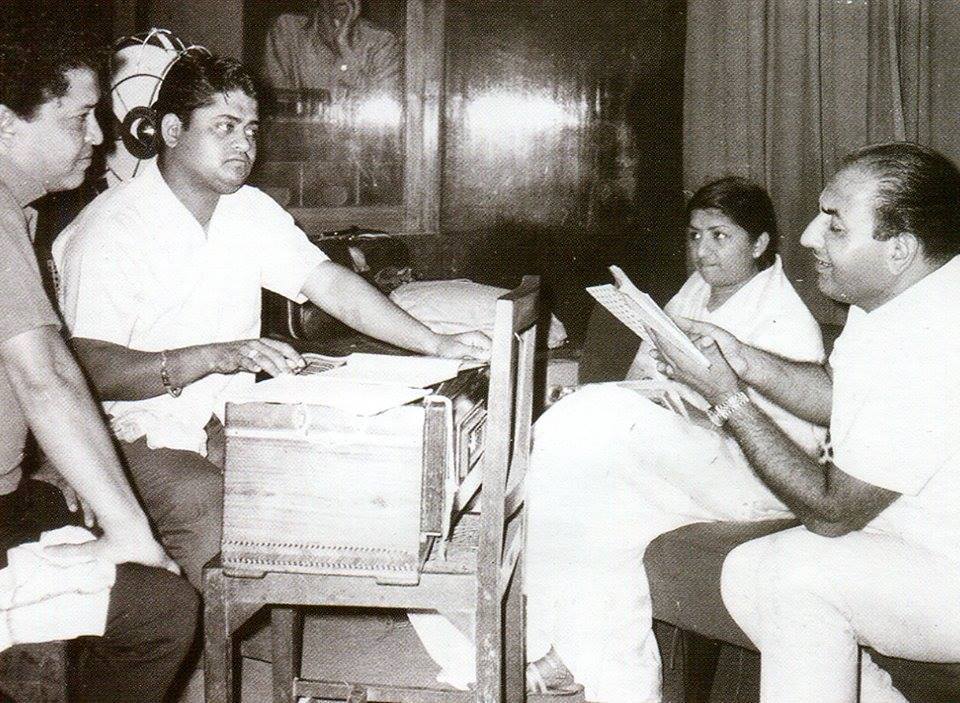
    1963 में अपनी पहली फिल्म “पारसमणि” से ही, लक्ष्मीकांत-प्यारेलाल ने दो महान गायकों, मोहम्मद रफ़ी – लता मंगेशकर के साथ कुछ शानदार युगल गीतों की रचना की है। 

    मोहम्मद रफी ने संगीत निर्देशकों लक्ष्मीकांत-प्यारेलाल के तहत सबसे ज्यादा 379 गाने गाए हैं, जिनमें 183 एकल शामिल हैं। 17 साल, 1963 से 1980 की अवधि में।

    शीर्ष पांच संगीत निर्देशक जिन्होंने मोहम्मद रफ़ी का सबसे अधिक उपयोग किया है।

    लक्ष्मीकांत-प्यारेलाल    379 गाने

    शंकर-जयकिशन          330 गाने

    चित्रगुप्त                     225 गाने

    रवि                          210 गाने

    कल्याणजी-आनंद     200 गाने

    लता मंगेशकर ने संगीत निर्देशक लक्ष्मीकांत-प्यारेलाल के तहत सबसे ज्यादा 712 गाने गाए हैं। 1963 से 1996 तक 33 वर्षों की अवधि में।

    शीर्ष पांच संगीत निर्देशक जिन्होंने लता मंगेशकर का सबसे अधिक उपयोग किया है।

    लक्ष्मीकांत प्यारेलाल     712 गाने

    शंकर जयकिशन          453 गाने

    आर डी बर्मन               327 गाने

    सी. रामचंद्र                 298 गाने

    कल्याणजी आनंदजी     297 गाने

    लता मंगेशकर और मोहम्मद रफ़ी ने 1947 से 1980 तक 32 वर्षों के अंतराल में 444 गीत गाए, जिसमें युगल, ट्रिपलक्स, चौकड़ी, पंचक आदि शामिल हैं। हम इस विषय के लिए केवल युगल पर विचार कर रहे हैं।

    लता मंगेशकर – मोहम्मद रफ़ी के युगल गीतों की संख्या 411, ट्रिपलेक्स, चौकड़ी, बहु-गायन गीतों के 33 गीतों को बाद करते  हुए।

    मोहम्मद रफ़ी और लता मंगेशकर ने 1963 से 1980 तक 17 वर्षों की अवधि में, संगीत निर्देशक लक्ष्मीकांत-प्यारेलाल के साथ सबसे अधिक संख्या में 78 युगल गीत गाए हैं।

    शीर्ष पांच संगीत निर्देशक जिन्होंने मोहम्मद रफ़ी और लता मंगेशकर के युगल गीतों की रचना की है। 

    लक्ष्मीकांत-प्यारेलाल     78 युगल।

    शंकर-जयकिशन          50 युगल।

    कल्याणजी-आनंदजी     38 युगल।

    नौशाद                       32 युगल।

    चित्रगुप्त                     31 युगल।

    लता-रफी के 411 युगल में से 78 अंक (लगभग 19%) लक्ष्मीकांत-प्यारेलाल द्वारा रचित हैं।

    ऐसी कई फिल्में हैं जिनमें लक्ष्मीकांत-प्यारेलाल  ने लता-रफी के दो या दो से अधिक युगल गीतों की रचना की है।

    दो, लता-रफ़ी युगल वाली फ़िल्में और गीत।

    नाइट इन लंडन 1967 

    नाइट इन लंडन और बाग मैं फूल किसने

    आया सावन झूम के, 1968,

    आया सावन झूम के और साथिया नहीं जाना

    जिगरी दोस्त 1968

    फूल है बहारोंका और दिल में क्या है

    माँ और ममता 1970अपने नैनो को समज़ादे और रुत बेकरार हैं 

    हमजोली 1970

    हाय रे हाय निंद नहीं.. और टिक टिक टिक मेरा दिल डोले

    आप आए बहार आई 1970

    कोयल क्यों गए और मुझे तेरी मोहब्बत का

    नाच उठे संसार 1976

    तेरे संग जीना तेरे संग मरना और जूम नाकाम झूम

    सरगम 1979, लता-रफी के तीन युगल हैं।

    डफलीवाले डफली बजा  ( बिनाका गीतमाला फाइनल में नंबर 1, 1980),

    कोयल बोली और परबत के उसपार।

    गायकों के लिए रॉयल्टी के कुछ मुद्दों के कारण, रफ़ी और लता के बीच मतभेद था और इसने रफ़ी-लता से जुड़े युगल गीतों की रिकॉर्डिंग बंद कर दी थी। इस प्रकार 1964 से 1967 तक इन महान गायकों के युगल गीत नहीं थे।

    बिनाका गीतमाला:

    लता -रफी / लक्ष्मीकांत-प्यारेलाल के और कई युगल नियमित रूप से साप्ताहिक बिनाका गीतमाला के साथ-साथ फाइनल गीतों की वार्षिक उलटी गिनती में दिखाई दिए। कुछ गाने >>

    1963:- नंबर 15  वो जब याद आए.. “पारसमणि”

    1969:- नंबर 23 रेशम की डोरी…”साजन”

                नंबर 29 आया सावन झूम के …. आया सावन झूम के”

                नंबर 12 एक तेरा साथ    “वापस”

               नंबर 06 आ मेरे हमजोली आ..” जीने की राह “

    1970:- नंबर 28 हाय रे हाय निंद नहीं.. हमजोली”

               नंबर 18 झिलमिल सितारों का….’जीवन मृत्यु”

               नंबर 12 चुप गए सारे…”दो रास्ते”

    1976: – नंबर 25 आजा तेरी याद आई “चरस”

    1978: – नंबर 02 आदमी मुसाफिर है “अपनापन”

    1980:- नंबर  23 पर्वत के उस पार। ”सरगम”

               नंबर  07 कोयल बोली। “सरगम”

               नंबर  01 डफलीवाले डफली बजा “सरगम”

    अजय पौंडरिक, वड़ोदरा

    २२/०४/२०२२  

  • लक्ष्मीकांत-प्यारेलाल और अभिनेता / अभिनेत्री की सिग्नेचर ट्यून्स (सांकेतिक धुने)

    लक्ष्मीकांत-प्यारेलाल और अभिनेता / अभिनेत्री की सिग्नेचर ट्यून्स (सांकेतिक धुने)

    लक्ष्मीकांत-प्यारेलाल और अभिनेता / अभिनेत्री की सिग्नेचर ट्यून्स (सांकेतिक धुने) 

    संगीत निर्देशक लक्ष्मीकांत-प्यारेलाल ने ऐसे कई लोकप्रिय गीतों की रचना की है, जिससे फिल्मों को हिट होने के साथ-साथ फिल्म अभिनेताओं / अभिनेत्रियों की लोकप्रियता में वृद्धि हुई है।

    1969 में “दो रास्ते” के लक्ष्मीकांत-प्यारेलाल जादुई सुपरहिट गीत, ‘बिंदिया चमके गी ‘ ने मुमताज को नाम और प्रसिद्धि के साथ-साथ ‘स्टार’ का दर्जा दिया। उनकी लोकप्रियता चार्ट को “खिलोना”, 1970 के गाने ‘सनम तू बेवफा के’ और फिल्म “लोफर” 1973 के ‘कोई शहरी बाबू‘ के माध्यम से और बढ़ावा मिला।

    इसी तरह, लक्ष्मीकांत-प्यारेलाल संगीत ने 1987 में “मिस्टर इंडिया” से श्रीदेवीहवा हवाई‘ और 1988 में “तेज़ाब” से माधुरी दीक्षितएक दो तीन’ के लिए भी इसी तरह की सफलता हासिल की। ​​इतना ही नहीं, इन गीतों के गायिका  कविता कृष्णमूर्ति और अलका याग्निक  को क्रमशः गायकों के रूप में पहचान मिली।

    जितेंद्र संगीतमय हिट फिल्म “फर्ज”, 1967 की सफलता के माध्यम से ‘स्टार’ बन गए, विशेष रूप से गीत ‘मस्त बहारों का में आशिक’

    लक्ष्मीकांत-प्यारेलाल ने अमिताभ बच्चन, राजेश खन्ना, धर्मेंद्र, ऋषि कपूर, जीतेन्द्र , अनिल कपूर, जैकी श्रॉफ और कई के लिए अधिकतम  सुपरहिट गाने कंपोज़ किये हैं। 

    लक्ष्मीकांत-प्यारेलाल ने  मुमताज़, हेमा मालिनी, रेखा, शर्मीला टैगोर, राखी, जया बच्चन, हेलेन, तनूजा, आशा पारेख, श्रीदेवी, माधुरी दीक्षित, मौसमी चटर्जी,,इत्यादि के लिए अधिकतम  सुपरहिट गाने बनाये है. 

    चंकी पांडे, (1988 में “तेज़ाब” से ‘सो गया ये जहान‘), विजय अरोड़ा (‘गौतम गोविंदा’ 1977 में  ‘एक रितु  आए‘), जावेद जाफरी (‘बोल बेबी बोल रॉक-एन‘) जैसे कम जाने-माने अभिनेता -रोल’ “मेरी जंग”, 1984) और शेखर सुमन (“उत्सव”, 1984 से ‘सांज ढले‘) को लक्ष्मीकांत-प्यारेलाल द्वारा रचित सिग्नेचर धुनें मिलीं।

    लक्ष्मी छाया जैसी नर्तकी सह कम जानी-पहचानी अभिनेत्रियों को ‘मेरा गांव मेरा देश’ 1971 के ‘मार दिया जाए के छोड़ दिया जाय’, ‘हाय शर्माऊ किस किस को बताउ’ और ‘आया आया अटरिया  पे कोई चोर‘ जैसे गानों के लिए जाना जाता है। ‘राजा और रैंक’ 1968 से ‘मेरा नाम है चमेली‘ के लिए मशहूर कुमकुम, ‘मेरे लाल’ से इंद्राणी मुखर्जी पायल की झंकार रस्ते रस्ते‘, 1966 आदि को ये सुपरहिट गाने मिल चुके हैं.

    विभिन्न अभिनेताओं / अभिनेत्रियों के लिए लक्ष्मीकांत-प्यारेलाल द्वारा रचित सिग्नेचर ट्यून्स, गानों की सूची। इन गानों ने अभिनेता/अभिनेत्री को और अधिक लोकप्रिय बना दिया।

    अमिताभ बच्चन-

    आदमी जो कहता है (मजबूर, 1974)

    माई नेम इज एंथनी (अमर अकबर एंथनी, 1977)

    बने चाहे  दुश्मन (दोस्ताना, 1980)

    जॉन जानी जनार्दन (नासीब, 1981)

    गोरी का साजन की गोरी (आखिरी रास्ता, 1987)

    जुम्मा चुम्मा दे दे (एचयूएम, 1990)

    तू मुजे कुबुल (खुदा गवाह, 1991)

    अनिल कपूर-

    वन टू का फोर माई नेम इज लखन (राम लखन, 1987)।

    जिंदगी की यही रीत है (एमआर इंडिया, 1987)

    अरुणा ईरानी –

    ऐ फासा (बॉबी, 1973)

    पंडितजी मेरे मारने के बाद (रोटी कपड़ा और मकान, 1974)

    बिंदु –

    दर्द-ए-दिल बढ़ता जाए (बुनियाद, 1972)

    हंगामा हो गया। (अनहोनी, 1973)

    बिस्वजीत-

    नाज़र  ना लग जाए, (नाइट इन लंदन, 1967)

    अकेला हूं मैं हमसफर (जाल, 1967)

    आशा पारेख –

    सुनो सजना पपीहे  ने ( आए दिन बहार के, 1966)

    तेरे कारन  मेरे साजन (आन मिलो सजना, 1970)

    सोना लै  जा रे (मेरा गांव मेरा देश, 1971)

    मैं तुलसी तेरे आंगन की (मैं तुलसी तेरे आंगन की, 1979)

    बबीता –

    हम तो तेरे आशिक (फ़र्ज़  1967),

    बार बार दिन ये आए.. (फ़र्ज़, 1967)

    शीशी भरी गुलाब की (जीत 1971)

    बेला बोस –

    ओ दिलवालो साज़ – ए – दिल (लुटेरा, 1965)

    चंकी पांडे –

    सो गया ये जहां सो गया (तेजाब, 1987)

    धर्मेंद्र –

    मेरे दुश्मन तू मेरी (आए दिन बहार के, 1966)

    छलकाए जाम (मेरे हमदम मेरे दोस्त, 1968)

    हुई शाम उनका खयाल आ गया (मेरे हमदम मेरे दोस्त, 1968)

    ना जा कहीं अब ना जा (मेरे हमदम मेरे दोस्त, 1968)

    साथिया नहीं जाना के जीना लगे (आया सावन जुम के, 1969)

    कुछ कहता है ये सावन (मेरा गांव मेरा देश, 1971)

    जानी ओ जानी (राजा जानी, 1972)

    आज मौसम बड़ा बेइमान है (लोफर, 1973)

    गाड़ी बुला रही है (दोस्त, 1974)

    मैं जाट यमला पगला (प्रतिज्ञा, 1976)

    आजा तेरी याद आए (चरस, 1976)

    ओ मेरी महबूबा (धरम वीर, 1977)

    देव आनंद –

    के मैं आया हूं (अमीर गरीब, 1974).. सैक्सोफोन का उत्कृष्ट उपयोग।

    डिंपल कपाड़िया –

    हम तुम एक कमरे/

    झूठ बोले (बॉबी, 1973)

    हेमा मालिनी-

    हे घट सवारी (अभिनेत्री, 1970)

    शराफत छोड़ दी मैंने (शराफत, 1970)

    एबीसीडी छोडो (राजा जानी, 1972)

    आजा तेरी याद आई (चरस, 1976)

    ड्रीम गर्ल ड्रीम गर्ल, (ड्रीम गर्ल, 1977)

    जिंदगी ना टूटी लड़ी (क्रांति, 1981)

    मेरे नसीब में तू है (नसीब, 1982)

    हेलेन –

    आ जान-ए-जा आ मेरा ये हुस्न जवान (INTQAAM, 1969)

    मुझे देखे कोई दास्तान हौं (लुटेरा, 1965)

    मीरा नाम है जमीला (लंदन में रात, 1967)

    ऊई मां ऊई मा ये क्या हो गया (पारसमणी, 1963)

    हम प्यार किए जाएंगे (आया तूफ़ान, 1964)

    मेघवा गगन बीच झांके (हरिश्चंद्र तारामती 1963)

    इंद्राणी मुखर्जी

    पायल की झंकार रस्ते रस्ते (मेरे लाल, 1966)। हारमोनियम पर सबसे अच्छा गीत

    जैकी श्रॉफ –

    तू मेरा जानू है (हीरो, 1983)

    जया भादुरी –

    पत्ता पत्ता बूटा बूटा (एक नज़र, 1972)

    पहले सौ बार इधर (एक नज़र, 1972)

    हमी करे कोई सूरत (ईके नज़र, 1972)

    शहनाई बाजे ना बजे (शोर, 1972)

    जावेद जाफरी

    बोल बेबी बोल रॉक-एन-रोल (मेरी जंग, 1984)

    जीतेंद्र –

    मस्त बहारों का मैं आशिक (फ़र्ज़  1967)

    बार बार दिन ये आए (फ़र्ज़, 1967)

    जे हम तुम चोरी से (धरती कहे पुकार के, 1968)

    बड़ी मस्तानी है मेरी महबूबा (जीने की राह, 1969)

    हाय रे ही निंद नहीं आया (हमजोली, 1971)

    दिल की बात दिल ही जाने (रूप तेरा मस्ताना, 1972)

    जयाप्रदा –

    डफली वाले (सरगम, 1977)

    जयललिता (पूर्व तमिलनाडु सीएम) –

    जागी बदन मैं ज्वाला (ईज़्ज़त , 1969).. मन को झकझोर देने वाली लय

    जॉय मुखर्जी –

    बड़े मियां दीवाने ऐसे ना बनो (शागिर्द , 1967)

    दुनिया पागल है (शागिर्द, 1967)

    कमल हासन –

    तेरे मेरे बीच में (एक दूजे के लिए, 1981)

    किमी काटकर-

    जुम्मा चुम्मा दे दे (हम  1991)

    किशोर कुमार – (अभिनेता किशोर कुमार पर फिल्माए गए गीत)

    मेरे महबूब क़यामत होगी (मिस्टर एक्स इन बॉम्बे , 1964)

    अजनबी तुम जाने पहचाने से (हम सब उस्ताद है, 1965)

    प्यार बनते चलो (हम सब उस्ताद है, 1965)

    सुनो जाना सुनो जाना (हम सब उस्ताद है, 1965)

    ये दर्द भरा अफसाना (श्रीमान फंटुश  1965)

    दिन जवानी के बार बार (प्यार किया जा, 1966)

    कुमकुम-

    मेरा नाम है चमेली … (राजा और रैंक, 1968)

    लक्ष्मी छाया –

    मार दिया जाए के छोड़ दिया जाए

    हायशरमऊ किस किस को बता

    आया आया अतरिय्या पे कोई चोर (सभी मेरा गांव मेरा देश से, 1971)

    लीना चन्दावरकर-

    ढल गया दिन हो गई शाम (हमजोली, 1971)

    जाने क्यों लोग मोहब्बत किया कराते  है। (मेहबूब की मेहंदी 1971)

    गम का फसाना (मनचली, 1973)

    मनोज कुमार

    तौबा ये मतवाली चल (पत्थर के सनम, 1967)

    एक प्यार का नगमा है (शोर, 1972)

    माधुरी दिक्षित –

    एक दो तीन चार (तेज़ाब, 1987),

    चोली के पीछे (खल-नायक, 1993)

    माला सिन्हा –

    नींद कभी रहती थी आंखें मैं (आसरा, 1966)

    मेरी जिंदगी के चिराग को (जाल, 1967)

    महमूद –

    महबूबा महबूबा (साधु और शैतान, 1969)

    मनीषा कोइराला –

    इलू इलू (सौदागर, 1992),

    मौसमी चटर्जी

    हाय हाय एक लडाका मुजाको खत (कच्चे धागे, 1973)

    मेघा रे मेघा रे (प्यासा सावन)।

    मुमताज –

    बिंदिया चमकेगी (दो रास्ते, 1969)

    दिल ने दिल को पुकारा (दो रास्ते, 1969)

    सनम तू बेवफा के नाम से (खिलोना, 1971)

    कोई शहरी बाबू (लोफर, 1974)

    नंदा –

    एक प्यार का नगमा है (शोर, 1971)

    जारे कारे बदरा (धरती कहे पुकार के, 1969)

    नूतन

    सावन का माहा (मिलन, 1967)

    पद्मिनी कोल्हापुरे –

    यशोमती मैया से (सत्यम शिवम सुंदरम, 1977)

    ये गलियां ये चौबारा (प्रेम रोग)

    प्राण  –

    दारू की बॉटल मैं (मजबूर, 1974)

    प्रेमनाथ –

    जीवन चला ने का नाम (शोर, 1972)

    राखी –

    झिलमिल सितारों का आंगन होगा (जीवन मृत्यु, 1971)

    रेखा-

    मन क्यों बहका रे आधी रात को (उत्सव, 1984)

    दूर ना रहे कोई (कर्तव्य, 1978)

    राजेश खन्ना –

    मेरे नसीब मैं, (दो रास्ते, 1969)

    ये रेशमी झूले (दो रास्ते, 1969)

    दिल ने दिल को पुकारा (दो रास्ते, 1969)

    अच्छा तो हम चलते हैं। (आन मिलो सजना, 1970)

    वेद तेरा वादा (दुशमन, 1971)

    ये जो चिलमन है (महबूब की मेहंदी, 1971)

    मेरे दीवानेपन की (महबूब की मेहंदी, 1971)

    चल चल मेरे साथी (हाथी मेरे साथी, 1971)

    मेरे दिल में आज क्या है (दाग , 1973)

    ये जो पब्लिक है (रोटी, 1974)

    आपके अनुरोध पे (अनुरोध, 1977)

    अकेला गया हान मैं (राजपूत, 1981)

    रति अग्निहोत्री –

    तेरे मेरे बीच में (एक दूजे के लिए, 1981)

    रीना रॉय –

    तेरे संग प्यार (नागिन, 1976),

    मेरी सांसो  को जो (बदलते रिश्ते, 1978)

    शीशा हो या दिल हो (आशा, 1980)

    ऋषि कपूर –

    मैं शायर तो नहीं (बॉबी, 1973),

    पर्दा है परदा है (अमर अकबर एंथनी, 1977)

    डफली वाले (सरगम, 1979),

    ओम शांति ओम (कर्ज़, 1980)

    दर्द – ए – दिल (कर्ज़, 1980)

    साधना

    मैं देख जिस और सखी रे सामने मेरे सांवरिया (अनीता, 1967)

    ना बाबा नबा (अनीता, 1967)

    कैसे रहूं चुप ??? (इंतकाम, 1969)

    सुनिए जरा बैठिए ना हम आप के (गीता मेरा नाम, 1975)

    शत्रुघ्न सिन्हा

    बने चाह दुश्मन (दोस्ताना 1980)

    चोर मच गया शोर (बदला 1974)

    शर्मिला टैगोर – 

    चलो सजना जहान तक (मेरे हमदम मेरे दोस्त, 1969)

    दो दिन की जिंदगी (सत्यकम, 1970)

    ये कैसा घुम सजना (मेरे सजना, 1970)

    एक चेहरे पे केई (डीएएजी, 1973)

    शेखर सुमन

    सांझ ढाले गगन तले  (उत्सव, 1984)

    सायरा बानो –

    दिल विल प्यार व्यार (SHAGIRD, 1967)

    वो है जरा खफा खफा (SHAGIRD, 1967)

    रूठा है तो मन लेंगे (जवार भाटा, 1974)

    संजीव कुमार –

    ओ फिरकी वाली तू कल फिर आना ( राजा और रैंक, 1968)

    शादी के लिए रजा मंद कर ली (देवी, 1968)

    खिलोना जान कर (खिलोना, 1971)

    शशि कपूर

    फूल बन जाउंगा शार ये है (प्यार किया जा, 1966)

    सा रे गा मा पा (अभिनेत्री, 1971)

    श्रीदेवी

    मैं तेरी दुश्मन (नगीना 1986)

    हवा हवाई (एमआर इंडिया, 1987)

    किसी के हाथ ना आएगी (चालबाज, 1989)

    सुनील दत्त –

    सावन का महीना  (मिलन, 1967)

    मुबारक हो सबको (मिलन, 1967)

    राम करे ऐसा हो जाए (मिलन, 1967)

    संजय दत्त-

    नायक नहीं खलनायक हूं मैं (खलनायक 1993)

    तनुजा –

    आप मुझे अच्छे लगने लगे (जेन की राह, 1969)

    रोज़ शाम आती थी (इम्तिहान, 1974)

    विनोद खन्ना –

    रुक जाना नहीं (इम्तिहान, 1974)

    विजय अरोड़ा –

    एक रितु आए एक रितु जाए (गौतम गोविंदा, 1979)

    ज़ीनत अमान –

    हाय हाय ये मजबूरी (रोटी कपड़ा और मकान, 1974)

    मैं ना भुलुंगा (रोटी कपड़ा और मकान, 1974)

    सत्यम शिवम सुंदरम (सत्यम शिवम सुंदरम, 1977)

    सूची का कोई अंत नहीं है।

    अजय पौंडरिक 
    वड़ोदरा

  • साठ के दशक की दूसरी छमाही, हिंदी फिल्म संगीत, लक्ष्मीकांत-प्यारेलाल की संप्रभुता

    साठ के दशक की दूसरी छमाही, हिंदी फिल्म संगीत, लक्ष्मीकांत-प्यारेलाल की संप्रभुता

    साठ के दशक की दूसरी छमाही, हिंदी फिल्म संगीत, लक्ष्मीकांत-प्यारेलाल की संप्रभुता

    लक्ष्मीकांत-प्यारेलाल, वर्षवार, संगीत यात्रा (संगीत हिट फिल्में) की तुलना 1963 से 1993 तक अन्य समकालीन संगीत निर्देशकों की प्रमुख संगीत हिट फिल्मों के साथ की है। प्रत्येक वर्ष के तुलनात्मक विवरण के अंत में मैंने उन गीतों की सूची भी दी है, जिन्हें लक्ष्मीकांत-प्यारेलालने संगीतबद्ध किया गया है और फाइनल बिनाका गीतमाला स्टैंडिंग में नजर आए. फ़िलहाल हम साठ के दशक की, 1963 से  – 1969 तक चर्चा करेंगे। 

    दिग्गज संगीतकारों, नौशाद, शंकर-जयकिशन, ओ पी नय्यर, मदन मोहन, ऐस डी बर्मन, रोशन, चित्रगुप्त, सलिल चौधरी, हेमंत कुमार, रवि, कल्याणजी-आनंदजी>>आदि की मौजुदगी में “पारसमणी” १९६३, से नौजवान संगीतकार की जोड़ी लक्ष्मीकांत-प्यारेलाल की धमाकेदार शुरुआत्त।  

    लक्ष्मीकांत-प्यारेलाल 1963

    1963 में  लक्ष्मीकांत-प्यारेलाल और  “अन्य प्रमुख तत्कालीन संगीतकरों ” की संगीतमय हिट फिल्मे 

    शंकर-जयकिशन:–प्रोफेसर-हमराही-दिल एक मंदिर

    रोशन:- -ताजमहल-दिल ही तो है

    एस डी बर्मन:–बंदिनी-तेरे घर के सामने

    नौशाद :– मेरे महबूब

    रामलाल:- — सेहरा

    रवि:-—गुमराह

    लक्ष्मीकांत-प्यारेलाल के पास सिर्फ दो फिल्में थीं “पारसमणी” और “हरिश्चंद्र तारामती”। ये फिल्में साल की आखरी  तिमाही में रिलीज हुई थीं।

    संगीत निर्देशक रोशन ने नौशाद की “मेरे महबूब” और शंकर-जयकिशन की “दिल एक मंदिर” को पछाड़ते हुए          “ताज महल” के लिए सर्वश्रेष्ठ संगीत निर्देशक का पुरस्कार जीता।

    १९६३ वार्षिक बिनाका गीतमाला (३२ गाने) और लक्ष्मीकांत-प्यारेलाल दो गाने।

    नंबर 15 वो जब याद आये  लता – रफ़ी.. “पारसमणी”

    नंबर 06 हस्ता  हुआ नूरानी चेहरा,  लता – कमल बारोट “पारसमणी”

    ———————–

    लक्ष्मीकांत-प्यारेलाल…1964

    1964 में लक्ष्मीकांत-प्यारेलाल और  “अन्य प्रमुख तत्कालीन संगीतकरों ” की संगीतमय हिट फिल्मे

    शंकर-जयकिशन:- आई मिलन की बेला-राज कुमार-संगम

    नौशाद:— लीडर 

    मदनमोहन:- वो कौन थी

    ओपी नैयर:—कश्मीर की कली

    रवि:- दूर की आवाज

    रोशन:- चित्रलेखा

    रामलाल:- गीत गया पत्थरोने

    लक्ष्मीकांत-प्यारेलाल:– आया तूफान, मिस्टर एक्स इन बॉम्बे, सती सावित्री, संत ज्ञानेश्वर और दोस्ती।

    फिल्मफेयर पुरस्कार:- नामांकन मदन मोहन (“वो कौन थी”), शंकर-जयकिशन (“संगम”) और लक्ष्मीकांत-प्यारेलाल (“दोस्ती”)। लक्ष्मीकांत-प्यारेलाल ने “दोस्ती” के लिए अपना, पहला फिल्मफेयर पुरस्कार जीता।

    १९६४  वार्षिक बिनाका गीतमाला और लक्ष्मीकांत-प्यारेलाल के ४ गाने। .. (कुल 32 गाने)

    लक्ष्मीकांत-प्यारेलाल के पास “हरिश्चंद्र तारामती” के कुछ  गीत हैं जो 1963 के अंत में रिलीज़ हुए थे।

    नंबर 30 मैं एक नन्हा सा .. लता .. “हरिश्चंद्र तारामती”

    नंबर 26 राही मनवा .. रफ़ी ..”दोस्ती”

    नंबर 21 चाहूंगा मैं तुझे .. रफी .. “दोस्ती”

    नंबर 06 मेरे महबूब क़यामत ..किशोर .. “मिस्टर एक्स इन बॉम्बे”

    ——————————————————

    लक्ष्मीकांत-प्यारेलाल….1965

    1965 में लक्ष्मीकांत-प्यारेलाल और  “अन्य प्रमुख तत्कालीन संगीतकरों ” की संगीतमय हिट फिल्मे

    आर डी बर्मन:-भूत बंगला।

    कल्याणजी-आनंदजी:- हिमालय की गॉड मैं,- जब जब फूल खिले,-सहेली

    शंकर-जयकिशन:- प्रोफेसर, आरज़ू

    रवि:- —खानदान,—वक्त,

    एस डी बर्मन:–तीन देवियां,–

    रोशन:- भीगी रात

    ओ पी नैयर:- मेरे सनम।

    लक्ष्मीकांत-प्यारेलाल:- लुटेरा, श्रीमन फंताश, हम सब उस्ताद है, बॉक्सर।

    संगीत निर्देशक रवि ने शंकर-जयकिशन की “आरज़ू” और कल्याणजी-आनंदजी की “हिमालय की गोद मैं” को पछाड़ते हुए “खानदान” के लिए सर्वश्रेष्ठ संगीत फिल्मफेयर पुरस्कार जीता।

    १९६५ वार्षिक बिनाका गीतमाला और लक्ष्मीकांत-प्यारेलाल के गाने। .. (कुल 32 गाने)

    जबरजस्त छलांग लगाइ संत ज्ञानेश्वर के गाने ने, “ज्योत से ज्योत जगाते चलो”।

    नंबर 29 खुदाया  मोहब्बत ना होती .. रफ़ी … “बॉक्सर”

    नंबर 25 कोई जब राह ना पाये..रफी..दोस्ती’

    नंबर 24 नींद निग़ाहों  की .. लता .. “लुटेरा”

    नंबर 18 अजनबी तुम जाने…किशोर…हम सब उस्ताद हैं”

    नंबर 04 ज्योत से ज्योत जगाते चलो … लता-मुकेश “संत ज्ञानेश्वर”

    नंबर 02 चाहुंगा मैं तुझे….रफी “दोस्ती”

    ——————————————————

    लक्ष्मीकांत-प्यारेलाल…1966

    1966 में लक्ष्मीकांत-प्यारेलाल और  “अन्य प्रमुख तत्कालीन संगीतकरों ” की संगीतमय हिट फिल्मे 

    खय्याम:- –आखरी खत 

    आर डी बर्मन:- तीसरी मंजिल, पति पत्नी।

    रोशन:—दादीमा,-ममता

    एस डी बर्मन:- मार्गदर्शक

    शंकर-जयकिशन:- — सूरज,-लव ईन टोक्यो 

    मदन मोहन:- –मेरा सया

    ओ पी नैय्यर:– ये रात फिर ना आएगा

    रवि:- दस लाख, दो बदनियाँ

    हेमंत कुमार:- –अनुपमा

    लक्ष्मीकांत-प्यारेलाल:–मेरे लाल,- आए दिन बहार के,-प्यार किए जा,-आसरा,-सौ साल बाद,-लाडला,-दिल्लगी,-छोटा भाई..-नाग मंदिर।

    इस साल से लक्ष्मीकांत-प्यारेलाल ने शीर्ष स्थान हासिल करना शुरू कर दिया..उपरोक्त फिल्मों के गाने अभी भी लोकप्रिय हैं।

    शंकर-जयकिशन “सूरज” के संगीत के लिए सर्वश्रेष्ठ संगीतकार का पुरस्कार जीता, एस डी बर्मन की “गाइड” और रवि की “दो बदन” नामांकित किये थे ।

    १९६६  वार्षिक बिनाका गीतमाला और लक्ष्मीकांत-प्यारेलाल के गाने। .. (कुल 32 गाने)

    नंबर 26 दिन जवानी की चार यार ..किशोर .. “प्यार किए जा”

    नंबर 24 गोरे हाथो पर ना ज़ुल्म..रफ़ी..प्यार किए जा”

    नंबर 20 पायल की झंकार रस्ते .. लता .. “मेरे लाल”

    नंबर 14 ये आज कल के लड़के .. उषा “दिल्लगी”

    ——————————————————-

    लक्ष्मीकांत-प्यारेलाल…1967

    १९६७ में लक्ष्मीकांत-प्यारेलाल और  “अन्य प्रमुख तत्कालीन संगीतकरों ” की संगीतमय हिट फिल्मे 

    शंकर-जयकिशन: – – छोटी सी मुलाकत,  एन इवनिंग इन  पेरिस, अराउंड द वर्ल्ड  

    आर डी बर्मन:- — बहारों के सपने

    एस डी बर्मन:- — ज्वेल थीफ

    रवि:- — हमराज़

    कल्याणजी-आनंदजी:- –उपकार

    रोशन:- –बहू बेगम, नूर-जहाँ

    नौशाद:- –राम और श्याम

    लक्ष्मीकांत-प्यारेलाल:- मिलन,-शागिर्द,-फर्ज,-पत्थर के सनम,-अनीता,-नाइट इन लंदन,-जाल,- तकदीर, छैलाबाबू, मिलन की रात। 

    यह एक लक्ष्मीकांत-प्यारेलाल, एल.पी. की एक  “लहर” या “सुनामी” थी। “साप्ताहिक बिनाका गीत माला” 70% एल.पी. गीतों से भरा हुआ था.

    फ़र्ज़” सबसे पहली सफल गोल्डन जुबली ( ५० हफ्ते ) हिट फिल्म थी जिसने जीतेंद्र को एक स्टार बना दिया।बाद में “शागिर्द” ने भी भारत के बड़े बड़े शहरों में गोल्डन जुबली मनाई।”मिलन” के गानों ने देशभर में धूम मचाई। 

    सही मायने में साल 1967 लक्ष्मीकांत-प्यारेलाल का है, उन्होंने न केवल हिंदी फिल्म संगीत में नंबर एक की स्थिति की पुष्टि की, बल्कि विविधता के साथ एक के बाद एक संगीतमय हिट फिल्में आयी. 

    इस विजयी उपलब्धि के बाद, लक्ष्मीकांत-प्यारेलाल और सफलता बिना किसी रुकावट से अगले ३५ साल तक चली.

    लक्ष्मीकांत-प्याारेलाल को  “मिलन” के लिए सर्वश्रेष्ठ संगीतकार का अपना दूसरा फिल्मफेयर पुरस्कार जीता।  कल्याणजी-आनंदजी को “उपकार” और रवि को “हमराज” के लिए नामांकन हुआ था. 

    अब यह वह समय था जब लक्ष्मीकांत-प्यारेलाल का संगीत हर सफल फिल्म का एक अनिवार्य घटक बन गया। बड़े बैनर, प्रमुख निर्माता और निर्देशक चाहते थे कि लक्ष्मीकांत-प्यारेलाल ही उनकी  फिल्मों के लिए संगीत दे।

    १९६७ वार्षिक बिनाका गीतमाला और लक्ष्मीकांत-प्यारेलाल के गाने। .. (कुल ३३  गाने)

    लक्ष्मीकांत प्यारेलाल के संगीत निर्देशन में मिलन के गीतों ने 1967 में पूरे देश में तहलका मचा दिया और बिनाका गीतमाला 1967 कोई अपवाद नहीं था।

    नंबर 33 ये कली जब तलक  ..लता – महेंद्र “आए दिन बहार के”

    नंबर 24 माँ मुझे अपने आँचल .. लता .. “छोटा भाई”

    नंबर 23 मैं देखु जिस और..लता..”अनीता”

    नंबर 21 मेरा यार बड़ा शर्मिला .. रफी .. “मिलन की रात”

    नंबर 17 मुबारक हो सबको..मुकेश..’मिलन’

    नंबर 13 मेरे दुश्मन तू .. रफ़ी .. “आए दिन बहार के”

    नंबर  07ना बाबा ना बाबा..लता..अनीता”

    नंबर 06 हम तुम युग युग .. लता-मुकेश .. “मिलन”

    नंबर 01 सावन का महिना  ..लता-मुकेश .. “मिलन”

    ————————————————–

    लक्ष्मीकांत-प्यारेलाल….1968

    १९६८ में लक्ष्मीकांत-प्यारेलाल और  “अन्य प्रमुख तत्कालीन संगीतकरों ” की संगीतमय हिट फिल्मे 

    शंकर-जयकिशन:–ब्रम्हाचारी,-झुक गया आसमान,-मेरे हुजूर,-शिकार

    रवि:–नील कमल,-दो कलियां,-आंखे।

    कल्याणजी-आनंदजी:- –सरस्वतीचंद्र

    ओ पी नैयर:– कहीं दिन कहीं रात

    आर डी बर्मन:- –पड़ोसन

    उषा खन्ना :- फरेबी

    सपन जगमोहन:- तेरी तलाश मैं

    लक्ष्मीकांत-प्यारेलाल:–मेरे हमदम मेरे दोस्त,-इज्जत,-राजा और रैंक,-बहारों की मंजिल, रोम में जासूस।

    इस साल (१९६८),  शंकर-जयकिशन और लक्ष्मीकांत-प्यारेलाल गीतों के बीच एक अच्छी / तगड़ी संगीत प्रतियोगिता थी। संगीत की ताजगी के कारण लक्ष्मीकांत-प्यारेलाल के गीतोंका बोलबाला रहा. 

    हालांकि शंकर-जयकिशन ने रवि की “आंखें” और शंकर-जयकिशन की “दीवाना” को पछाड़ते हुए “ब्रह्मचारी” के लिए फिल्मफेयर पुरस्कार जीता।

    १९६८ वार्षिक बिनाका गीतमाला और लक्ष्मीकांत-प्यारेलाल के गाने। .. (कुल 32 गाने)

    नंबर  32 मस्त बहारों का मैं..रफ़ी..”फ़र्ज”

    नंबर 24  छलकाए जाम..रफ़ी..’मेरे हमदम मेरे दोस्त’

    नंबर 22  बड़े मियां दीवाने .. “शागिर्द”

    नंबर 20  महबूब मेरे..लता-मुकेश..’पत्थर के सनम’

    नंबर 16 मेरा नाम है चमेली .. लता .. “राजा और रैंक”

    नंबर 14 चलो सजना .. लता .. “मेरे हमदम मेरे दोस्त”

    नंबर 11 बता दू क्या लाना..लता..”पत्थर के सनम”

    नंबर 01 दिल विल प्यार व्यार .. लता .. “शागिर्द”

    लक्ष्मीकांत-प्यारेलाल…..1969

    १९६८ में लक्ष्मीकांत-प्यारेलाल और  “अन्य प्रमुख तत्कालीन संगीतकरों ” की संगीतमय हिट फिल्मे 

    चित्रगुप्त:- –वासना, –औलादी

    शंकर-जयकिशन:- –कन्यादान, –राजकुमार

    कल्याणजी-आनंदजी:–सुहाग रात,-हसीना मान जाएगी,-विश्वास,-महल

    आर डी बर्मन:- वारिस, अभिलाषा, प्यार का मौसम।

    मदनमोहन:- –चिराग

    नौशाद:–साथी,-संघर्ष।

    ओ पी नय्यर:– किस्मत, –हमसाया, –संबंध

    रवि:- –एक फूल दो मलिक

    एस डी बर्मन:- आराधना

    रोशन:- — अनोखी रात

    लक्ष्मीकांत-प्यारेलाल..वर्ष 1969 में 17 फिल्मों के लिए संगीत दिया..और उनके बनाए गए गीतों में से 90% हिट, यादगार, मधुर और अभी भी लोकप्रिय हैं … “आराधना” के गानो की लहर भी लक्ष्मीकांत-प्यारेलाल के गानों की सुनामी को भी कुछ खास नहीं कर सकी। एल.पी. के गीतों का जादू बरकरा रहा. 

    लक्ष्मीकांत-प्यारेलाल की हिट फ़िल्में. — आया सावन झूम के, –इंतेक़ाम, –दो रास्ते, — जीने की राह, –धरती कहे पुकार के, –सत्यकम, –साजन, –प्यासी शाम, — जिगरी दोस्त, –आंसू बन गए फूल…

    लक्ष्मी-प्यारे की ‘क्लीन स्वीप’ लगातार तीसरे साल जारी रही। लक्ष्मीकांत-प्यारेलाल के गाने और फिल्में आने वाले २५ सालों तक नियमितता के साथ चार्ट पर हिट होती रहीं। 

    और किशोर कुमार का युग की शुरआत। किशोर कुमार का युग भी अब शुरू हो गया है। लक्ष्मीकांत-प्यारेलाल ने भी इस साल किशोर कुमार  को कुछ अच्छे गाने दिए हैं। “दो रास्ते”, (खिजा के फूल) “आंसू बन गए फूल”, (जाने कैसा है मेरा दीवाना..आशा के साथ), और हृषिकेश मुखर्जी की “सत्यकाम” (जिंदगी है क्या, मुकेश, महेंद्र कपूर के साथ)….. 

    जीने की राह” के सुपरहिट संगीत के लिए लक्ष्मीकांत-प्यारेलाल ने अपनी तीसरी फिल्मफेयर पुरस्कार ट्रॉफी जीती।

    एस डी बर्मन की “आराधना” और शंकर-जयकिशन की “चंदा और बिजली” के लिए नामांकन हुआ था. 

    १९६९  वार्षिक बिनाका गीतमाला और लक्ष्मीकांत-प्यारेलाल के गाने। .. (कुल 32 गाने)

    नंबर 31 वो कौन है .. लता-मुकेश … “अंजना”

    नंबर 25 महबूबा महबूबा .. रफ़ी .. “साधु और शैतान”

    नंबर 23 रेशम की डोरी..लता-रफ़ी..’साजन’

    नंबर 22 रुक जा जरा … लता .. “इज्जत”

    नंबर 19 आया सावन झूम के..लता-रफी..आया सावन झूम के’

    नंबर 18 बड़ी मस्तानी है..रफ़ी..’जीने की राह’

    नंबर 16 दिल में क्या है..लता-रफ़ी..’जिगरी दोस्त’

    नंबर 12 एक तेरा साथ. लता-रफ़ी.. “वापस”

    नंबर 09 जे हम तुम चोरी से..लता-मुकेश.. “धरती कहे पुकार के”

    नंबर 06 आ मेरे हमजोली आ..लता-रफी..’ जीने की राह’

    नंबर 01 कैसे रहूं चुप, .. लता .. “इंतेकाम”

    अजय पौंडरिक 

    वड़ोदरा 

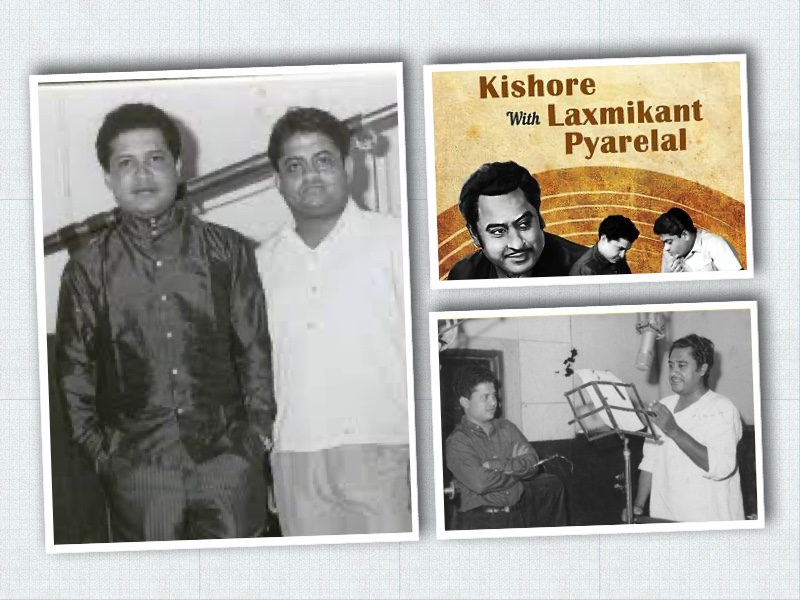
  • किशोर कुमार और लक्ष्मीकांत-प्यारेलाल एक बेहतरीन तिकड़ी

    किशोर कुमार और लक्ष्मीकांत-प्यारेलाल एक बेहतरीन तिकड़ी

    किशोर कुमार और लक्ष्मीकांत-प्यारेलाल

    1964 में निर्देशक शांतिलाल सोनी, किशोर कुमार और कुमकुम अभिनीत “मिस्टर एक्स इन बॉम्बे” बना रहे थे। जाहिर है, एक गायक के रूप में किशोर कुमार ही “मि. एक्स इन बॉम्बे” के गाने गाएंगे. लक्ष्मीकांत-प्यारेलाल ने इससे पहले  बी ग्रेड फिल्मे  “पारसमणि”, “हरिश्चंद्र तारामती”, “सती सावित्री”, “संत ज्ञानेश्वर” और “दोस्ती” की फिल्मों के गीतों के माध्यम से हिंदी फिल्म संगीत में एक उच्च प्रभाव डाला था. इन फिल्मों में लक्ष्मीकांत-प्यारेलाल को लता मंगेशकर, मुकेश, मोहम्मद रफी और मन्ना डे जैसे महान गायकों के साथ काम करने का अवसर मिला और उन्होंने “ए ग्रेड” संगीत तैयार किया।

    अब लक्ष्मीकांत-प्यारेलाल के लिए अभिनेता / गायक किशोर कुमार के साथ “मिस्टर एक्स इन बॉम्बे” में काम करने का समय था। उस समय किशोर कुमार अपने संगीत करियर के बुरे दौर से गुजर रहे थे। २६ साल के लक्ष्मीकांत और २३ साल के प्यारेलाल, दोनों किशोर कुमार के घर गाने की “ट्यून” ले गए। किशोर कुमार धुन सुनकर इतने खुश हुए कि उन्होंने घर में मौजूद सभी लोगों को बताना शुरू कर दिया, उनके माली, प्रबंधक, सुरक्षा गार्ड कि देखो ये दोनों लड़के (लक्ष्मीकांत और प्यारेलाल) मेरे लिए बहुत प्यारी और यादगार धुन लाए हैं। वो गाना था “मेरे महबूब क़यामत होगी”

    “मेरे महबूब क़यामत होगी”, किशोर कुमार और लक्ष्मीकांत-प्यारेलाल का “कॉम्बो” इसी गाने से १९६४ से शुरू हुआ.    आगे चलकर इस बेहतरीन “कॉम्बो” ने  १९६४ – १९८७ तक, 402 गानों का अनमोल तोहफा  संगीतप्रेमियों को दिया.  

    इस प्रकार यह ऐतिहासिक गीत “मेरे महबूब क़यामत होगी”, किशोर कुमार और लक्ष्मीकांत-प्यारेलाल का पहला गीत बन गया।  402 का यह आंकड़ा किसी भी संगीत निर्देशक के साथ किशोर कुमार द्वारा गए गीतों की संख्या दूसरे नंबर पर है. पहले पहले स्थान पर किशोर कुमार और आरडी बर्मन 499 के साथ हैं। 

    यहाँ ये बात बताना ज़रूरी है की किशोर कुमार और लक्ष्मीकांत-प्यारेलाल का “कॉम्बो”, किशोर कुमार और आरडी बर्मन के “कॉम्बो” से पहले बना है 

    संयोगवश, यह ऐतिहासिक गीत, “मेरे महबूब क़यामत होगी”, लक्ष्मीकांत-प्यारेलाल और किशोर कुमार के साथ, महान  गीतकार आनंद बख्शी का भी पहला गीत  है। 

    इस गाने के लिए किशोर कुमार की पहली ही प्रतिक्रिया/निर्णय सही था। यह गीत आज भी लोकप्रिय है.

    किशोर कुमार और लक्ष्मीकांत-प्यारेलाल के कॉम्बिनेशन में बहुरूपता / विविधता है. जरा नज़र डाले।

    लोक geet (मैं जहां चला जौन, “बनफूल”, 1970),

    मुजरा (नाच मेरी बुलबुल, रोटी, 1974),

    ग़ज़ल (प्यार को चाहिए क्या एक नज़र, “एक नज़र”, 1972),

    लोरी (सोई जा तारा “मस्तान, 1970),

    कव्वाली (हाल क्या है दिलों का, “अनोखी अदा”, 1973),

    दार्शनिक (आदमी जो कहता है, “मजबूर”, 1974)

    शास्त्रीय (चली रे चली रे गोरी (लता के साथ), “मिस्टर एक्स इन बॉम्बे”, 1964),

    रोमांटिक (मेरे दिल में आज क्या है, “दाग”, 1973),

    वेस्टर्न क्लासिक्स (जानी ओ जानी, “राजा जानी”, 1972),

    उदास (ये दर्द भरा अफसाना, “श्रीमान फंटुश”, 1965),

    भक्ति (प्रेम का रोग लगा मुजे “दो प्रेमी”, 1980),

    प्रेरणा (गाड़ी बुला रही है, “दोस्त”, 1974),

    देशभक्ति (देखो वीर जवानो, “आक्रमण”, 1975),

    डिस्को (पैसा ये पैसा, “कर्ज़”, 1980) से लेकर ‘चालू’ गाने तक।

    इस तरह के गाने किसी भी म्यूजिक डायरेक्टर के साथ किशोर कुमार के गानों में नहीं मिलेंगे। यह दुर्भाग्यपूर्ण है कि इस ‘कॉम्बो’ को उस तरह की मान्यता, प्रशंसा नहीं मिली, जो निश्चित रूप से, निष्पक्ष रूप से योग्य है।

    हां ! पर इस किशोर कुमार और लक्ष्मीकांत-प्यारेलाल  ‘कॉम्बो’ ने राजेश खन्ना को कई यादगार हिट फिल्में दी हैं।

    कुछ और बेहतरीन गाने किशोर कुमार और लक्ष्मीकांत-प्यारेलाल 

    मेरे महबूब क़यामत होगी …(मिस्टर एक्स इन बॉम्बे, 1964) सैड सॉन्ग।

    प्यारे बताते चलो…(हम सब उस्ताद है, 1965) देशभक्ति गीत।

    मेरे नसीब मैं ऐ दोस्त…. (दो रास्ते, 1969) इमोशनल सॉन्ग

    वादा तेरा वादा … (दुश्मन, 1972) मुजरा / कव्वाली

    ये जीवन है….(पिया का घर, 1971) वेस्टर्न

    मेरे दीवानेपन की भी दवा नहीं…. (महबूब की मेहंदी, 1972) रोमांटिक

    कृष्णा कृष्णा  बोलो कृष्णा….(नया दिन नई रात, 1974) भक्ति

    रुक जाना नहीं तू कहीं हर के…. (इम्तिहान, 1974) प्रेरणा

    आपके अनुरोध पे…. (अनुरोध, 1977) शास्त्रीय

    एक रितु आए एक रितु जाए…. (गौतम गोविंदा, 1979) सॉफ्ट रेंडरिंग

    ॐ शांति ॐ …। (कर्ज़, 1980) डिस्को /वेस्टर्न

    कहां जा रहा था….(कत्ल, 1986) दहाड़ते किशोर कुमार

    लक्ष्मीकांत-प्यारेलाल ने किशोर कुमार को उनके संगीत कैरियर के कमजोर दौर के दौरान, साठ के दशक के मध्य में, जब यह जोड़ी अपेक्षाकृत नई थी, मोहम्मद रफी की विशाल लोकप्रियता को नुकसान पहुंचाए बिना सर्वकालिक हिट गाने दिए हैं।

    “मिस्टर एक्स इन बॉम्बे” 1964 (मेरे मेहबूब कयामत होगी)

    “श्रीमान फंटूश” 1965 (ये दर्द भरा अफसाना)

    “हम सब उस्ताद हैं” 1965 (अजनबी तुम जाने पहचाने)

    “प्यार किये जा” 1966 (दिन जवानी के बार-बार प्यार किये जा)

    अजय पौण्डरिक 
    वड़ोदरा 

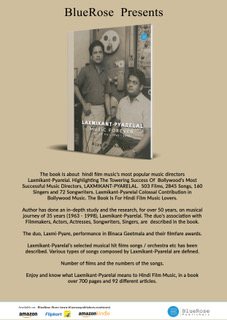
  • LAXMIKANT-PYARELAL Music Forever.

    LAXMIKANT-PYARELAL Music Forever.

    Review of the Book

    LAXMIKANT-PYARELAL Music Forever.

    By P P Ramchandran.

    —————————————————————————

    Mr. P P Ramchandran, popularly known as Mr. PPR. Mr. PPR deserves all praise for his achievement especially at 83 + age. His name should be included in gunnies book of records. He is married to books, has more than 2000 books in his personal library at home. He has reviewed over 1000 books, in 50 years.——————————————————————————————
    I have pleasure in forwarding my review of the book “
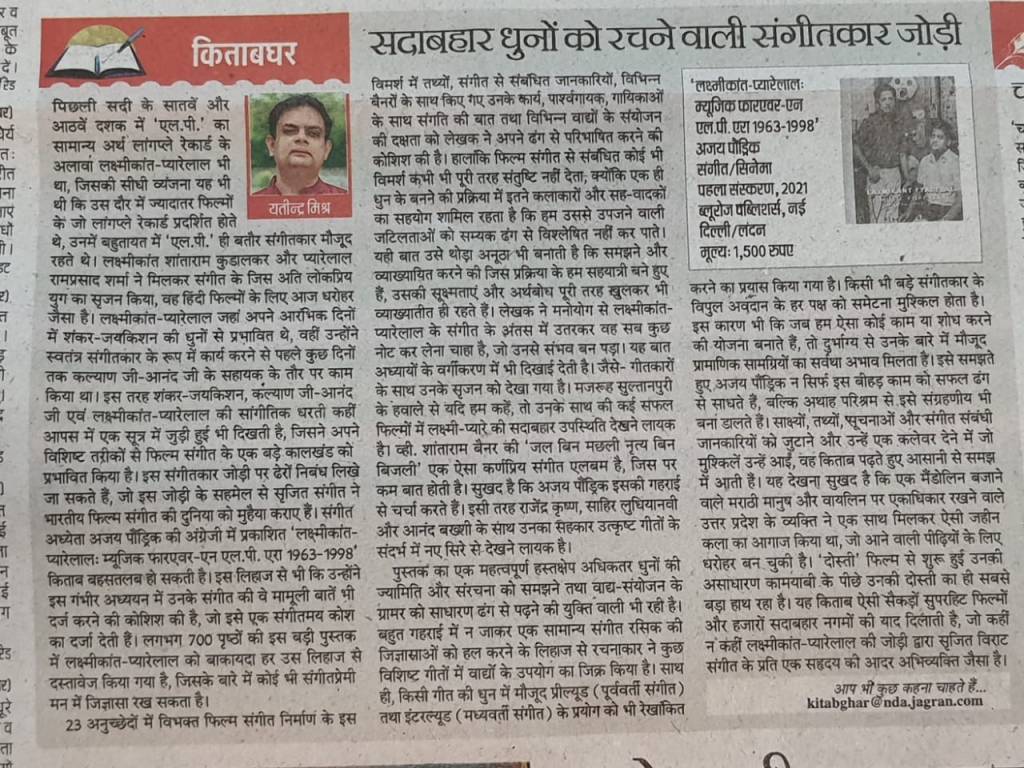
    “Laxmikant Pyarelal, Music Forever” by Ajay Poundarik.
    Do read and respond.

    P.P.Ramachandran.
    05/9/2021.
    *****************************************************************
    Laxmikant Pyarelal —–Music Forever by Ajay Poundarik ; Published by Blue Rose Publisher ; Pages 695 ; Price Rs 1500/- ************************************************************************
    Speaking in the House of Commons on 20th August 1940 in the heart of the Second World War the British Prime Minister Winston Churchill declared, “Never in the field of human conflict was so much owed by so many to so few”, referring to the ongoing efforts of the Royal Air Force fighting the Battle of Britain.

    Slightly amending the British Lion that roared we can say about Shri.Ajay Poundarik the author of the book under review — “ Never in the annals of Hindi film history was so much owed by so many to one individual”.

    The book under review is “ Laxmikant—Pyarelal—Music Forever—An ‘L P’ Era ::1963—1998” .The book is a monumental work—the result of unremitting hard work—collecting, collating, arranging in a palatable form valuable information on the greatest musical duo of

    Bollywood, who dominated the arena for over three and a half decades.

    Laxmikant-Pyarelal is the name that needs no introduction in the field of Hindi Film Music or Hindustani Music. The name represents an archive of hit film music that was churned out non-stop right from 1963 till the end of the century. L–P— Laxmikant-Pyarelal duo was one of the few Hindi Film music directors refreshingly active for almost four decades.

    L-P’s arrival in the Hindi Film Music world was during the year 1963 with the film “Parasmani”—a musical family drama partly black and white partly colour. It had no major star to boast of. The film was a Superhit with six super songs. This was followed by Dosti, Mr X in Bombay, Sant Gyaneswar and Sati-Savitri—all with outstanding songs sung even today.

    This book vividly captures the magic generated by the characters that people the Hindi film world as also those behind the screen—the playback singers and music directors and directors of the golden era of the 1960s and 1970s. The genius of these towering personalities does not end with them- it provides a peep into a time that had a romance and artistic feel all of its own. With the author’s nostalgic lens the reader is led into a fascinating world of emotions, romance, melody and quite a different set of moral values that dominated in the world of Indian cinema.

    To name a few items which the book highlights —Chetan Anand’s fine directorial ability, Raj Kapoor’s showmanship, Dilip Kumar’s perfection as the king of tragedy, Madhubala’s ethereal beauty and Dev Anand’s vibrancy.

    The colossal contribution of Laxmikant—Pyarelal is evidenced by the fact that the Duo gave music to 503 Films creating 2845 Songs, utilising 160 Singers and engaging 72 songwriters.

    When the official history of Bollywood movies comes to be written an important place will be given to a Barometer that gauged the

    popularity of the songs and that was the weekly programme Binaca Geetmala. The show was broadcast in 1953 by Radio Ceylon and the host was Ameen Sayani who had a mesmerising voice that was sweet and singsong. The programme gave ranks to the most popular Bollywood film songs according to sales in select shops in select cities.

    The program captured the entire nation—-as later Ramayana did. Wednesday—8 to 9 p m was dedicated to Ameen Sayani who offered a feast for one hour with selected popular songs.

    The songs soon were selected on the basis of Listeners’ Preferences.At the end of every year lists were compiled based on points earned by songs through the year, by airing it on weekly countdown programmes. These songs were the top hits of the year and was called Binaca Geetmala Final Songs.

    Binaca Geetmala used to broadcast annual (Varshik) programme giving the orders of the top ‘Final Songs” songs of the year, at the end of every year.

    If we count the “Final Songs” of Binaca Geetmala, from 1953 to 1993 the “Final Songs” numbers comes to 1259, in 40 years. Out of this LP captured a whopping 245 songs followed by Shankar Jaikishan with 144 songs. Eleven songs of L P appeared on TOP.

    Another parameter was the Filmfare Awards. Ever since L-P entered into the Hindi Film Music in 1963 they were nominated for the Best Music Director for almost each and every year . Altogether L-P got 7 Filmfare Trophies, including Four Times in a row—1977/1978/1979/1980. Films are Dosti, Milan, Jeene Ki Raah, Amar Akbar Anthony, Satyam Shivam Sundaram, Sargam and Karz. Laxmikant-Pyarelal composed over 2900 songs for nearly 503 films in a span of 35 years.

    Pages 488 to 504 furnish a list of the Films for which the duo gave music from 1963 to1998. About 489 films.

    Pages 505 to 695 gives a whopping list of 2844 songs.
    What is astounding is that the author gives in this list the following details—Film / Year / Singers /Lyricists/ Number of films and the numbers of the songs.

    The book covers every permutation and combination of L-P and singers, lyricists, film producers, even musical instruments—and offers these year wise. Binaca Geetmala awards, Filmfare Awards, etc are also furnished. Quite often songs are analysed in detail.

    Nuggets of information are passed on gently.

    There was a time when there was a rift between Laxmikant and Pyarelal and both of them almost decided to separate. Lata Mangeshkar, Naushad and Subash Ghai took the initiative and resolved the rift. Till date no one knows the cause of the rift.

    An interesting story is connected with the song “My name is Anthony Gonsalves” from the film “Amar Akbar Anthony”. The original name of the character played by Amitabh was Anthony Fernandez. L-P wanted to give a tribute to Pyarelal’s violin guru—whose name was Anthony Gonsalves. They requested Manmohan Desai to change the character’s name to Anthony Gonsalves and he readily agreed and the song is a tribute to a violin teacher from Goa.

    The reader is made to understand the great role of Laxmikant-Pyarelal in the world of Hindi Film Music.

    The book of over 700 pages containing 92 different articles is a veritable feast.

    The author Ajay Poundarik is an Engineer who has undertaken projects in Nigeria, Afghanistan and India.

    One wishes the author had given brief biographies of both Laxmikant and Pyarelal. Also that he had employed a good proof reader.

    P.P.Ramachandran. 5/9/2021

    Review By “Maharashtra Times”

    The Review Of Book :: 

    LAXMIKANT-PYARELAL, Music Forever.

    By Mr Manek Premchand,  Music Historian 

    A Labour of Love The author has been in love with music since his childhood, but absolutely in love with the tunes of Laxmikant-Pyarelal, right since 1963, when the composing duo arrived with a bang in Parasmani. They soon became his heroes, as he says in the chapter Research, Book Writing and Acknowledgment.

    Reading the book itself—694 pages of content with hard-binding—is itself a huge task, so one can imagine how much more it must have taken for the author to put it together in the first place. As a writer myself, I can see what he has not talked about: the hundreds of pages of drafts, the sleepless nights, the obsession to carry on, deliver something of value. Thus, the book is clearly a labour of love. 

    Yes, a lot of thought has gone into this effort, and the book is beautifully arranged from start to end. There is a listing, for example, on actors who lip-synched L-P’s songs (which are mentioned), with the author covering the major ones like Amitabh and Dharmendra of course, but not sparing even minor actors like Javed Jaffry, Laxmi Chhaya or Kimi Katkar. 

    There’s excellent information on the use of musical instruments too. He tells us for instance, that in the qawwali Parda hai parda (Amar Akbar Anthony, 1977), the maestros used plenty of the mandolin, shehnai/naadaswaram, and synchronised these with the tabla/dholak. Did you know too that Main shair to naheen (Bobby, 1973), involved the use of the Iranian santoor, guitar, accordion and viola? Not just that, Poundarik sometimes even tells us who played the musical instruments in specific songs. As an example, from the same Bobby, the song Hum-tum ik kamre mein band hon featured the Iranian santoor played by Shivkumar Sharma and the accordion by Sumit Mitra.

    The author has looked at the all-important harmonium, and listed out songs that featured the instrument on the screen too, not only in the songs composed by Laxmikant-Pyarelal, but by a range of musicians, right from Anil Biswas (Shukriya aye pyaar tera shukriya/Aaram, 1951) to Sonik-Omi (Raaz ki baat keh doon to/Dharma, 1975). That’s beautiful trivia, but there’s more of it sprinkled throughout the book. Did you know for instance that Sanjeev Kumar began his career as a police officer in Hum Hindustani (1960)? Or that actor Sanjay Khan started up in films around the same time as Laxmikant-Pyarelal? The author then weaves these actors with the music of these maestros.

    There’s an exciting chapter on L-P’s creation of tunes based on Hindustani classical raags. You think of Roshan tumhi se duniya and Suno sajna papihe ne (both raag mishr Pahadi) or you read about their marvellous work in raag mishr Kalavati: Agar dilbar ki ruswaayi humen manzoor ho jaaye, as well as Kabhi to miloge jeevan saathi. These and many more are what you find as precious gems in this wonderfully elaborate book. 

    In fact, the author has done exhaustive commendable work in a beautiful array of chapter headings, none more vital than the filmography and discography, listed at the end of the book. The author informs us through lists that Laxmikant-Pyarelal’s music was featured in over 500 films, including 14 regional ones, and they ended up composing 2844 songs. Whew!

    Among the book’s many merits though, there’s one downside in it: there are plenty of typos scattered through the book. These are in film titles, the songs, and most importantly in the read itself. This jars somewhat, taking away a bit from the remarkable read about the amazing music-composing team. Even so, it is a good book, especially for purposes of reference .Manek Premchand Music Historian

    Amazon.in
    Amazon.in
    amazon.in
    amazon.in
    amazon.in

  • Conspicuous Ternion :: Majrooh Sultanpuri & Laxmikant-Pyarelal

    Conspicuous Ternion :: Majrooh Sultanpuri & Laxmikant-Pyarelal

    Conspicuous Ternion :: Majrooh Sultanpuri & Laxmikant-Pyarelal

    Majrooh Sultanpuri, as a songwriter, entered into film music in 1945. His contributions to the Indian film music is boundless. His lyrics effortlessly blend with the tunes, the words soothingly flowing over the notes that even after decades’ people would still murmur these numbers. 

    Young Laxmikant-Pyarelal made a staggering and incredible entry into Hindi Film Music in 1963, through the music of the film Parasmani. Likewise Majrooh Sultanpuri, Laxmikant–Pyarelal too have immeasurable services in hindi film music, persistently, for nearly 500 films, in 35 years, starting from 1963 to 1998. 

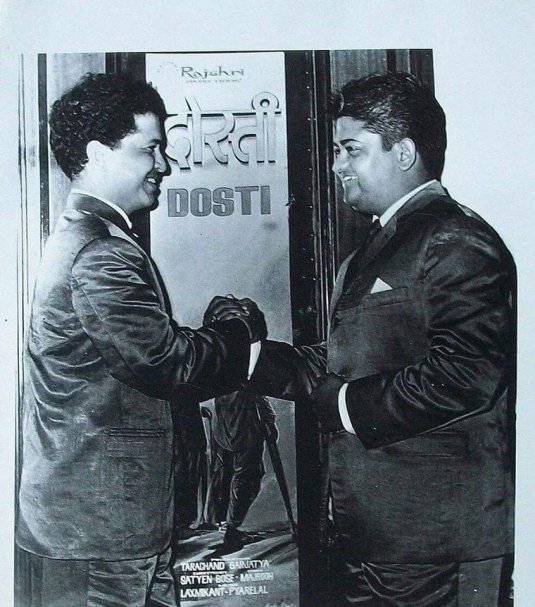
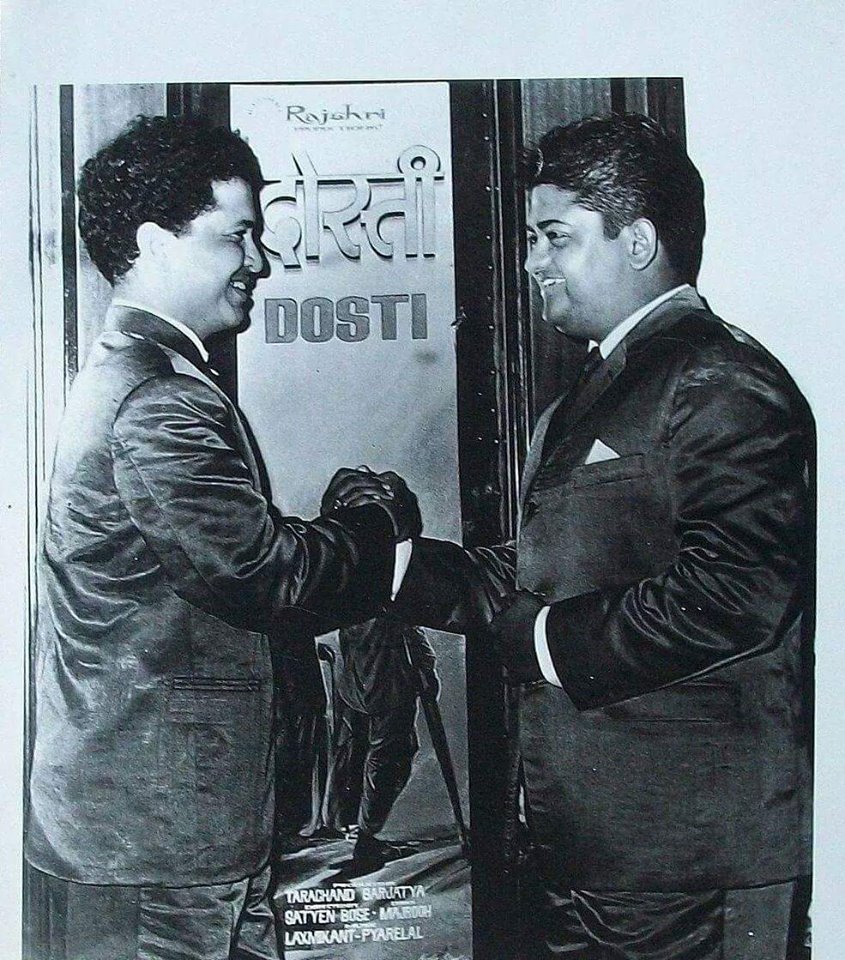
    In 1964, the partnership of Majrooh Sultanpuri and Laxmikant-Pyarelal started through the film Dosti. Laxmikant–Pyarelal got more out of the veteran Mahrooh in Dosti (1964). It was Majrooh’s award-winning lyrics. Majrooh won his only filmfare award. Laxmikant–Pyarelal too won their first Filmfare award for the music of  Dosti.  

    Majrooh Sultanpuri and Laxmikant-Pyarelal worked for nearly 40 films. The Laxmi-Pyare and Majrooh team produced some spectacular, noteworthy albums like Dilllagi (1966), Pathar Ke Sanam (1967), Shagird (1967), Mere Hamdam Mere Dost (1968), Dharti Kahe Pukar Ke (1969), Abhinetri (1970), V. Shantaram’s classic, dance-musical, Jal Bin Machhli Nritya Bin Bijlee (1971), Ek Nazar (1972), Imtehan (1974) and many more but for most music lovers, Dosti (1964) towered above them because of its freshness and simplicity.

    DOSTI film, directed by Satyen Bose, gave ‘name’ and ‘fame’ to both Laxmikant-Pyarelal and Rajshri Films (Tarachand Barjatya), as well.  DOSTI music put Laxmikant-Pyarelal in top music directors rank and made them a “household name”.      

    After this victorious feat Laxmikant-Pyarelal and success went together without a break or loss of continuity.

    Listing below Majrooh Sultanpuri and Laxmikant-Pyarelal Films:- 

    Dosti  1964

    Mere Lal 1966

    Dillagi  1966

    Patthar Ke Sanam 1967

    Shagird  1967

    Mere Hamdam Mere Dost   1968

    Baharon Ki Manzil  1968

    Pyasi Shaam 1969

    Wapas  1969

    Meri Bhabhi 1969

    Dharti Kahe Pukar Ke   1969

    Abhinetri  1970

    Jal Bin Machhali Nritya Bin Bijlee   1971

    Ek Nazar  1972

    Barkha Bahar  1973

    Anokhi  Ada 1973

    Nirman  1974

    Imtihan  1974

    Anari  1975

    Mere Sajana 1975

    Dus Numbari  1976

    Naach Uthe Sansar  1976

    Parvarish  1977

    Ladies Tailor  1981

    Khoon Aur Paani  1981

    Pakhandi 1984

    Watan Ke Rakhwale  1987

    Janam Janam 1988

    Kanoon Ki Zanjeer 1991

    Rishta Ho To Aisa 1992

    Badi Bahan 1993

    BINACA GEETMALA 

    Majrooh Sultanpuri and Laxmikant-Pyarelal are involved in a total 22 numbers of Binaca Geetmala Finals. 1964 started with 2 songs from “Dosti ”.  Position / Number 2 in 1965, “Dosti ” Chahunga Mein Tuze Sanz Savere.  In 1966 the songs from ‘DillagiYe Aaj Kal Ke Ladake and “Mere LalPayal Ki Jhankar Raste Raste made a big impact in the finals.  

    In 1968  total 8 songs of Laxmikant-Pyarelal found a place in the finals. Out of 8 songs  6 songs were from Majrooh-LP,  two each from “Shagird,” Bade Miyan Deewane and  Dil Wil Pyar Wyar,  “Mere Hamdam Mere Dost’ Chhalkaye Jaam and Chalo Sajana,Patthar Ke Sanam Mehboob Mere Mehboob Mere and Batadu Kya Lana, found the place in final songs with  Number 1 song, top of the chart from  “ShagirdDil Wil Pyar Wyar Main Kya Janu Re.

    1969 Number 12,  Ek Tera Saath .”Wapas”, number 8 Je Hum Tum Chori Se Dharati Kahe Pukar Ke”. 1970 number 8 Sa Re Ga Ma PaAbhinetri”. In the year 1971, two  songs from “Jal Bin Machhli Nritya Bin Bijlee”  O Mitwa O Mitwa  and Taron Na Sajkę found the place in the finals. 

    Laxmikant, Majrooh Sultanpuri & Pyarelal

    Review of the songs:-

    I have tried to get the best of Majrooh Sultanpuri ** Laxmikant-Pyarelal. BUT I cannot forget the FOUR GEMS. Two each from “Imtihan” (1974), ‘ruk jana nahin’ ** roz sham aati thi, and “Mere Sajna” (1975) ‘maine kuchh khoya hai’ ** ‘ye kaun hasa’ two each rendered by Kishore Kumar and two each sung by Lata Mangeshkar.  Unique styles in terms of songwriting, composition as well as rendering. I feel sorry for not posting  musical “Dillagi” (1964) songs.

    The orchestra arrangements in “preludes” and “interludes” used to be the assets of the songs composed by Laxmikant-Pyarelal. It would be more proper to listen to the songs  after reading the write up, explaining peculiarities, for each of the songs, you will enjoy it more.

    DOSTI    1964    (Singer:-  Mohammad Rafi)

    It was Rajashri Film’s second movie with No Stars, No Heroin, No Hero.  Most of the prominent music directors of that time refused to score the music for this film as there was no star cast (two teenage unknown actors) and also they felt there was nothing in the film to compose the songs for Blind and Physically Disabled Children. But Laxmikant-Pyarelal took up the challenge and the film music became a History. All the songs written by Majrooh Sultanpuri and melodiously composed by Laxmikant-Pyarelal became the “STAR” of the films.

    Mera To Jo Bhi Kadam….M Rafi

    Rahi Manwa Dhukh Ki Chinta….M Rafi

    Janewalo Jara Mudke….M Rafi

    Koi Jab Raah Na Paye….M Rafi

    Gudiya Hamse Ruthi...Lata

    Chahunga Main Tuze Sanz Savere…..(Singer:-  Mohammad Rafi )

    The most famous song from the film. It starts with the sentimental “prelude”, full of FLUTE, in raag ‘pahadi’. BAMBOO FLUTE and VIOLINS are admirably executed in all the ‘interludes’. SYMPHONY style VIOLINS are mellifluously used, as ‘filler’ at the end of each of ‘anara’ that is the ‘beauty’ of the composition. The song has an excellent “DHOLAK” rhythm.  Mohammad Rafi is simply outstanding in rendering. Initially this song was to be scrapped from the soundtrack. It was Rafi Saab who insisted Laxmikant-Pyarelal to retain the song and what a momentous decision that was from Dosti where there was no looking back. Rafi was so impressed with the compositions of Laxmikant Pyarelal that he had taken just one rupee for singing the song.

    MERE  LAL  1966  (Singer:-  Lata Mangeshkar)

    Average hit film directed by Satyen Bose, starring Indrani Mukharjee and Dev Kumar. The song ‘Payal Ki Jhankar Raste Raste’, pulled the crowd into the cinema hall, the superhit song of the year 1966. Lata Mangeshkar has sung 5 solos. The songs were  good. 

    — Lal Tera Jug Jug Jiye Mata …Lata

    — Jabtak Ye Sansar ….Mukesh – Usha

    — Meri Patli Kamar Lambe Bal Re ….Lata

    — Badal Roye Naina Roye …Lata

    Payal Ki Jhankar Raste Raste     (Singer:-  Lata Mangeshkar)

    Mesmerizing “Prelude” of 40 seconds, full of HARMONIUM, MANDOLIN (overlapped with Harmonium), FLUTE and DHOLAK, sets the mood to listen to this gem of composition. Entire song is woven around glimpses of HARMONIUM (played by Sonik Verma, a Blind Musician, of Sonik-Omi music director pair). All the “Interludes” have different tunes. The Best Song In Terms Of Use Of Harmonium. MANDOLIN is brilliantly used as a “filler” in between Lata Mangeshkar’s voice, giving ear-pleasing moments. Super Duper HIT song of the year 1966, A sheer VARIETY from the unique combo of LATA MANGESHKAR & LAXMIKANT-PYARELAL.

    The song is filmed on Indrani Mukharjee who gambol beautifully on DHOLAK rhythm. 

    PATTHAR KE SANAM  1967   (Singer:-  Lata Mangeshkar)

    It was A G Nadiadwala production film directed by Raja Nawathe. Manoj Kumar, Waheeda Rehman Mumtaz starrer, a super hit movie. All the songs are hit. The songs became popular and still can be heard even today. 

    Bata Du Kya Lana …Lata

    Koi Nahi Hai Phir Bhi ….Lata

    Aye Dushman – E- Ja…. Asha 

    Tauba Ye Matwali Chal…….Mukesh

    Mehboob Mere Mehboob Mere… (Singer:- Mukesh – Lata Mangeshkar)

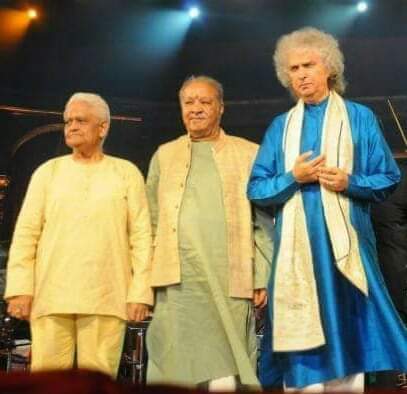
    When #Pyarelal ji told Pandit Shivkumar Sharma to play #SANTOOR with his “nails” for this melodious song. LAXMIKANT-PYARELAL have extensively used the mellifluous instrument from “Kashmir” named SANTOOR…. Santoor used to be prominently played instrument in most of the songs by Laxmikant-Pyarelal right from 1965. There are many TOP HIT songs which are decorated with Santoor in Laxmikant-Pyarelal’s orchestra arrangements. This particular song from “Patthar Ke Sanam” (1967) is awesomely orchestrated, “prelude’ of 16 seconds and all the “interludes”, with SANTOOR (played by Pandit Shivkumar Sharma) and the FLUTE (played by Pandit Hariprasad Chaurasiya). To create a different sound of Santoor, in the song, Pyarelalji told Shivji to use his ‘nails’ instead of the ‘wooden sticks’. Even the ‘strokes’ of the Santoor in the song, at various places, are played through the nails. See how beautifully this immortal song has been created. This song is Laxmikant-Pyarelal’s symphonic orchestra arrangements with astonishing DHOLAK rhythm. 

    SHAGIRD   1967  (Singer:-  Lata Mangeshkar)

    A comedy movie. Story between Confirmed bachelor, professor and his student who consider him as a mentor. Produced by Subodh Mukharjee and Directed by Samir Ganguly. It was a super musical hit celebrating Golden Jubilee Run (50 weeks) in many towns of India. The film has Joy Mukharjee -Saira Banu in lead and comedian I S Johar. All Songs HIT.

    Bade Miyan Deewane Aise Na Bano  …Manna Dey – M. Rafi

    Kanha Kanha Aan Padi Mein…Lata

    Dil Wil Pyar Wyar Main Kya ...Lata (Number -1, TOP song of Binaca Geetmala 1968)

    Woh Hai Zara Khafa Khafa …Lata-Rafi (all time hit)

    Udate Pawan Ke Sang ….Lata (India’s sound of music)

    Duniya Pagal Hai Ya Phir Main Deewana (Singer:- Mohammad Rafi)

    Rock N Roll style rhythm. GUITAR is excellently orchestrated.

    MERE HAMDAM MERE DOST   1968  (Singer:-  Lata Mangeshkar)                                                      An outstanding musical album from the legends Laxmikant-Pyarelal and Majrooh Sultanpuri. As many as “ 7 SOLO”” songs….4 lovely, melodious solo songs by Lata Mangeshkar and 3 mellifluous solos sung by Mohammad Rafi. The film was directed by Amar Kumar, starring Dharmendra – Sharmila Taigore and Mumtaz. Laxmikant-Pyarelal were in supreme form in 1967/68. Whatever Laxmikant-Pyarelal composed used to become popular and hit.

    The songs are popular even today. Almost all the songs are melodious and sweet and are beautifully decorated with wonderful orchestra arrangements. 

    Chalkaye Jaam  …Rafi

    Tum Jao Kahin ..Lata

    — Hamen To Ho Gaya Hai….Lata

    Allah Ye Ada Kaisi ….Lata

    Hame To Ho Gaya Hai Pyar.…Lata

    – Chalo Sajna Jahan Tak Ghata Chale ...Lata

    Hui Sham Unka Khayal      

    “Prelude” is full of SAXOPHONE and PIANO with other western instruments, sets the mood of the song. A mesmerizing composition and mellifluous orchestra arrangements. Entire song is woven around the glimpses of SAXOPHONE, ACOUSTIC GUITAR & CLARINET. In all the “interludes”. Overlapping sound effect of SAXOPHONE/CLARINET with PIANO is just brilliant. VIOLA , GUITAR, CELLOS & VIOLINS are also brilliantly executed in entire song. Another beauty of the song is it’s “ rhythm” DHOLAK / TABLA are used only in “antara”…all the “interludes:” are without any rhythm but just ear-pleasing. An addict song for me. One of the finest composition from Laxmikant-Pyarelal …MOHAMMAD RAFI is simply outstanding.

    BAHARON KI MANZIL   1968    (Singer:-  Lata Mangeshkar)

    One of the finest musical albums from Majrooh – LP. Dharmendra – Meena Kumari. This film too has as many as 4 solo from Lata Mangeshkar. All are classic.

    — Aaja Re Piya ..Lata

    — Janam Din Aaya…Lata

    — Ye Daman Ab Na Chhutega

    Nigahen Kyon Bhatakti Hai        (Singer:-  Lata Mangeshkar)

    Haunting melody, an extremely melodious song. Enjoy the beautiful DHOLAK rhythm as well as Lataji;s AALAPS. Lataji steels the show while singing चले आओ, ss  चssले आओ

    WAPAS  1969                                                                                                                                    The film is directed by Satyen Bose (who directed “Dosti”, “Mere Lal” earlier). Starring unknown actors and actresses, Shekhar Purohit, Azra, Alka, Satyajeet and Parikshit Sahani ( Ajay Sahani) who was making his debut. The film has some fabulous music. Out of the total five songs FOUR songs are rendered by Mohammad Rafi.

    Paijaniya Chhanake Ram..Rafi (pure Indian classical)

    — Aayi Baharon Ki Shaam…Rafi (western classical)

    Gudiya Si Meri Ladali …Rafi

    Door Hai Wo Aanchal …Rafi

    Zun Zuna Zaaje …Usha Mangeshkar

    Ek Tera Saath    (Singers:- Lata – Rafi) 

    Magnificent magical praiseworthy poetic song of Majrooh Sultanpuri, romantic eternal feelings, a very amazing duet. MELODY with a SYMPHONY style orchestra arrangements. You can enjoy a FUSION style, in almost all the Laxmikant-Pyarelal compositions. A fusion genre is music that combines two or more styles. FLUTE, VIOLA, SANTOOR with TABLA are brilliantly executed in this song. In the interludes, Flute & Viola give different tunes and along the side you enjoy Tabla rhythm with the ear-pleasing display of SANTOOR. The song is based on Indian Semi-Classical raag and the orchestra has a western style touch. LP’s specialty is a “PAUSE’ .. is another plus point of this song. This has been an extremely melodious song sung by Mohammad Rafi and Lata Mangeshkar. An addict one for me. Don’t forget to listen to the start with Rafi’s voice “Ek Tera Saath” .. just brilliant take-off..

    DHARTI KAHE PUKAR KE    1969   (Singer:-  Lata Mangeshkar)

    Musical Blockbuster Film with Captivated Songs. Deenanath Shastri, the producer of the film and a very good friend of songwriter SHAILENDRA, has signed Shailendra to write the songs for this film. But the sudden death of Shailendra put the full-stop to Laxmikant-Pyarelal with Shailendra.

    — Jaa Re Kare Badra ..Lata

    — Khushi Ki Raat Aa Gayi ..Mukesh

    — Diye Jalaye Pyar Ke ..Lata (Beautiful song composed  in “WALTZ” style)

    — Dharti Kahe Pukar Ke ..Rafi

    Je Hum Tum Chori Se ..  (singers:- Lata Mangeshkar – Mukesh )                                                      An Extremely Melodious Duet Composed In “Folkish” Style.                                                                       27 second of ‘prelude’ full of BANSURI, SANTOOR & FLUTE. Traditional Musical Instruments SHEHNAI / NADASWARAM are predominantly used in the orchestra mainly in all the ‘interludes’ and ‘postlude’. Euphonious DHOLAK ‘rhythm’ synchronized with the GHUNGROO BELLS, enthralls the listeners.

    ABHINETRI    1970    (Singer:-  Lata Mangeshkar)

    It was Subodh Mukharjee’s musical hit movie. Once again Album is dominated by Lata Mangeshkar who has sung as many as 6 songs, including 4 solos. All songs are melodious and wonderfully composed. 

    Sajna O Sajna….Lata (Fabulous melody and composition)

    Dhadkan Har Dil Ki …. Lata

    — Khinche Humse Sanware ….Lata (Beautiful DHOLAK rhythm)

    Sa Re Ga Ma Pa….Lata-Kishore (The most popular song of the film)

    Milte Hi Rahenge Hum …. Lata-Mahendra – K.

    Bane Bade Raja ….Asha Bhosle. 

    O Ghata Sawari   (Singer:-  Lata Mangeshkar)

     A Yoga song. Magnetizing “prelude” of 57 seconds, with symphony style VIOLINS , JAZZ FLUTE, SANTOOR, GLOCKENSPIEL and Lata’s Humming Sound.  How delicately and tunefully Laxmikant-Pyarelal have orchestrated the synchronization of Lata’s voice with beautiful glimpses of JAZZ FLUTE, is just enthralling as well as creating the rainy season effect and also sets the mood of the song.  All the “interludes” are with different tunes. In the second ‘interlude’ creating WATER SOUND is killer. Glimpses of JAZZ FLUTE , as filler, in between the song + “pause” and the western style rhythm s has made this song a special. Filmed on the actress Hema Malini, performing YOGA.

    JAL BIN MACHHALI NRITYA BIN BIJLEE   1971    (Singer:-  Lata Mangeshkar)

    To work with veteran Actor, Producer – Director, Dadasaheb Phalke Award winner  

    V Shantaram used to be a pride. He was a great connoisseur of talent.The quality of the songs and music for V. Shantaram film’s used to be unique and special. Music used to be the asset for his films. V. Shantaram used to have something new for his film. This time it was for the First Time For Hindi Film Music all the songs of this film were recorded in Stereophonic Sound System. Lata Mangeshkar has sung as many as FOUR solo songs in addition to TWO duets with Mukesh. Mukesh has sung one song which became immensely hit. If you look at this JBMNB Album, all the songs are composed in a different style. Each and every song have different compositions and ‘rhythm’ patterns, as well. The orchestra arrangements for all the songs is just mesmerizing.

    Man Ki Pyas Mere Man Se …..Lata

    Jo Main Chali…Lata

    O Mitwa O Mitwa…..Lata

    Baat Hai Ek Boond Si….Lata – Mukesh

    — Jhum Ke Gaye Dil ...Lata – Mukesh

    Taron Ne Sajke...Mukesh

    Kajara Laga Ke Bindiya Saja Ke  (Singer:- Lata Mangeshkar)

    The anecdote described  by Shree Pyarelalji, how the song was recorded. A long musical sitting was held between V. Shantaram, Actress Sandhya, Laxmikant-Pyarelal and Majrooh Sultanpuri. Actress Sandhya first demonstrated the dance steps, performed the full dance and then told Laxmikant-Pyarelal to prepare the tune and rhythm by watching her steps. It was a different and unique style to compose the song.  Laxmikant-Pyarelal along with Lata Mangeshkar and Majrooh Sultanpuri came out with an outstanding composition.

    A song on #MAYURDANCE. One more gem of composition with different styles. FLUTE is prominently used in western style. Perhaps the longest “prelude” 3 minutes and 27 seconds of beautiful dance sequence. This song is a GEM. FLUTE and SANTOOR, VIOLIN, VIOLA and GUITAR are prominently used and synchronized as well as overlapped, in western style orchestra arrangements with different styles of rhythm with DHOLAK. Also don’t forget to listen to the “postlude” of the song and “Mayur Dance”.

    EK NAZAR   1972      (Singer:- Lata Mangeshkar)

    It was the first film of B R Ishara as a Producer / Director, starring, Husband – Wife pair of  Amitabh BachchanJaya Bhaduri, with lustrous music by Laxmikant-Pyarelal. Melodious songs, great music by Laxmikant-Pyarelal and heart touching lyrics by Majrooh Sultanpuri , all the songs were phenomenal but since the film flopped went under popularity.

    — Patta Patta Buta Buta — Lata-Rafi  (the most popular song of the film)

    — Pehle So Baar ..Lata (beautiful Mujra song)

    — Hameen Karen Koi Soorat Unhe Bhulane Ki….Lata (beautiful Mujra song)

    — Pyar Ko Chahiye Kya ..Kishore (rare Gazal song from Kishore Kumar)

    Ai Gham-E-Yaar   (Singer:- Mahendra Kapoor)

    Perhaps this is the only song sung by Mahendra Kapoor for Amitabh Bachchan. 30 seconds of ‘prelude’ full of FLUTE, SANTOOR, CELLOS and  VIOLINS. IRANI SANTOOR, VIOLINS, SARANGI, CELLOS are awesomely instrumented in the ‘interludes’. Tuneful DHOLAK rhythm. 

    ANOKHI ADA  1973

    Musical hit film starring JeetendraRekha and Mehmood

    Sundari Hi HI Sundari ….Kishore

    Tere Dil Main …Lata-Rafi

    Jawani Tera Bol Bala….Manna Dey – Asha 

    Gum Gayi ..Asha

    Haal Kya Hai Dilon Ka     (Singer:- Kishore Kumar)

    IMTIHAN   1974    (Singer:-  Lata Mangeshkar)

    It’s said in our ancient scriptures that the Guru (teacher) has to set and follow extremely high standards for his conduct because he is an idol for the Shishyas (students) which they adore and emulate. “Imtihaan” , by default, has this story . An inspiring movie to all the movie-buffs.

    The songs from this film, all the four songs are hit. It was a film between super hits of Laxmikant-Pyarelal  “Bobby” , “Daag” , “Manchali” and “Roti Kapda Makan”, “Loafer”.

    Roz Sham Aati Thi …..(Singer:- Lata Mangeshkar)

    The unique combo of Lata Mangeshkar and Laxmikant-Pyarelal have given many memorable songs in the sixties ( close to 179 songs). It was also expected to deliver the best in the seventies too. The song is popular even today. On the top of everything…the chemistry of Lataji and  LP worked miracles.

    67 seconds “prelude”::-  0.15 seconds, TWEETING of BIRDS, Than GUITAR glimpses starts, FRENCH HORN (0.34 to 0.44), IRANI SANTOOR ( till 0.55) and than Lataji’s AALAP till 1.06 and the “pause”…giving the feel of ‘sunset’.  Just brilliant. It sets the mood of the song. 

    Powerful RHYTHM of BONGO / CONGA DRUMS and it’s PAUSES. Lataji stops after singing ‘roj shaam aati thi’ (रोज़ शाम आती थी ) (1.11…1.14) just listen to the “rhythm”, again at 1.16 ….1.19…This gives an “ear-pleasing” moment to listen to the rhythm only. You will again find such “pauses” in the song. 

    “Interludes”:- Both the interludes are beautifully decorated in western style orchestra arrangements with use of VIOLINS, CELLOS, IRANI SANTOOR and FRENCH HORN.

    Ruk Jana Nahin      (Singer:- Kishore Kumar)                                                                     Inspiration Song. Wonderful Singing by Kishore Kumar on “high notes” and perhaps one of his best songs in the mid-seventies, carrying  variety. Beautifully penned by Majrooh Sultanpuri, truly an inspiring word. Wonderful decoration of highly RICH orchestra consists of CHURCH BELL (overlapping with the ‘rhythm’), GUITAR, IRANI SANTOOR, ACOUSTIC GUITAR, VIOLINs, FLUTE  and TRUMPET (Military BIGUL). Western style “rhythm” with Bongo Drums. All the three “interludes” have three different tunes. Another ‘killer’ part of the song is the various “pauses” given by Kishore Kumar and Laxmikant-Pyarelal.

    MERE SAJNA  (1975)

    Naveen Nischal – Rakhee Gulzar starrer with good songs. 

    — Mere Sajna …Lata

    Maine Kuchh Khoya Hai     (Singer:-  Kishore Kumar)

    Unique composition 

    Ye Kaun Hasa  (Singer:-  Lata Mangeshkar)

    Again Lata Mangeshkar & Laxmikant-Pyarelal chemistry worked for this uncommon composition. 

    Ajay Poundarik, Atlanta (Georgia), USA.

  • Laxmikant-Pyarelal & Anand Bakshi Heterogeneity Of Songs For Kishore Kumar

    Laxmikant-Pyarelal & Anand Bakshi Heterogeneity Of Songs For Kishore Kumar

    Laxmikant-Pyarelal & Anand Bakshi Heterogeneity Of Songs For Kishore Kumar 

    Laxmikant-Pyarelal made banging as well as vigorous start through the music of Parasmani, released in the fourth quarter of 1963.

    In the next year, 1964, after creating a Magical Hits with Lata Mangeshkar Sati-Savitri and Sant Gyaneshwar and Mohammad Rafi Dosti,  it was now time for Kishore Kumar to create a vintage musical hit songs with Laxmikant-Pyarelal

    Both Laxmikant and Pyarelal, relatively new, went to Kishore Kumar’s house with the song “tune”. Kishore Kumar was so happy to listen to the tune that he started telling everyone present in the house, his gardener, stewards, security guard that see these two boys (Laxmikant & Pyarelal ) has bring very sweet and memorable tune for me. That song was “Mere Mehaboob Quyamat Hogi”.

    Memorable Primer Meet Of  Kishore Kumar, Anand Bakshi & Laxmikant-Pyarelal

    Eternal Classic Song “मेरे मेहबूब क़यामत होगी”  “MR X IN BOMBAY” 1964

    FIRST EVER SONG of Songwriter ANAND BAKSHI with LAXMIKANT-PYARELAL. Later this combo went on to work for 304 films with over 1680 songs,

    FIRST EVER SONG of Singer KISHORE KUMAR with LAXMIKANT-PYARELAL . Later this combo went on to be associated with 402 songs. 

    The Combination of Anand Bakshi, Laxmikant-Pyarelal and Kishore Kumar was involved in a total of 273 songs, including 103 of solo songs. 

    There are many films in which Kishore Kumar has sung 4 or  more songs, involving Anand Bakshi and Laxmikant-Pyarelal. Haathi Mere Saathi, Amir Garib, Roti, Aakraman, Aashiq Hoon Baharon Ka, Anurodh etc

    We are to highlight few of the best 

    Mere Mehaboob Quyamat Hogi …(Mr X In Bombay, 1964)… Sad Song  

    The song is based on raag Bhairavi and it starts with the beautiful “prelude” of 20 seconds with the glimpses of VIOLINS, ACCORDION, GUITAR and MANDOLIN.

    Mere Naseeb Mein Ae Dost…. (Do Raaste, 1969) Emotional Song

    The song is based on raag Yaman Kalyan.  Kishore Kumar’s  soft rendering and Laxmikant-Pyarelal’s SYMPHONY style orchestra arrangements.

    Vaada Tera Vaada (Dushman, 1972 ) Mujra /Qawwali

    Entire song has  “qawwali” style DHOLAK / MATAKI rhythm. SANTOOR and SARANGI are well executed in the ‘interludes”. SARANGI is also used as filler in the “mukhada” to give Mujra touch to the song. 

    Mere Dwanepan ki bhi dawa nahin…. (Mehaboob Ki Mehandi, 1972)  Romantic

    This romantic song based on Raag “Tilang” starts with the ‘humming’ sound by Kishore Kumar. “Mukhada” is wonderfully synchronized by ‘filling’ SARANGI and FLUTE around Kishoreji’s melodious and romantic  rendering. All the three ‘interludes’ have different type of tunes and orchestral  arrangements.

    Yeh Jeevan Hai …(Piya Ka Ghar, 1972)                                                                        Anand Bakshi writes ये ना सोचो इसमें अपनी हार है की  जीत है ! उसे अपना लो जो भी जीवन की रीत है   One of the finest songs from  Kishore Kumar with Laxmikant-Pyarelal.

    Gaadi Bula Rahi Hai   (Dost, 1974)                                                                              This Song Means Be Positive Every Time Do Not Think Negative Any Time In Life. Life Will Be Happy. Pretty Philosophical Words Penned By Anand Bakshi. गाडी को देख कैसी है नेक अच्छा बुरा न देखे ! सब है सवार दुश्मन के यार सबको चली ये लेके !
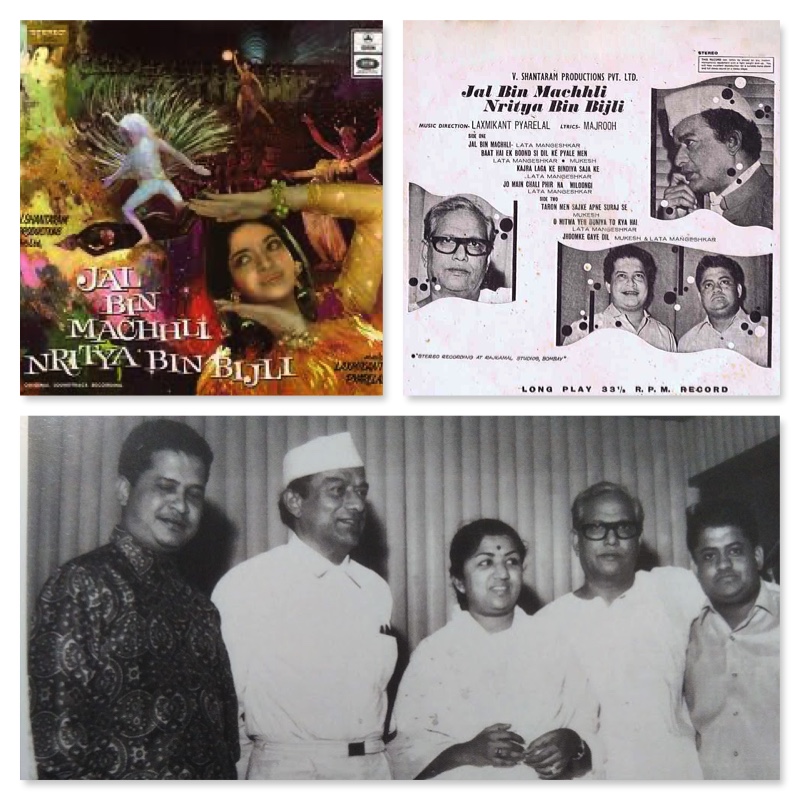
    Aadmi Jo Kehta Hai ….(Majboor,  1974)                                                                       Anand Bakshi penned   कोई भी हो हर ख्वाब तो अच्छा नहीं होता ! बहोत ज्यादा प्यार भी अच्छा नहीं होता 

    Aap Ke Anurodh Pe…. (Anurodh, 1977)  Classical

    Hypnotizing orchestra from Laxmikant-Pyarelal  and stupefying rendering by Kishore Kumar. This mellifluous song is composed on Raag “Yaman Kalyan”.

    Ek Ritu Aaye Ek Ritu Jaye…. Goutam Govinda, 1979 Soft Rendering

    Exceptionally soft  rendering by Kishoreji, many pathos. In the beginning of the song Laxmikant-Pyarelal used BICYCLE.

    Om Shanti Om        Karz  1980  Disco /Western    

    Spellbind, Huge and Enrich  orchestra arrangements in western style,  throughout the song. Despite Kishore Kumar’s usual shouts and Laxmikant-Pyarelal’s boisterous orchestra, the melody part of the song is not lost. 

    Ye Dard Bhara Afansana      Shreeman Fantoosh  1965 

    Laxmikant-Pyarelal was able to get the best output from Kersi Lord  when he played the ACCORDION for this beautiful song.

    ये दर्द भरा अफसाना, सुनले अनजान ज़माना जमाना 

    मैं हूँ एक पागल प्रेमी मेरा दर्द न कोई जाना                      

    In the mid-sixties Kishore Kumar was passing through the lean period of his musical career. Laxmikant-Pyarelal composed some of the best songs for Kishore Kumar. This song is one of them. A beautiful GEM of a song from this combo. A song which shows Laxmikant-Pyarelal class and talent right in the beginning of their career. The entire song is woven around t“Haathi Mere Saathi”. he glimpses of ACCORDION. ACOUSTIC GUITAR, symphony VIOLINS are beautifully orchestrated in ‘interlude’ ‘prelude’ and ‘postlude’. Western style, ROCK N ROLL, rhythm.

    Soi Ja Tara     Mastana   1971

    This is filmed on actor Mehmood and beautiful child artist Nain-Tara Dhanraj.   Extremely melodious and emotional song with wonderful DHOLAK rhythm. The song is orchestrated with symphony VIOLINS, FLUTE and SANTOOR.

    Chal Chal Mere Saathi               Haathi Mere Saathi. 1971

    Song that stormed the nation.

    Kishore Kumar, Laxmikant-Pyarelal & Anand Bakshi.  

    It was the peak period for film star RAJESH KHANNA, singer Kishore Kumar,  the songwriter Anand Bakshi as well as the music director Laxmikant-Pyarelal. 

    A Huge Hit Song. Kishore Kumar’s voice is really refreshing enough and melodiously unmatched. Wonderful Orchestra Arrangements in particular the SAXOPHONE / CLARINET / TRUMPET  is brilliantly executed to generate the Elephant Sound (roaring/trumpeting) with unique toe-stepping rhythm. The song is written by Anand Bakshi. “Haathi Mere Saathi” ranks high among the biggest ever hits of RAJESH KHANNA’s career. But the film ranks as a classic because it is still unequalled as the complete family fare in its genre for kids. It was the biggest hit ever made by a South producer in Hindi.

    The film was released in the year 1971 in the month of May. A time for school /college vacations. A perfect time to catch the audience. It has celebrated the “SILVER JUBILEE” in almost every part of India.It was the very first film for writer SALIM-JAVED.. This pair took off from this film only.

    Melodious, Sweet as well as very popular music pulled the crowd to the cinema hall.

    Jaani O Jaani Jaani O Jaani     Raja Jani  1972

    The title track song is filmed in the background. Distinctively intoned by Kishore Kumar on western notes. Entire song is orchestrated on ACOUSTIC GUITAR,  BASS GUITAR, WHISTLING, FLUTE and CHORUS on western notes. One of the best from Kishore Kumar and Laxmikant-Pyarelal.

    Manchali Kahan Chali       Manchali       1973

    Romantic Song, orchestrated with ACOUSTIC GUITAR, GUITAR, VIOLINS and SAXOPHONE. The rhythm is BONGA DRUM.

    Jaan-E-Chaman Jaan-E-Bahar        Dulhan    1974

    One more romantic song. Breezing melody with westernized orchestra arrangements. 

    Aate Jate Khoobsurat               Anurodh  1977

    Bakshi sahab has narrated the story of a man how he met the girl, what exactly has happened etc, in the form of a song.

    Prem Ka Rog Laga Mujhe …. Do Premee   1980

    Typical Laxmikant-Pyarelal and Kishore Kumar flavoured song. It is one of the rare devotional songs sung by Kishore Kumar. Filmed on Rishi Kapoor

    Akela Gaya Tha Main    … Rajput   1981

    Rajesh Khanna still enjoying the song created by Bakshi Saab, LP and KK. Wonderful rhythm of Horse ‘Tappa’. 

    Zindagi Ek Latifa ……Amrit  1986

    Beautifully penned by Bakshi Saab. Intelligent composition. Morality in lyrics and very impressive singing by legendary kishoreda.

    Ajay Poundarik, Vadodara. 23rd May, 2021.

  • Mellifluous Use of  FLUTE :  Laxmikant-Pyarelal Canorous Orchestra

    Mellifluous Use of FLUTE : Laxmikant-Pyarelal Canorous Orchestra

    Mellifluous Use of  FLUTE :  Laxmikant-Pyarelal Canorous Orchestra 

    Hindi Film Music orchestra is full of various musical instruments. FLUTE is the most commonly used in most of the songs. Any devotional song featured the FLUTE. But there are also several songs in which the Flute is used in various ways. 

    Flute is a natural fit in some situations like Lord Krishna songs. Almost all the music directors have a liking for the Flute and broadly used it. Many music directors have also created some different types of sound by synchronising the Flute with other instruments. 

    Flutists like Sumant Raj, Pannalal Ghosh, Nityanand Haldipur, Hariprasad Chaurasia, Raghunath Seth and many, have contributed heavily in bollywood music. 

    There are two musical hit movies woven around the glimpses of Flute. Raja Nawathe’s  Basant Bahar 1956 music by Shankar-Jaikishan, Flute played by Pannalal Ghosh

    The other musical hit was Subhash Ghai’s Hero, 1983, music by Laxmikant-Pyarelal. Flute played by Pandit Hariprasad Chaurasia who was a regular musician in Laxmikant-Pyarelal orchestra, in sixties and seventies. 

    Highlighting  few of the songs on Flute, composed by various music directors.   

    Naushad 

    Tu Mera Chand Main Teri Chandani      “Dillagi”  1949

    S D Burman

    Jaye To Jaye Kahan          “Taxi Driver”  1954

    Shankar-Jaikishan       

    Main Piya Teri Tu Mane      “Basant Bahar”  1956

    Roshan

    Bahot Diya Denewalene    “Surat Aur Sirat”      1962

    Salil Chudhari  

    Jaa Re Jaa Re Uda Jaa Re    “Maya”    1961

    Kalyanji-Anandji        

    Jis Dil Mein Basa Tha            “Saheli”   1965

    Ravi

    Neele Gagan Ke Tale                 “Humraaz”  1967

    R D Burman

    Aaja Piya Tohe                             “Baharon Ke Sapne”  1967 

    Jaidev 

    Ye Din Aur Unki Nigahon Ke         “Prem Parbat”   1973

    Shiv-Hari

    Tere Mere Hothon Pe            “Chandni”   1989

    Flute was extensively utilised by Laxmikant-Pyarelal in their conorous as well as enrich orchestra arrangements right from the duo’s first film Parasmani, 1963. Flutist Pandit Hariprasad Chaurasia, maximum contribution for Laxmikant-Pyarelal. Flutists Sumant Raj, Nityanand Haldipur, Raghunath Seth etc have also contributed to the Laxmikant-Pyarelal orchestra. 

    It must be noted that Laxmikant-Pyarelal have composed close to 30 songs on Lord Krishna and all these songs are orchestrated with Flute.

    Listing out a few hits, 10 songs, below and considered 14 songs for review. 

    1 Mere Dil Mein Halki Si       Lata Mangeshkar    ‘Parasmani’  1963.

       Beautiful use of Flute in ‘mukhada’ as a filler.

    2 Chahunga Main Tujhe     Mohammad Rafi     ‘Dosti’  1964.

       Jazz Flute / Bamboo Flute in prelude and interludes

    3 Julmi Hamare Sanwariyan   Lata Mangeshkar  ‘Mr X In Bombay’  1964. 

       34 seconds prelude Flute

    4 Jyot Se Jyot Jagate Chalo   Mukesh     ‘Sant Gyaneshwar’   1964

       Awesome use of Flute in prelude, interludes and as a filler. 

    5 Bada Natkhat Hai Tero Nandlal      Lata     “Aasra”   1966

    Second interlude Flute is mellifluously orchestrated. 

    6 Ram Kare Aisa Ho Jaye   Mukesh     “Milan”    1967

    Entire song is woven around the ear-pleasing glimpses of Flute 

    as a ‘filler’ and also in all the interludes.

    7 Tauba Ye Matwali Chaal     Mukesh     “Patthar Ke Sanam”  1967

    Prelude and interludes are orchestrated with Flute.

    8 Hi Hi Yeh Majboori     Lata        “Roti Kapda Aur Makan”   1974

    Prelude and interludes.

    9 Yashomati Maiyya Se   Lata-Manna Dey    “Satyam Shivam Sundaram” 1978

    Prelude and interludes.

    10 Tere Mere Beech Main     Lata – SPB          “Ek Duje Ke Liye”     1981

    Flute is orchestrated in the first interlude.

    Meri Dosti Mera Pyar          DOSTI  1964

    (Majrooh Sultanpuri / Mohammad Rafil)

    Honeyed and melodious, Rafi Saab is  singing from the heart. Prelude of 11 seconds is orchestrated with VIOLINS and MANDOLIN. The best part of the song is the use of FLUTE with DHOLAK, in the first interlude as well as third interlude.  Second interlude has ACCORDION, GUITAR and  MANDOLIN. FLUTE is also orchestrated as filler, in ‘mukhada’ . Simple but sweet orchestral arrangements with an awesome DHOLAK rhythm . The FLUTE is played by Pandit Hariprasad Chaurasia. 

    Sakhi Ri Pee Ka Naam        SATI SAVITRI   1964

    (Pandit Bharat Vyas / Lata Mangeshkar)

    Extremely melodious tune and composition. Awesome Take off by Lata ji सखी री सखी री पी का नाम, नाम न पूछो.  Delicate use of FLUTE  in both the Interludes. That second interlude FLUTE mesmerizes. FLUTE is also used as a filler in ‘antara’.  DHOLAK is worth listening to. The FLUTE is played by Pandit Hariprasad Chaurasia.

    Nind Kabhi Rehati Thi      AASRA   1966

    (Anand Bakshi / Lata Mangeshkar)

    This is an extremely melodious romantic song starts with the ‘humming’ by Lataji for first 10 seconds, we get first beautiful “pause” at 0.10 – 0.13, second, after rendering ‘ नींद कभी रहती थी आँखों मैं at 0.20 – 0.23, third after rendering word ’sanwariya’ at 0.33 – 0.36, this pause gives you to listen to the beautiful ‘RHYTHM’ created for this lovely song. You will listen to all these “pauses” regularly till the end. Don’t forget to listen to the ‘pause’ at 3.58 to 4.01 to highlight the FLUTE. The entire song, mainly interludes, are woven around the glimpses of FLUTE (by Pt. Hariprasad Chaurasiya) and SANTOOR (by Pt. Shivkumar Sharma) and SYMPHONY style VIOLINS (at the surround sound of Lataji, in ‘mukhada’ and ‘antara’). The rhythm of DHOLAK and TABLA is worth listening to as it is of different flavor. On the top of everything…the chemistry of Lataji & LP worked miracles. Filmed on Mala Sinha.

    Suno Sajna Papeehe Ne                    AAYE DIN BAHAR KE   1966

    (Anand Bakshi / Lata Mangeshkar)

    The most liked Lata-LP song .TWEETING sounds of BIRDS have been effectively used by music directors Laxmikant-Pyarelal in many of the songs. This song has a wonderful prelude of 10 seconds, full of TWEETING sounds of BIRDS. The song is awesomely orchestrated with SANTOOR, (by Pt. Shivkumar Sharma ) FLUTE (by Pt. Hariprasad Chaurasiya ) and SITAR with mellifluous TABLA rhythm. Lata Mangeshkar is simply outstanding in rendering this gem, filmed on Asha Parekh – Dharmendra.

    Jare Kare Badara       DHARTI KAHE PUKAR KE      1968

    (Majrooh Sultanpuri / Lata Mangeshkar)

    This is also an extremely melodious gem. Orchestra covers 75% use of FLUTE. 24 seconds of prelude is FLUTE synchronised with GHUNGROO BELLS and a ‘pause’. The song has a beautiful DHOLAK rhythm. First and second interludes are melodiously orchestrated FLUTE. Second interlude is BANJO sound and GHUNGROO BELLS overlapping sound effects. The song is an addict one just one reason, FLUTE. The FLUTE is played by Pandit Hariprasad Chaurasia. Postlude of 20 seconds is full of SITAR, played by Ustad Rais Khan. Filmed on actress Nanda. 

    Mehfil Soyee Aisa Koi       INTAQUAM    1969

    (Rajinder Kishan / Lata Mangeshkar)

    An astonishing cabaret song, wonderfully orchestrated with BONGA DRUM and  ACOUSTIC GUITAR  rhythm. Mind Boggling  display of JAZZ FLUTE intermixed with ACOUSTIC GUITAR. BRASS instruments are amazingly orchestrated throughout the song. It is filmed on Helen. 

    Sajna O Sajna        ABHINETRI       1970

    (Majrooh Sultanpuri / Lata Mangeshkar)

    Pandit Hariprasad Chaurasia and Pandit Shivkumar Sharma have played the FLUTE and SANTOOR, respectively, under music directors Laxmikant-Pyarelal. 

    Starts with astounding display of SANTOOR followed by melodious DHOLAK rhythm, synchronized with ACOUSTIC GUITAR. Awe-Inspiring take off by Lataji सजना ssss ओ सजना   6 seconds singing ‘pause’…..’stroke’ of SANTOOR, at 0.29. It is repeated again. First interlude starts with FLUTE. SANTOOR is played in the interlude. Second interlude starts with SANTOOR and it ends with FLUTE. Third interlude starts with Symphony VIOLINS, SANTOOR takes over and now listens to the best part of the Orchestra of  the song, overlapping sound effects of Lataji’s HUMMING, SANTOOR and FLUTE. It;s ear-pleasing. Filmed on Shashi Kapoor – Hema Malini.

    Aaya Re Khilonewala Khel Khilone        BACHAPAN  1970

    (Anand Bakshi / Mohammad Rafi)

    An extremely melodious song. 25 seconds of prelude is full of FLUTE, ( played by Pandit Hariprasad Chaurasia ), supported with VIOLINS and CELLOS. Astonishing take off by Rafi आया रे खिलौनेवाला खेल खिलोने लेके आया रे, synchronising tuneful DHOLAK rhythm. First interlude is full of FLUTE. Awesome use of FLUTE as a filler, in antara. Second and third interludes are orchestrated with symphony VIOLINS as well as CELLOS. There  is wonderful rhythm as well as singing ‘pause’ to highlight SANTOOR. The stroke of SANTOOR (played by Pt. Shivkumar Sharma) at the end of each antra gives an ear-pleasing moment. Filmed on Sanjeev Kumar.

    Sham Dhale Jamuna Kinare       PUSHPANJALI    1970

    (Anand Bakshi / Manna Dey – Lata Mangeshkar)

    Laxmikant-Pyarelal  AMAZING WORK ON FLUTE :  played by Pandit Hariprasad Chaurasia. In the interlude, the overlapping sound effects  of FLUTE  with  MANDOLIN  and VIOLA are worth listening to. Great Composition. Wonderful execution of CHORUS

    Dard-E-Dil Badhata Jaye         BUNIYAD 1971

    (Anand Bakshi / Lata Mangeshkar)

    Cabaret song with Melody. Laxmikant-Pyarelal’s work is characterized by a notable openness to a wide variety of musical styles and instruments. Classical ragas mix with JAZZ horns, WAH-WAH GUITAR, FLUTE, funk and disco RHYTHMS, and the insistent beat of the DHOLAK.  How brilliantly the western instruments like BAMBOO FLUTE and GUITAR are synchronized with Lata’s sweet voice, in this mellifluous orchestra arrangement . All the three interludes have different tunes.During sixties & seventies Lata and Laxmikant-Pyarelal combination have delivered some of the most melodious songs to the Indian Film Industry and this is one them.This is one of the sweetest cabaret song sung by Lata for Laxmikant-Pyarelal. Filmed on Actress Bindu.

    Man Ki Pyas Mere           JAL BIN MACHHLI NRITYA BIN BIJLI   1971

    (Majrooh Sultanpuri / Lata Mangeshkar)

    The prelude of 28 seconds of SANTOOR and FLUTE is mind-blowing. Use of minimum musical instruments. Entire song is woven around the glimpses of FLUTE (played by Pt. Hariprasad Chaurasia) and SANTOOR (played by Pt. Shivkumar Sharma). Excellent “DHOLAK”/“tabla’ rhythm. An addict song. Filmed on Sandhya.

    Ding Dong O Baby Sing A Song,             HERO   1983

    (Anand Bakshi /Manhar Udhas & Anuradha Paudwal)

    Western style orchestra arrangements and rhythm. Prelude of 40 seconds is mind-boggling, in particular the use of BAMBOO-FLUTE and ACOUSTIC GUITAR. Anuradha Paudwal has brilliantly synchronized her voice with the “filler” of glimpses of the JAZZ FLUTE. One will wonder how nicely the ’SITAR’ is used in the song, immediately after the words “ding dong” .”sing song” stroke of SITAR…BRASS instruments, SAXOPHONE are orchestrated in the “interludes”. It is also a “rock n roll” style orchestra.

    Lambi Judai             HERO   1983

    (Anand Bakshi / Reshma ) 

    What a composition in ‘punjabi folk’ style. Minimum orchestra to give excellent ’throw’ of voice of Reshma. FLUTE, RUBAB and GUITAR are excellently exhibited in the entire orchestra. Mesmerizing ‘rhythm’. Second interlude full of the theme tune of the film, FLUTE,  played by Pandit Hariprasad Chaurasia, mesmerizes.  “Postlude” is also beautifully decorated with FLUTE, BANJO and GUITAR ( from 4.00 to 4.34).

    FLUTE THEME MUSIC…Pandit Hariprasad Chaurasiya…Excellently composed tune on FLUTE ….mellifluous efforts by Laxmikant-Pyarelal.

    Ajay Poundarik

    Vadodara 

    30th April, 2021.

  • Laxmikant-Pyarelal experimenting “santoor”

    Laxmikant-Pyarelal experimenting “santoor”

    When #Pyarelal ji told Pandit Shivkumar Sharma to play #SANTOOR with his “nails” for this melodious song.

    मेहबूब मेरे मेहबूब मेरे तू है तो दुनिया कितनी हंसी है !  PATTHAR KE SANAM, 1967.

    Songwriter Majrooh Sultanpuri. Singers:- Lata Mangeshkar & Mukesh.

    Laxmikant-Pyarelal have extensively used the mellifluous instrument from “Kashmir” named SANTOOR…. Santoor used to be prominently played instrument in most of the songs by Laxmikant-Pyarelal right from 1965. There are many TOP HIT songs which are decorated with Santoor in Laxmikant-Pyarelal’s orchestra arrangements. Till 1974, in most of the songs the SANTOOR is played by none other than Pandit Shivkumar Sharma.Pandit Shivkumar Sharma has full respect for the duo of Laxmikant-Pyarelal.

    Both Shivji and Pyarelalji have done various experiments while orchestrating the SANTOOR in the song. This particular song from “Patthar Ke Sanam” (1967) is awesomely orchestrated, “prelude’ of 16 seconds and all the “interludes”, with SANTOOR (played by Pandit Shivkumar Sharma) and the FLUTE (played by Pandit Hariprasad Chaurasiya). To create a different sound of Santoor, in the song, Pyarelalji told Shivji to use his ‘nails’ instead of the ‘wooden sticks’. Even the ‘strokes’ of the Santoor in the song, at various places, are played through the nails. See how beautifully this immortal song has been created.This song is Laxmikant-Pyarelal’s symphonic orchestra arrangements with an astonishing DHOLAK rhythm. Filmed on Manoj Kumar – Waheeda Rehman